DocumentsAppendixJun 15, 2026Pages 23–130
Arts and Culture Strategy (Attachment 1 to staff report 9.1)
Comprehensive Arts and Cultural Development Strategy for the City of Langford including background, trends, community profile, facilities assessment, engagement findings, and recommended objectives and actions.
Key facts
- Strategy prepared by Patricia Huntsman Culture + Communication
- Project timeline planned across five phases with completion by Q1 2026
- Community profile: 2021 population 46,584 (31.8% increase since 2016); median age 38.4
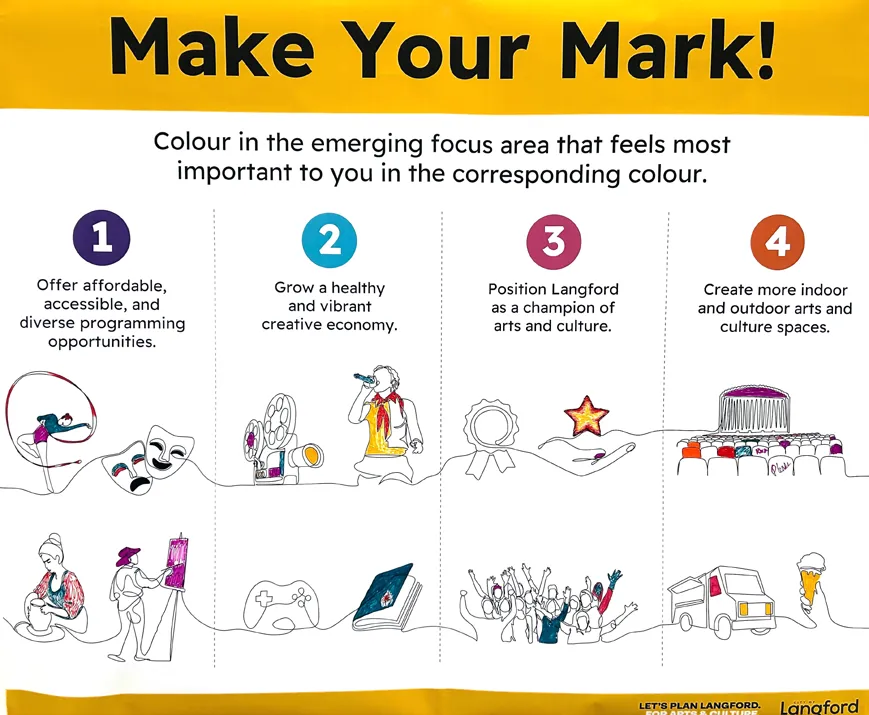
- Recommendations include creating more arts and culture spaces (noted example: a 750-seat proscenium performing arts theatre as a potential facility type)
- Includes Appendices with Cultural Facilities Matrix and Cultural Scorecard
Arts and Culture Strategy (Attachment 1 to staff report 9.1)
Page 23
1 Page 23 of 304
Page 24
Contents 1.0 Introduction 3 1.1 Project Background 4 1.2 Approach and Timeline 4 1.3 Brief Overview of Cultural Development in Langford 5 1.4 Community Profile 6 2.0 Current Trends and Best Practices in Arts and Culture in Canada 9 2.1 Major Trends Affecting the Sector 10 2.2 Governance, Funding, and Partnerships Trends 16 3.0 Arts and Culture in Langford 19 3.1 Cultural Facilities, Programs and Services Assessment 20 3.2 Planning Linkages 25 3.3 Financial Support Provided to Arts and Culture Organizations and Events in the Community 30 4.0 Early Engagement Findings 34 4.1 Engagement Activities by the Numbers, Spring-Summer 35 4.2 Interdepartmental Staff Session (Mar 20) 36 4.3 Community Working Group Sessions (June 4 and July 23) 38 4.4 Sounding Boards 41 4.5 Emerging Themes and Directions 43 5.0 Next Steps 44 6.0 Appendices 47 Appendix A: Cultural Facilities Matrix 48 Appendix B: Cultural Scorecard 48
Prepared by: Patricia Huntsman Culture + Communication for the City of Langford 2 Page 24 of 304
Page 25
1.0 Introduction 3 Page 25 of 304
Page 26
1.0 Introduction 1.1 Project Background The City of Langford is becoming known as a vibrant city in the region for its range of festivals and events, with an emphasis on family-friendly programming. To build on this recognition, the City of Langford is developing its first Arts and Culture Strategy focused on strengthening Langford’s resilient and diverse economy as the third fastest growing municipality in Canada.
The strategy will help the City of Langford grow a strong, vibrant arts and culture scene, one that reflects who we are and welcomes everyone. It will act as a guide in how the City will support the creative community, host events, and create spaces that bring people together through creativity.
Through research and consultation, the Arts and Culture Strategy will serve as a framework for Langford’s future vision to solidify that Langford is a destination for the arts and an inclusive place that celebrates and showcases diverse cultures.
Goals of the final Arts and Culture Strategy include: ● Increase awareness of the arts and culture sector in Langford by identifying organizations and artists that are active in the community ● Engage the community and key interest holders on their needs and priorities, including space needs for programming ● Develop a vision for arts and culture that is inclusive, diverse, and accessible ● Clarify the roles and responsibilities of the City and its partners ● Increase capacity and collaboration between the City and its partners ● Support the integration of arts and culture into City-wide planning and placemaking processes ● Guide and support Council decision-making and service delivery in a context of limited resources, to establish and maintain an engaging, prominent arts and culture scene 1.2 Approach and Timeline The City of Langford Arts and Culture Strategy development process is anticipated to be a 12-month-long process of research, community engagement, and strategy development.
The process is scheduled to unfold through five phases, with the completion of the Strategy and associated documents by Q1 2026. ● Phase 1: Start Up (February-March) ● Phase 2: Background Research and Analysis (March-May) ● Phase 3: Communications + Engagement (May-September) Prepared by: Patricia Huntsman Culture + Communication for the City of Langford 4 Page 26 of 304
Page 27
● Phase 4: Validation and Synthesis (September-October) ● Phase 5: Arts and Culture Strategy (October-December) The planning process is being carried out by a project team of consultants and City of Langford’s Communications & Economic Development team. 1.3 Brief Overview of Cultural Development in Langford Cultural Development is the planning and implementation of strategies that leverage a community’s unique cultural resources and assets for the social, economic, environmental, and cultural benefit of a community.
Strategies may include, but are not limited to: ● Investing in arts and cultural facilities (art galleries, museums, theatres, concert halls etc.) ● Producing public festivals and events, and programming arts and culture activities ● Implementing public art and creative placemaking initiatives (transformed underused public spaces for creative or playful uses) ● Attracting and supporting creative industries (film, television, publishing, design, fashion, music, etc.)
There are numerous direct and indirect social and livability benefits resulting from cultural development, such as improved quality of life, which in turn leads to attraction of skilled workers, tourism, and businesses, etc. These benefits have led to an understanding that cultural amenities and delivery are no longer a ‘nice to have’ or a ‘frill’ in local government. Increasingly, cultural development is included in the core suite of municipal services offered to strengthen a community’s cultural identity and grow its creative economy.
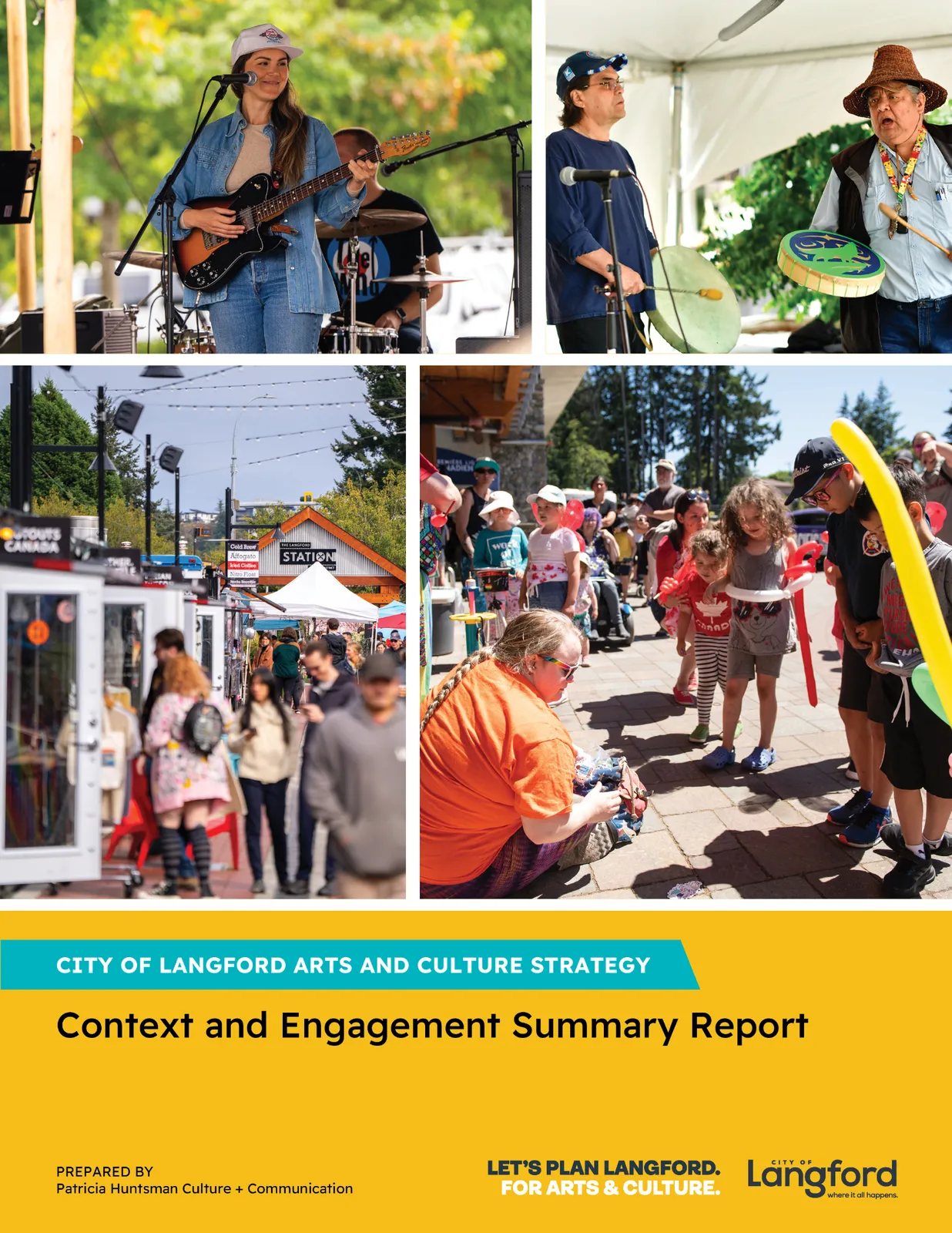
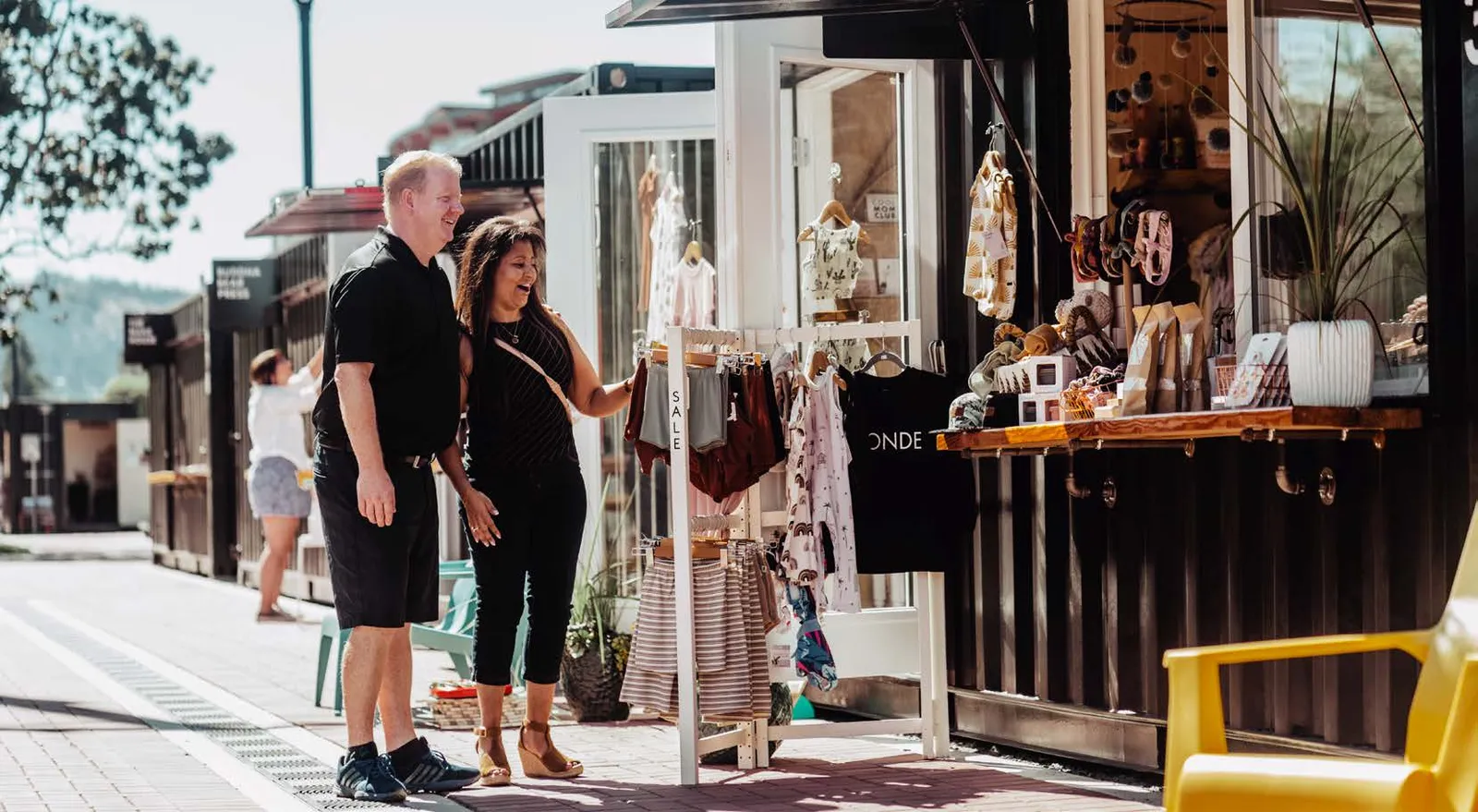
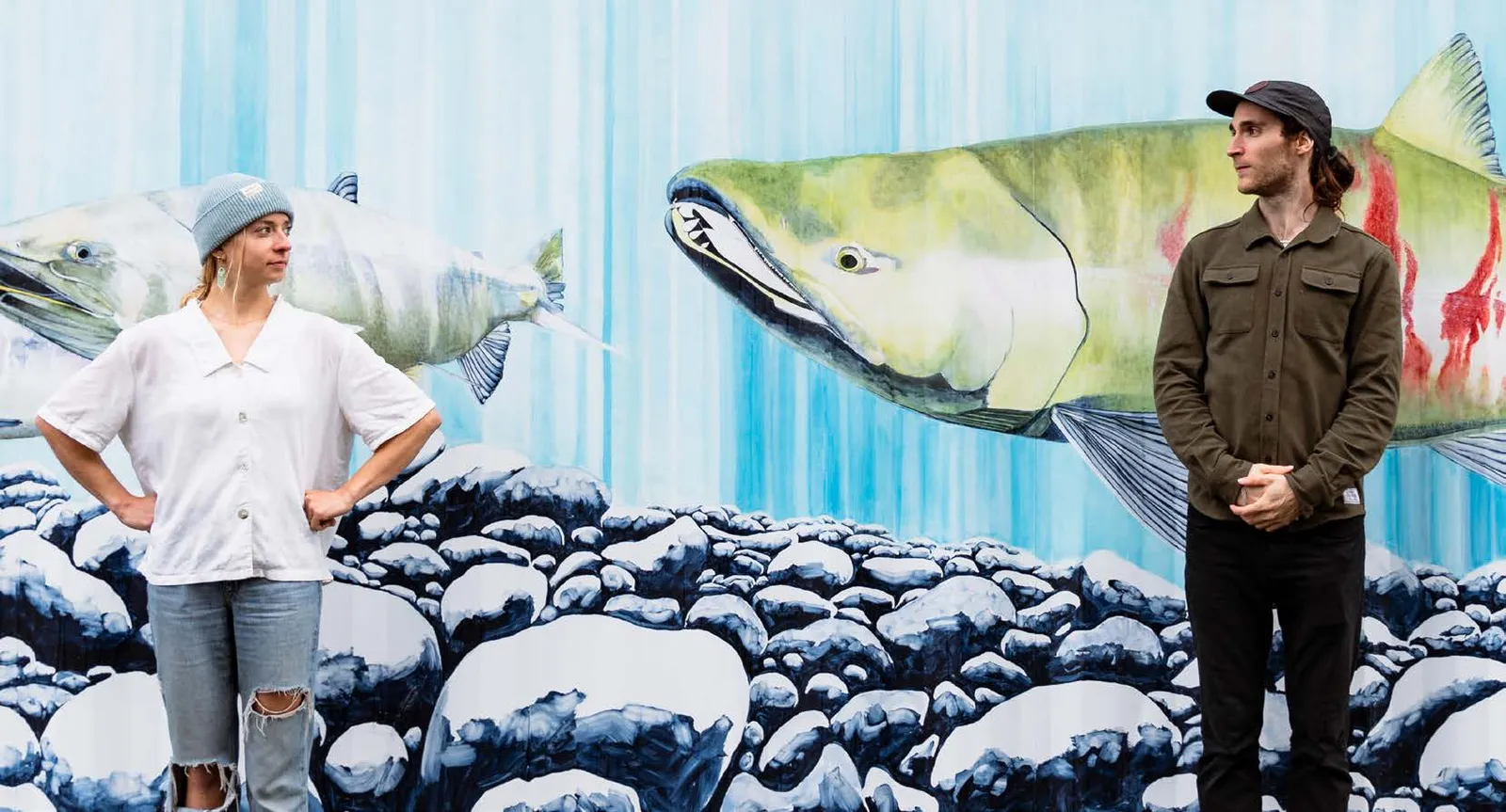
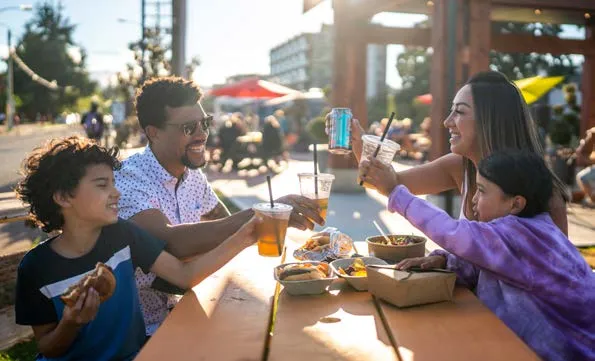
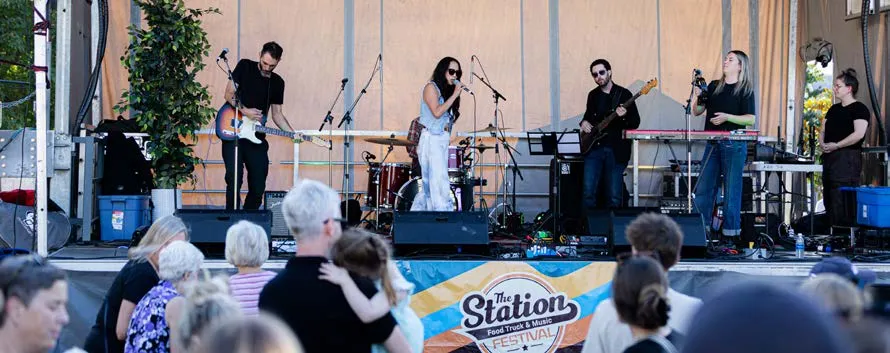
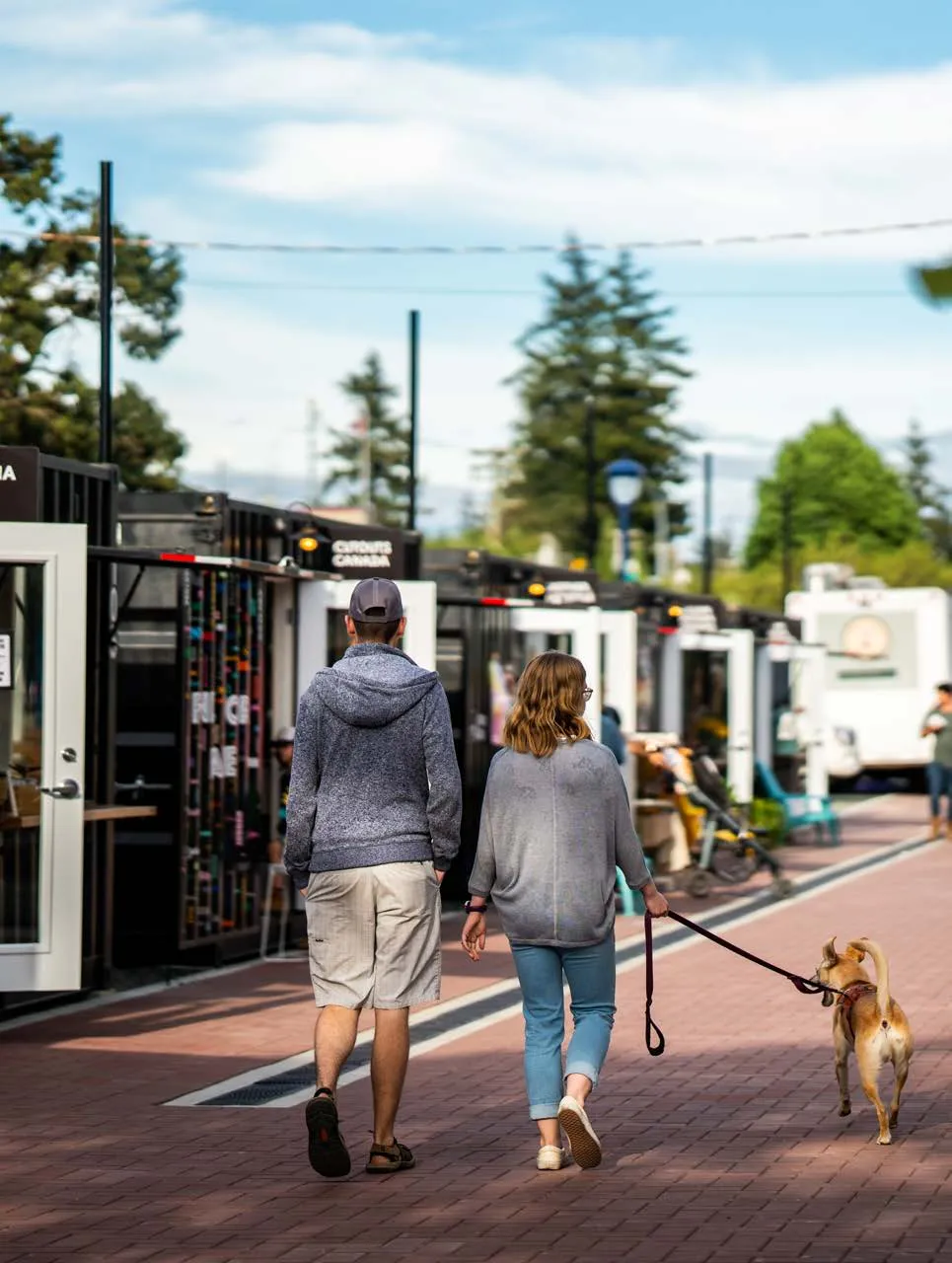
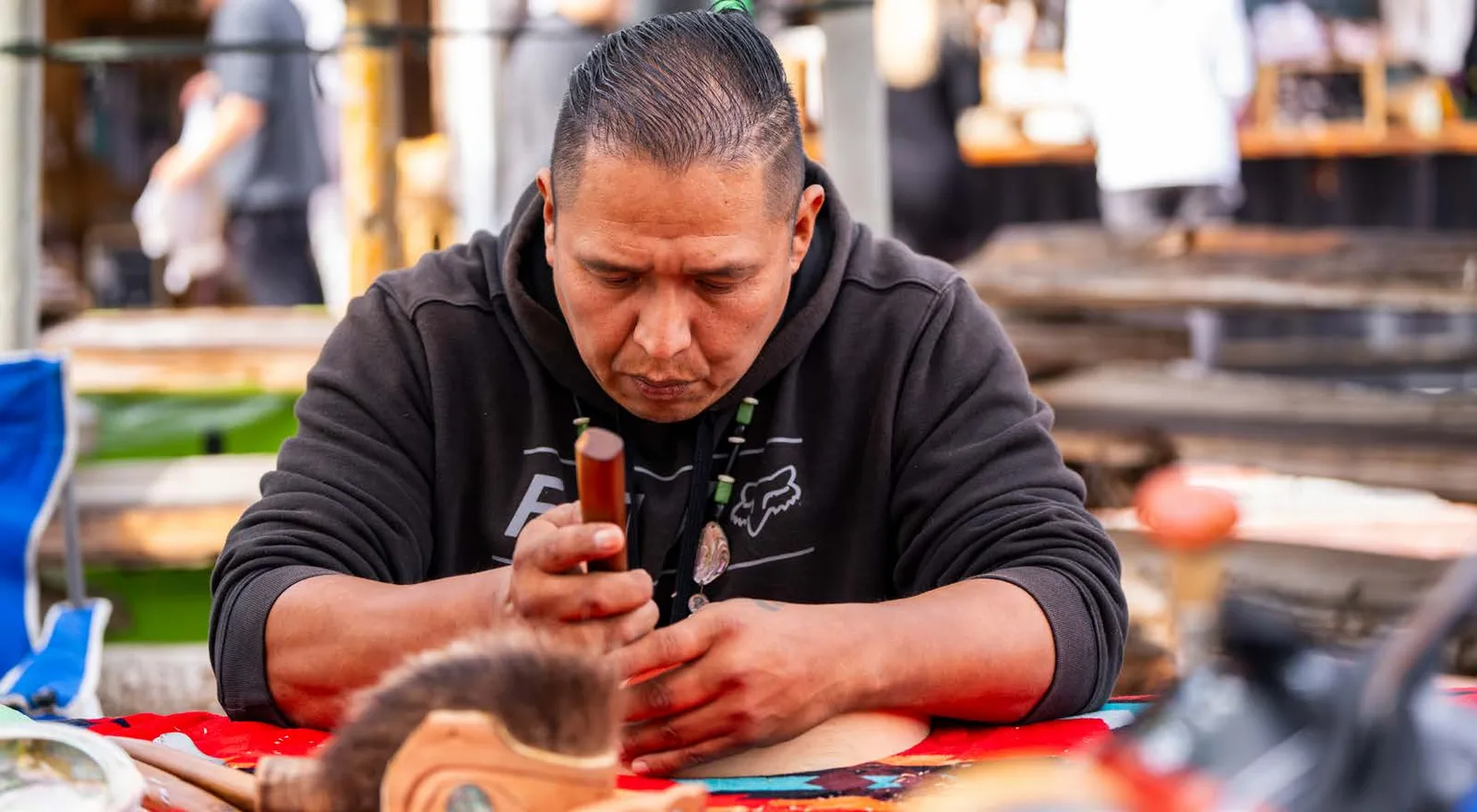
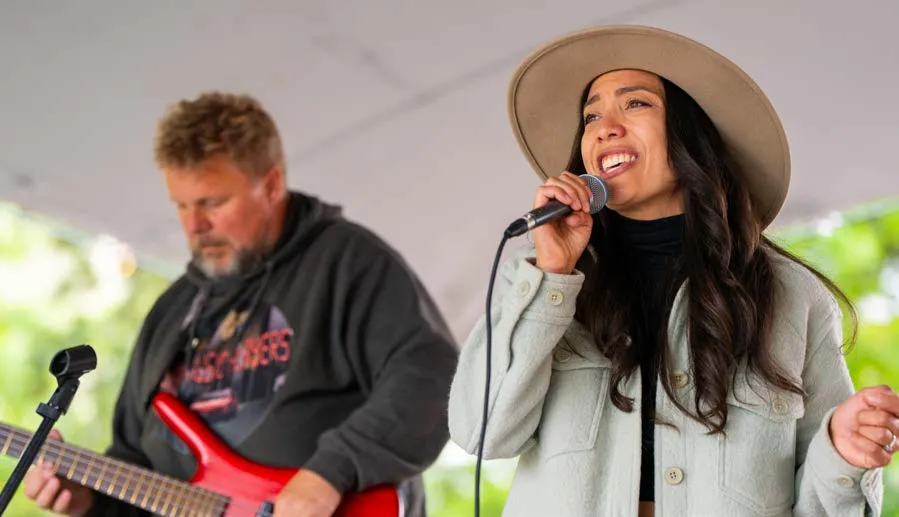
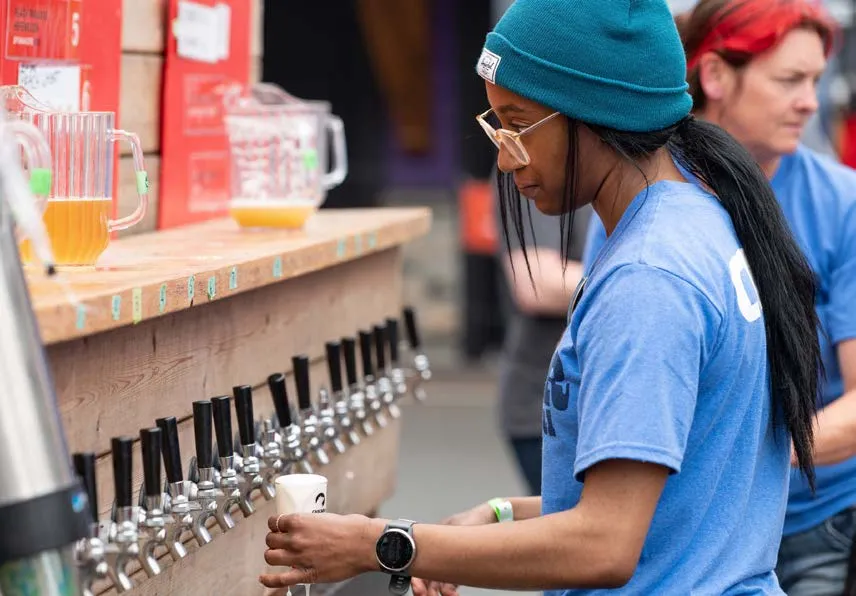
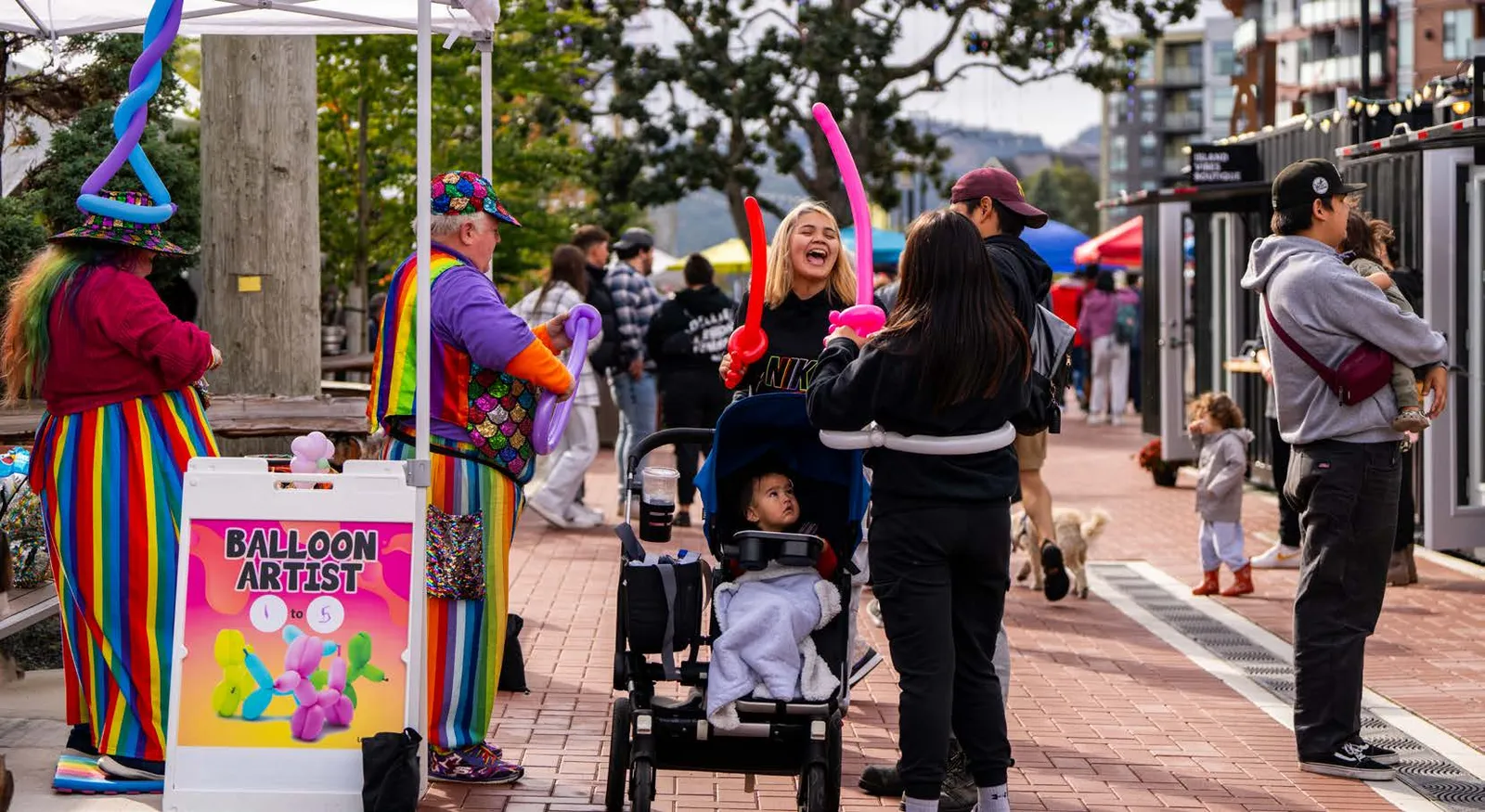
Key Recent Achievements in Langford’s Cultural Development include: ● Opening the Langford Station Arts and Cultural District in 2022 — featuring thirteen custom retrofitted shipping containers that host six artist studios, and seven business incubators. ● $300,000 annual investment into family-friendly and culturally-diverse festivals and events — including Change Makers Gathering Festival, Brewery and the Beast, Canada Day Festival, Food Truck and Music Festival, Lantern Festival, Fridays at The Station, and more. ● Street banners featuring the ‘Rainbow Trout’ artwork, ideated by Russ Chipps, Chief of Sc’ianew First Nation (Beecher Bay) and designed by his daughter Jeannie Chipps, were displayed downtown to celebrate Pride Month and National Indigenous Peoples Month in 2024. ● Redeveloping the Official Community Plan in 2025 with a new chapter dedicated to “Embracing the Creative City”, as well as arts and culture-based objectives listed in their chapter dedicated to “Economic Prosperity and Resilience”. Prepared by: Patricia Huntsman Culture + Communication for the City of Langford 5 Page 27 of 304
Page 28
1.4 Community Profile The City of Langford is one of thirteen municipalities that makes up the Capital Regional District located on southern Vancouver Island and occupies the traditional territories of the Coast Salish, specifically Xwsepsum (Esquimalt), Lekwungen (Songhees), Sc’ianew (Beecher Bay), and the WSÁNEĆ Peoples, represented by the Tsartlip, Pauquachin, Tsawout, Tseycum, and Malahat Nations. The neighbouring four communities, including Colwood, Highlands, Metchosin, and View Royal, comprise the region of West Shore, home to over 96,500 people.
On the whole, it feels different than other places on Vancouver Island, with a growing young, diverse, highly-educated and family-oriented population. Compared to other Vancouver Island municipalities, Langford enjoys low crime rates and a welcoming atmosphere1. The local public-school district is SD62 Sooke, with four elementary schools, one middle school and one secondary school located within the city limits2. In response to the growing educational needs of the community, a proposal for a new secondary school in Langford is currently in development.
Langford is well known for its natural beauty and outdoor recreation opportunities, and with an increase in population in recent years, Langford is evolving from its agricultural and rural roots to a more culturally active and diverse community. While Langford continues to have strong ties to nature, heritage, and farming, its current focus is on economic diversification by prioritizing and attracting key industries such as tech, manufacturing, retail, hospitality, film and creative entrepreneurs. Langford was even voted British Columbia’s Most Economically Resilient City by BCBusiness Magazine3 in April 2025.
Langford also boasts an extensive and highly-celebrated trail network and active transportation infrastructure. As is common to many suburban communities, however, the transportation share is primarily vehicular, (62.5% auto driver and 18.2% auto passenger) with lower active and public transportation rates (3.7% transit, 3.4% bicycle and 8.7% walking)4. A Transportation Master Plan is being developed in parallel with the Arts and Culture Strategy, and will examine the opportunities to encourage and support residents' shift to alternative modes of transportation.
Below are highlights from the 2021 Statistics Canada Census Profile, as well the Canadian Social Survey (CSS), with data collected between 2021 and 2024. The CSS collects information on a variety of social topics such as health, well-being, quality of life, confidence in institutions, activities, time-use, and emergency preparedness. 4 CRD. 2022 Capital Regional District Origin destination Household Travel Survey: Final Report. September 2023. 3 McCullough, Michael. “B.C.’s Most Economically Resilient Cities in 2025”. BCBusiness. April 2, 2025. Available online: https://www.bcbusiness.ca/industries/general/b-c-s-most-economically-resilient-cities-in-2025/ 2 City of Langford. “Schools”. City of Langford. Available online: https://langford.ca/residents/education/schools/ 1 Sweetman, Mick. “Breaking down crime statistics on Vancouver Island”. CHLY FM Local News. August 8, 2023. Available online: https://www.chly.ca/local-news/2023/8/8/breaking-down-crime-statistics-on-vancouver-island Prepared by: Patricia Huntsman Culture + Communication for the City of Langford 6 Page 28 of 304
Page 29
Census Profile5 Metric City of Langford Population 46,584 (31.8% increase since 2016) Median Age 38.4 years old
Generational breakdown: ● 0-14 years: 17.2% of the population ● 15-64 years: 69.1% of the population ● 65+ years: 13.7% of the population Family/ Household Composition Average family size: 2.8
Average household size: 2.4 Indigenous Identity 5.8% of the population Visible Minority Identity 16.6% of the population (up from 10.3% in 2016)
Ethnographic breakdown: ● South Asian: 4.1% ● Chinese: 2.4% ● Black 1.6% ● Filipino: 3% ● Latin American: 1.4% ● Southeast Asian: 1.1% Immigrant Identity 15.8% of the population (up from 12.6% in 2016)
Places of birth: ● Americas: 15.6% ● Europe: 32.7% ● Africa: 6.7% ● Asia: 44.2% ● Oceania: 0.8% Highest Education Level Achieved (Aged 15 years or older)
● None: 12.2% ● High school: 32.2% ● Postsecondary: 55.5% Employment Rate 67.9% of the population
Occupations: ● Sales/service: 27.5% 5 StatsCan. Langford, BC Census Profile, 2021 Census of Population Prepared by: Patricia Huntsman Culture + Communication for the City of Langford 7 Page 29 of 304
Page 30
● Business/finance/admin: 18.1% ● Trades/transport/equipment: 17.5% ● Education/law/social/community/government: 13.3% ● Arts/culture/recreation/sport: 2.5% Median Total Income (in 2020) $47,600 Official languages (English and French) spoken as mother tongue 84.9% of the population
Non-official languages spoken as mother tongue 12.4% of the population
Top-spoken non-official languages: ● Tagalog ● Punjabi ● Spanish ● Korean ● Mandarin
Canadian Social Survey6 Metric City of Langford Life Satisfaction 44% of the population said “Very satisfied” Sense of Meaning and Purpose 50% of the population said “Completely” Has a Hopeful Outlook on Life 65% of the population said “often or always” Feels Lonely 50% of the population said “rarely or never” Sense of Belonging to Community 31% of the population said “Very strong or somewhat strong” Has Someone to Count on 74% of the population said “often or always”
6 StatsCan. Canadian Social Survey. https://www.statcan.gc.ca/en/survey/household/5354 Prepared by: Patricia Huntsman Culture + Communication for the City of Langford 8 Page 30 of 304
Page 31
2.0 Current Trends and Best Practices in Arts and Culture in Canada
9 Page 31 of 304
Page 32
2.0 Current Trends and Best Practices in Arts and Culture in Canada 2.1 Major Trends Affecting the Sector In the broader context of planning, important trends in Canada’s nearly $60 billion cultural industry will continue to have a significant influence on arts and culture development for the foreseeable future. Calls to Action of Truth and Reconciliation Commission The Truth and Reconciliation Commission was established to acknowledge and provide a witness to Residential School experiences hearing from over 6,500 witnesses and survivors. As part of its comprehensive final report released in 2015, 94 Calls to Action were issued to further the aims of reconciliation.
Arts, culture, and heritage institutions are called to transform from within to break down the colonial systems that create deeper barriers in the efforts to heal from collective trauma, and this begins by building relationships with Indigenous communities, art-makers, and cultural producers.
The Calls to Action directly name several institutions complicit in the colonial project, including the Canadian Museums Association (CMA), Library and Archives Canada, Canadian Association of Archivists, and Canada Council for the Arts, to undertake the necessary steps towards reconciliation7. The Calls to Action directly name several institutions complicit in the colonial project, including the Canadian Museums Association (CMA), Library and Archives Canada, Canadian Association of Archivists, and Canada Council for the Arts, to undertake the necessary steps towards reconciliation.
In response, Canadian Museums Association released Moved to Action: Activating UNDRIP in Canadian Museums in 2022, outlining recommendations and new museum standards for implementing UNDRIP and supporting Indigenous self‑determination in museums. Further, the Government of Canada has been working to renew the National Museum Policy, which was last updated in 1990. Through consultations, five key themes emerged: the role of heritage institutions in society; financial sustainability and resilience; advancing reconciliation with First Nations, Inuit and Métis peoples; embracing equity, diversity and inclusion; and preservation and access as core functions.
7 Truth and Reconciliation Commission of Canada. Truth and Reconciliation Commission of Canada: Calls to Action. 2015. Available online: https://www2.gov.bc.ca/assets/gov/british-columbians-our-governments/indigenous-people/aboriginal-people s-documents/calls_to_action_english2.pdf Prepared by: Patricia Huntsman Culture + Communication for the City of Langford 10 Page 32 of 304
Page 33
Climate Change In recent years, British Columbia has seen significant changes in climate and weather that show that, now more than ever, it is time to act in service of positive environmental practices. Since the culture sector relies on both primary (extraction and agriculture) and secondary (manufacturing and construction) sectors of the economy, (i.e. the burning of fossil fuels), it is also implicated in producing the carbon emissions that contribute to the climate crisis8.
The culture sector produces emissions through the following activities: ● Food: At events and in cultural productions, food produces 15-20% of the emissions because not only are audiences and patrons able to purchase food to be consumed, but arts workers and artists are also being fed. ● Buildings: There is a huge environmental cost in constructing, maintaining, heating and cooling cultural venues. ● Mobility and Transportation: Culture and leisure are considered the third most common reason for global mobility. Whether one is traveling to see a particular art piece, go to a festival, or if particular exhibitions are traveling from museum to museum, the transportation of art, artists, and audiences can lead to huge amounts of carbon emissions (especially when air travel is involved). ● Waste: Cultural events like music festivals are some of the worst producers of landfill waste. According to the BBC, in the UK, festivals such as Glastonbury have produced up to 23,500 tonnes, per year9. In other subsectors, the production of promotional materials, props, and costumes also result in carbon emissions. ● Digital Impacts: Whilst still a small proportion of the footprint, digital impacts are growing to represent 3-4% of the world’s Greenhouse Gas emissions10. Culture is implicated in this growth as 70% of what is consumed online is cultural content.
Artists and cultural workers in Canada have begun to recognize their own responsibility to reduce their negative impacts on the environment, and act more sustainably through climate mobilization. Nearly two-thirds (63%) of arts, entertainment, and recreation organizations and businesses have some type of environmental practice or policy11. The most common environmental practices include:
● Encouraging employees to adopt environmentally friendly practices: 43% 11 Hill, Kelly. “Greener Arts?”. Hill Strategies Statistical Insights on the Arts. January 21, 2022. Available online: https://hillstrategies.com/2022/01/12/greener-arts/ 10 Bottrill, Catherine & Tickell, Alison. “The Art of Zero”. Julie’s Bicycle. April, 2021. Available online: https://juliesbicycle.com/wp-content/uploads/2022/01/ARTOFZEROv2.pdf 9 Gray, Richard. “The people fighting the war on waste at music festivals”. BBC. June 27, 2019. Available online: https://www.bbc.com/culture/article/20190627-the-people-fighting-the-war-on-waste-at-music-festivals 8 Lesimple, Heloise. “Decarbonizing Culture #1 Understanding the Ecological Impact of Cultural Activities”. LeCAKE: Common Art Knowledge Europe. Available online: https://www.lecake.eu/understanding-the-ecological-impact-of-cultural-activities/ Prepared by: Patricia Huntsman Culture + Communication for the City of Langford 11 Page 33 of 304
Page 34
● Reducing waste: 39% ● Reducing energy or water consumption: 30% ● Choosing suppliers based on their environmentally responsible practices or products: 26%
The cultural sector also holds a unique position in society, in that it can be a voice for radical change. In the introduction to The Green Sessions: A Day of Learning, a series of recorded talks and panels organized by Soulpepper Theatre Company, the organizers write: “We believe that artists have an essential part to play in the climate battle. We know that our role as storytellers and communicators can be instrumental in delivering a societal shift”12. The ability to raise awareness and be leaders in climate activism is one of the sector’s strongest tools for improving environmental impact.
Accessible Arts for the Inclusion of People with Disabilities In 2021, BC enacted its first provincial legislation on compliance with accessibility requirements to remove barriers for people with disabilities. The Accessible British Columbia Act (2021) sets a provincial precedent for all municipalities (and organizations including, schools, school districts, and health authorities), to create their own accessibility plans for the inclusion of people with disabilities in civic life.
Compliance with accessibility legislation alone does not create truly inclusive spaces, especially in the arts, culture, and heritage context. In a cultural space, accessibility for people with disabilities does not just apply to the infrastructure, or the physical accessibility, but also to the artistic programming, and the mission and vision of the institution. Taking a more multi-dimensional approach to accessibility demonstrates to people with disabilities that they are desired in a space. Investing in accessibility, therefore, offers cultural spaces new ways to expand their viewership13.
People with disabilities are not just audiences – they are artists and creators, too! Too many disabled artists and arts workers are still only included as a way to achieve diversity metrics or to fulfill funding requirements. “Interest in accessibility is surging”, says Eliza Chandler, artistic director of the non-profit Tangled Art + Disability, “but there’s still a long way to go”14.
14 Sandals, Leah. “8 Things Everyone Needs to Know About Art and Disability”. Canadian Art. March 13, 2016. Available online: http://canadianart.ca/features/7-things-everyone-needs-to-know-about-art-disability/ 13 Lazard, Carolyn. “Accessibility in the Arts: A Promise and a Practice”. Recess New York. 2019. Available online: https://promiseandpractice.art/ 12 Soulpepper Theatre Company. “The Green Sessions: Day of Learning”. June 23, 2021. Available online: https://www.youtube.com/playlist?list=PLCLYxw6-iwZtoa22qExiRwjyR1mgMA9fi Prepared by: Patricia Huntsman Culture + Communication for the City of Langford 12 Page 34 of 304
Page 35
Economic and Political Instability With the uncertainty of international trade agreements and political relationships between Canada and the US, the cultural sector is poised for market changes and general instability in the economy in the upcoming years. Though the extent of impact is unknown, tariffs will have profound impacts on the arts and culture sector – they will almost immediately decrease the value of Canadian cultural exports and increase the cost of creating and producing in Canada15. According to Statistics Canada, $8.2 billion, or 33% of Canada’s exported cultural goods and services were visual and applied arts exported to the United States in 202216. Canadian artists, creatives and cultural workers who import their materials and infrastructures from US suppliers will pay a significantly higher price, or else find new Canadian or other international suppliers with whom they may not have a relationship with.
Further, artists’ work travel abilities have been disrupted, with concerns rising in regards to US border security measures and personal safety. Trans and gender non-conforming artists are especially vulnerable with new policies that require work visas to reflect their gender assigned at birth17. Fears of detainment are also a concern for those who have publicly expressed solidarity with Palestine and/or criticism of the Donald Trump presidency18.
Taken together, these pressures underscore the growing precarity of cross-border cultural exchange and the urgent need for protections that safeguard the mobility, livelihoods, and creative expression of Canadian artists and cultural workers.
COVID-19 The impacts of COVID-19 on the Arts, Culture, and Heritage sector are still being felt today. It was one of the first sectors to close in 2020, and the economic recovery has been piecemeal by sub-sector19 (if they have been able to recover at all). The performing arts, festivals, and celebrations were especially affected, as their work relies on large gatherings and interpersonal connections between artists, arts 19 Canadian Heritage. “Arts, Culture and Heritage Sectors During the Covid-19 Pandemic”. June 16, 2022. Available online: https://www.canada.ca/en/canadian-heritage/corporate/transparency /open-government/standing-committee/rodriguez-canadian-heritage/arts-culture-heritage-covid.html 18 Stechyson, Natalie. “A wave of artists are reconsidering tours over U.S. border detention fears”. CBC. April 3, 2025. Available online: https://www.cbc.ca/news/entertainment/musicians-authors-cancel-tours-u-s-1.7500267 17 Gordon, Holly. “Canadian trans musicians cancel U.S. shows citing fear and policies targeting gender identity”. CBC. April 11, 2025. Available online: https://www.cbc.ca/music/canadian-trans-musicians-cancel-american-shows-policies-targeting-trans-artists-1.7 508169 16 CARFAC. “CARFAC’s submission on Canada’s response to United States tariffs on Canadian goods”. March 27, 2025. Available online: https://www.carfac.ca/carfacs-submission-on-canadas-response-to-united-states-tariffs-on-canadian-goods/ 15 Wilheim, K., Kramer, M. (February 10, 2025). Trump, tariffs and trade: What’s at stake for the arts and creative industries? Cultural Policy Hub. Available online: https://culturalpolicyhub.ocadu.ca/news/Trump-tariffs-and-trade Prepared by: Patricia Huntsman Culture + Communication for the City of Langford 13 Page 35 of 304
Page 36
workers, and audiences – all of which were disrupted by lockdown measures, travel, and gathering restrictions. In the live music sector, many beloved venues have shuttered their doors for good.
After the pandemic, British Columbia had been providing up to $34.5 million in one-time pandemic-era recovery and resilience funding to arts and culture organizations to support the uneven recovery within the sector20. Meanwhile, the 2024 provincial budget did not include significant pandemic-era funds, which may result in more organizations relying on the limited funding from the BC Arts Council. Artificial Intelligence Now more than ever, governments are scrambling to institute Artificial Intelligence (AI) policies and frameworks, as the systems become more powerful and evolve quickly. In the arts and culture sector, concerns over intellectual property, loss of value for human labour, and the spreading of misinformation are widely discussed topics21.
There are also discussions, especially in arts spaces, on how AI can be used within artistic and creative work, and how policy may stifle the creative and innovative potential of the technology. Canadian policymakers also have to be aware of the wholly negative assumptions that Canadians have about AI and “innovation” in general; according to Imagine Canada, only 31% of Canadians “trust AI”, which is 19% lower than the global average22. Therefore, policymakers must strike a balance between the opportunities of AI, and the risks it may pose to economic, social, and cultural well-being23. Affordability Crisis Living and working as an artist and arts worker in Canada’s cities is getting harder. According to a study commissioned by the Canada Council for the Arts, the lead reasons for why artists move away from the city24 include: ● Cost of living is too high ● Access to both affordable housing and creative space is a struggle 24 Canada Council for the Arts. “Concentration of Artists in Canada”. 2023. Available online: https://canadacouncil.ca/research/research-library/2023/11/concentration-of-artists-in-canada 23 Wilheim, Kelly. “Social and cultural impacts of AI: A seat at the policy table”. Cultural Policy Hub, OCAD. January 22, 2024. Available online: https://culturalpolicyhub.ocadu.ca/news/social-cultural-impacts-of-AI 22 Jensen, Emily. “What trends will impact charities and nonprofits in the third quarter of 2024?” Imagine Canada. August 12, 2024. Available online: https://imaginecanada.ca/en/360/what-trends-will-impact-charities-and-nonprofits-in-the-third-quarter-of-2024 21 Canadian Heritage. “Government of Canada partners with Mila to guide the development of a cultural data strategy for artificial intelligence”. September 13, 2024. Available online: https://www.canada.ca/en/canadian-heritage/news/2024/09/government-of-canada-partners-with-mila-to-guid e-the-development-of-a-cultural-data-strategy-for-artificial-intelligence.html 20 BC Museums Association. “Key Takeaways from Budget 2024 for Arts, Culture and Heritage Organizations”. 2024. Available online: https://museum.bc.ca/key-takeaways-for-arts-culture-and-heritage -organizations-from-budget-2024/ Prepared by: Patricia Huntsman Culture + Communication for the City of Langford 14 Page 36 of 304
Page 37
● Renovictions (when a tenant is unwilling evicted so a property owner can make renovations) apply to both housing and creative spaces ● Allowable subsistence levels in grants are inadequate and do not reflect increases in cost of living or inflation ● Education is needed on tenant rights and CRA rules for grants ● Corporate cultures of cities impact the aesthetics of the kinds of arts that are considered valuable ● Racism and intersecting forms of discrimination persist in the sector
In a recent study commissioned by the Cultural Human Resources Council, it was revealed that affordability and working conditions for Canada’s artists are worse than Canadians in other professions25. Only 3 out of every 10 artists are satisfied with the affordability of their dwelling, even though over half work from home. According to the report, challenges intensify at the intersections of identity, as BIPOC artists, artists who are D/deaf and/or disabled, gender diverse and women artists, and younger artists reported lower personal incomes and less satisfaction with the affordability of their dwellings. Festival Landscape There is a noticeable shift in the festival landscape, moving away from large, one-off events toward more immersive, distributed cultural experiences. Audiences are increasingly drawn to fluid, interactive events that extend beyond traditional one-day formats, with technology such as VR, apps, and AI-enhanced experiences playing a larger role in engagement.
Following the pandemic, some festivals are struggling to rebuild audiences, while established festivals continue to see strong attendance—established festivals navigating the challenges more effectively than newer events. Efforts to attract younger and more diverse attendees are ongoing, while funding relies heavily on earned revenue, modest government support, and pandemic-related federal funding. To address rising costs and volunteer limitations, many events are adopting smaller, more efficient "plug and play" market models.
Similarly, with wildfires and extreme heat beginning earlier and having more drastic effects, organizers that rely on signature all-in-one-weekend festivals in the summer, have had to take precautionary measures to protect their patrons26. Primarily outdoor event organizers are experimenting with 26 S. K. Kshatri. “Drought, wildfire concerns impact B.C. summer events”. 2024. CBC News. Available at: cbc.ca/news/canada/british-columbia/bc-wildfire-impacts-tourism-industry-1.7110777
25 Hill, Kelly. “How are Canada’s artists doing? Analysis of a survey of affordability and working conditions in early 2024.” Cultural Human Resources Council & Hill Strategies. June 4, 2024. Available online: https://hillstrategies.com/wp-content/uploads/2024/05/chrc-kellyhill-artists-analysis-2024.pdf Prepared by: Patricia Huntsman Culture + Communication for the City of Langford 15 Page 37 of 304
Page 38
moving shows indoors and are developing relationships with emergency personnel in order to be better prepared in emergency situations.
Safety requirements have also increased due to growing instances of hate and intolerance, while leadership challenges persist in organizing successful events. After several tragedies at public events, the Government of BC has released a report27 on how to improve public safety at events with six key recommendations: ● Risk assessments ● Clarify jurisdictional roles (providing tools and expertise to help communities and municipalities across the province coordinate) ● Establish a centralized training and support hub ● Boost local event delivery capacity ● Foster local collaboration ● Promote learning through evaluation
With these recommendations in mind, moving away from large, one-off events to smaller, community-focused and community-led events is proving to be a popular trend amongst Canadian municipalities. 2.2 Governance, Funding, and Partnerships Trends
The Canadian cultural sector is adapting to dynamic challenges, including shifting funding models, governance expectations, and cross-sector collaboration. Municipal cultural planning is an inclusive process, requiring involvement from both a local government and the community. Municipal cultural service delivery approaches range from in-house delivery, to contracted services, to a hybrid of the two. Municipalities are increasingly shifting away from the responsibility of acting solely as the direct supplier of in-house cultural services, to a more strategic and decentralized role, leveraging the community’s existing assets through fee-for-service, operating and partnership contracts, including critical input from arts and culture organizations28.
Municipalities often rely on partnerships with non-profit organizations, cultural institutions, artists, and businesses to co-deliver services and amplify impact. As public accountability increases and traditional revenue sources evolve, arts organizations must adopt innovative governance, funding, and partnership approaches.
28 Dick, B., Jeannotte, S. & Hill, K. (2019). Positioning Culture within Canadian Municipalities. Culture and Local Governance / Culture et gouvernance locale, 6(1), 1–22. https://doi.org/10.18192/clg-cgl.v6i1.4550 27 Schuermann, Jan. “B.C. releases safety report, including 6 recommendations, after Lapu-Lapu Day festival attack”. CityNews Vancouver. Available online: https://vancouver.citynews.ca/2025/07/09/bc-to-release-public-safety-report-lapu-lapu-day/ Prepared by: Patricia Huntsman Culture + Communication for the City of Langford 16 Page 38 of 304
Page 39
To thrive, Canadian arts organizations must adopt governance structures that are participatory and adaptive, secure flexible funding that enables innovation, and pursue partnerships that expand reach and deepen community impact. Embracing these best practices will help ensure the sector’s resilience and cultural vitality.
This literature review identifies key trends and best practices within a Canadian context, informed by recent global and local research. As organizations navigate digital transformation and societal shifts, there is a growing need to rethink the structures that govern creativity, inclusion, and financial resilience. This review aims to provide decision-makers with an overview of how Canadian arts organizations can evolve to meet these complex demands. Governance Models Arts governance in Canada reflects a hybrid of nonprofit, public, and corporate governance traditions. As in other jurisdictions, Canadian boards must balance financial accountability with support for artistic excellence. Collaborative governance – emphasizing stakeholder inclusion and strategic alignment – is increasingly seen as best practice. Boards are expected to engage with artistic leadership while maintaining trust and mission alignment29 30. In Canada, many arts boards are volunteer-based and often composed of individuals from diverse professional backgrounds. This diversity can enhance governance, but it also presents challenges in aligning artistic vision with fiduciary duties. An increasing number of organizations are incorporating Indigenous governance principles and community-led advisory bodies to reflect Canada's evolving cultural landscape and promote reconciliation. Funding Models Canadian arts organizations rely on a mix of public funding (via Canada Council for the Arts and provincial arts councils), earned revenue, and philanthropic donations. However, donor-imposed restrictions—especially on permanently restricted gifts—can limit program flexibility and impact31. Flexible, multi-year funding is increasingly recognized as critical to support innovation and long-term planning. Recent efforts by Canadian Heritage and private foundations emphasize capacity building and sustainable funding for smaller and rural arts organizations. There is also an emerging interest in equity-focused funding models that address systemic barriers faced by BIPOC artists and 31 Jegers, M., Grossi, G., & Reichard, C. (2022). Service delivery under pressure: The effect of donor-imposed financial restrictions. Nonprofit and Voluntary Sector Quarterly. Advance online publication. https://www.researchgate.net/publication/365171422 30 Rentschler, R. (2015). Governance in the arts and culture nonprofit sector: Vigilance or indifference? In Management and the arts (Chapter 7). https://www.researchgate.net/publication/307643526_Governance_in_the_Arts_and_Culture_Nonprofit_Sector _Vigilance_or_Indifference 29 Reid, W., Turbide, J., & Rentschler, R. (2021). Theorizing arts governance: Mapping the influence of context, creativity and funding paradigms for future research prospects. International Journal of Arts Management, 23(4), 45–60. https://www.researchgate.net/publication/355840745 Prepared by: Patricia Huntsman Culture + Communication for the City of Langford 17 Page 39 of 304
Page 40
communities. The Canada Council’s Explore and Create program is one example of supporting artistic innovation while recognizing the need for equitable access to resources. Service Delivery Models Financial constraints challenge service delivery. Arts organizations in Canada are exploring co-creation with communities, audience engagement strategies, and digital innovation to sustain relevance. Collaborations with health, education, and municipal partners are enabling broader impact and access32 33. The pandemic highlighted the fragility of many service delivery models, pushing organizations to explore digital platforms and outdoor public programming. These adaptations are expected to remain important components of service models, offering new opportunities to engage broader and more diverse audiences, particularly in underserved regions. Partnership and Collaboration Cross-sector partnerships have become a strategic necessity. In Canada, models that unite municipalities, BIPOC communities, and private stakeholders offer pathways to sustainable arts ecosystems. Intermediary organizations—such as arts service organizations—play a vital role in advocating, coordinating, and building sector capacity34. Collaborative frameworks, such as those supporting community-engaged art and place-based initiatives, show promise for creating locally relevant cultural programming. Partnerships with public health and social services are also proving instrumental in demonstrating the social value of the arts, thereby attracting new sources of funding and political support. 34 Donelli, C. C., Fanelli, S., & Zangrandi, A. (2021). Collaborative governance in Italian theatre: Drivers of value creation. In W. Reid, J. Turbide, & R. Rentschler (Eds.), Theorizing arts governance (Special issue). International Journal of Arts Management, 23(4), 61–75. https://www.researchgate.net/publication/355840745 33 Teissl, V., Mayerhofer, E., & Reid, W. (2021). Intermediary dynamics in cultural governance: Film festivals in Vienna. In W. Reid, J. Turbide, & R. Rentschler (Eds.), Theorizing arts governance (Special issue). International Journal of Arts Management, 23(4), 76–89. https://www.researchgate.net/publication/355840745 32 GCDN. (2018). Governance models for cultural districts. Global Cultural Districts Network. https://gcdn.net/wp-content/uploads/2018/04/GCDN-Governance-Models-for-Cultural-Districts-2018.pdf Prepared by: Patricia Huntsman Culture + Communication for the City of Langford 18 Page 40 of 304
Page 41
3.0 Arts and Culture in Langford
19 Page 41 of 304
Page 42
3.0 Arts and Culture in Langford 3.1 Cultural Facilities, Programs and Services Assessment Langford was once known primarily as a bedroom community35 for the nearby provincial capital city of Victoria. However, through intentional development and vision, the City has become one of Canada’s fastest growing communities, owing to increasing livability, job opportunities, and local services. Langford is also emerging as a tourism destination, attracting visitors with its natural beauty, outdoor activities, and growing number of attractions. The origins and evolution of Langford are important to consider when assessing its Cultural Facilities, Programs, and Services. A community that traditionally has relied on a neighbouring city or town for its amenities will typically have gaps in the cultural facilities, programs, and services that exist within its own boundaries. This is the case with Langford, although due to its proximity to – and collaboration with – neighbouring Westshore communities, opportunities for residents to participate and engage in arts and culture do exist within the region. The City of Langford is also pursuing partnerships and opportunities that support the growth of the creative industries and cultural spaces, generating expanded economic and tourism potential, as well as cultivating community attachment. Cultural Facilities With Langford’s population growth and development as a burgeoning city in its own right, cultural facilities that host arts learning programs, events, and cultural services have been introduced over the past decade to meet the growing needs of the community. The following shows a mix of City of Langford owned and operated spaces, as well as facilities and properties owned and operated by non-profit organizations and societies: · Langford Station, which opened in 2022, was purpose-built by the City of Langford as an arts and culture district in downtown Langford36. The initiative envisions a creative ecosystem of local artists, retailers, murals, sculptures, lighting installations, food trucks, and live music and events. Langford Station is owned and operated by the City of Langford. 36 Langford Mayor Scott Goodmanson described the project as a way to “foster community and entrepreneurial spirit by creating a space for connection and collaboration within the community” and “setting the stage for Langford to become a vibrant destination for arts, highlighting and celebrating the diversity celebrated in our city.” 35 Collins, Tim. “Langford’s journey from ‘Dogpatch’ to fastest growing city”. Goldstream News Gazette. Jan 29, 2018. Available online: https://www.goldstreamgazette.com/community/langfords-journey-from-dogpatch-to-fastest-growing-city-5726 03 Prepared by: Patricia Huntsman Culture + Communication for the City of Langford 20 Page 42 of 304
Page 43
· The Victoria Conservatory of Music, Westhills, Langford satellite facility opened in 2016 within the YM/YWCA Langford Aquatic Centre complex, and is leased and operated by the Victoria Conservatory of Music. The 3,000-square-foot facility houses four classrooms and three studios, and offers year-round classes and camps. The City of Langford provides support to this facility through its Permissive Tax Exemption Program. · Luxton Fairgrounds are owned, maintained and operated by the Metchosin Farmers’ Institute and host the Spring and Fall Fairs on the property, as well as offering facility rentals for community events. The City of Langford provides support to this property through its Permissive Tax Exemption Program. · Centennial Centre for Arts, Culture & Community Programs, owned and managed by West Shore Parks & Recreation, offers a variety of year-round visual and performing arts learning programs and camps, dance classes, and a pottery studio which opened in 2021. A recently approved housing and childcare development on the site of the community centre will bring about changes to the facility and programs; however, according to West Shore Parks & Recreation37, the City of Langford is committed to building a replacement facility of comparable size to ensure such programming continues in Langford. The City of Langford is one of five local governments that provides annual operating funding (government transfers) to West Shore Parks & Recreation Society. · Veterans Memorial Park opened in 2001 and is a 1.75-acre urban green space located on the edge of Langford’s City Centre. Serving as the primary community plaza in the city, Veterans Memorial Park is the host location for many community events, such as the annual Remembrance Day Ceremony, the Langford Light Up, and the Goldstream Farmers Market. The City of Langford is currently planning the expansion of Veterans Memorial Park, identified through the 2023 Parks, Trails, and Recreation Needs Assessment. The Park is owned and operated by the City of Langford. · Starlight Stadium, a state-of-the-art 6,000-seat multi-purpose stadium used primarily for sporting events since 2009, also hosts Langford’s Canada Day celebrations, music and culinary festivals, and is available for community events. The Stadium (expanded in 2019) is owned and operated by the City of Langford. Local school theatres, including the Teechamitsa Theatre and the Isabelle Reader Theatre, serve a growing number of students in theatre programs. The theatres offer some technical capabilities, with the in-school theatre programs presenting annual theatrical productions to the public. While community productions were previously presented to the public at these facilities, there has been 37 West Shore Parks & Recreation, “Langford City Council recognizes the vital role Centennial Centre plays in our community, offering highly utilized spaces for pottery, art, music, themed birthday parties, youth nights, and rental space for community groups. Langford’s council is committed to rebuilding a state-of-the-art space of comparable size, either as part of this project or at an alternative location. Langford staff will work closely with West Shore Parks & Recreation Society to determine what is needed in a new space to ensure WSPRs fantastic programming continues.” Prepared by: Patricia Huntsman Culture + Communication for the City of Langford 21 Page 43 of 304
Page 44
decreasing availability for these types of rentals and productions. The number of public events and community productions held at these theatres has decreased in recent years. There are no other theatres in Langford, although the Dogwood Auditorium at Royal Roads University in nearby Colwood is a modern, multipurpose gathering space and is suitable for lectures and performances. The new John Horgan Campus of Royal Roads University Langford, opening Fall of 2025, will feature thoughtful multi-use design, an Indigenous Peoples Centre, cultural spaces, and amenities that foster connection. The need for a performing arts space on the West Shore was first identified by the Capital Regional District (CRD) in the early 2000s, to complement the three theatres currently located in Sidney and downtown Victoria. According to a recent CRD-commissioned report by Nordicity38: “All three regional theatres are located either in Victoria’s urban core or on the Saanich Peninsula, leaving fast-growing areas like the West Shore underserved. For example, Langford, the third-fastest growing municipality over 20,000 people in the country by percentage, has seen a growing demand for cultural events and experiences along with neighbouring jurisdictions, but the lack of appropriately sized and accessible venues has led some groups to perform in casinos, old schools, or venues not well-suited for public performances. Local groups such as the Juan de Fuca Performing Arts Centre Society (JdFPACS) are actively advocating for a new performing arts facility in the West Shore and engaging in early-stage planning and community consultation to explore what such a venue could look like.” See Appendix A for the Cultural Amenities Map. Cultural Programs and Services Outdoor cultural events such as Winter Fest, Music in the Park, Changemakers Gathering, Light up the Hills, Luxton Fair, and Brewery & the Beast have been successful contributors to the community’s identity as a vibrant hub in close proximity to nature, meshing open-air arts and cultural experiences with Langford’s natural surroundings. The City of Langford presents some of these events and also supports key community organizations such as the West Shore Arts Council (which presents the annual Light Up the Hills event), and the Metchosin Farmers’ Institute (which presents the Luxton Fair). The West Shore Arts Council advocates for participation in and appreciation of the arts, culture and heritage and their valuable contribution to a vibrant community. The Arts Council provides online resources that link the public to local arts groups and events via its arts organization directory and event listings, and strives to develop opportunities for its members to connect, collaborate, contribute to the community through arts programming, and promote their work. There is a small number of private arts learning programs in Langford, including dance, music, circus arts, acting, and visual arts instruction. The Centennial Centre for Arts, Culture & Community and Langford Station are the primary spaces to engage with visual arts and related learning programs. The community has not established an art 38 Nordicity. Analysis of Service Options to Support Performing Arts Facilities. May 29, 2025. Available online: https://www.crd.ca/media/file/appendix-nordicity-report-analysis-service-optionspdf Prepared by: Patricia Huntsman Culture + Communication for the City of Langford 22 Page 44 of 304
Page 45
gallery, arts centre, public studios, or formal exhibition spaces within the City of Langford, although these types of spaces are available in nearby regions within the Capital Regional District. There are informal or alternative spaces within the community, including flexible spaces within the Langford Station cultural district, which display art to the public and provide opportunities for artists to display and sell their work. Notably, the Langford Art Fest is a one-day festival celebrating local art, presented by local small businesses, and held at Langford Station. Assessment Given its growing population, on par with other BC communities such as West Vancouver, Vernon, Port Coquitlam, and the City of North Vancouver, the provision of cultural facilities, programs, and services in Langford is at a critical juncture. The ratio of amenities per capita in Langford is below cities with comparable populations, although there are other factors to consider, such as Langford’s evolution and recent high rate of growth. Langford’s cultural amenities context is assessed with population growth in mind. To enhance livability and continue to attract and retain residents, Langford has a clear opportunity to invest in and foster the development of additional amenities within its neighbourhoods. With no indoor cultural gathering spaces in Langford, amenities such as creation, performance, and exhibition spaces are needed, and will serve to promote cultural and community development. Recommendations for Consideration
Support Langford Station in realizing its potential as the central outdoor cultural and community
gathering place: ● Continue to implement recommendations from the Langford Station Cultural District Accessibility Audit and Langford Accessibility Plan39 to improve accessibility40, ● Install signage and wayfinding to enhance visibility41, including branded signage at nearby public lots erected to build awareness of the amenity and its location, ● Implement creative placemaking and public art to enhance public spaces, ● Improve seating and lighting to increase linger time and promote visibility, identity, functionality, and safety at various times and seasons. 2. Establish indoor cultural and community gathering place(s): 41 Studies have shown that 400 metres is often an acceptable walking distance from parking to a destination, factors such as the nature of the route as well as visibility or sight lines play a role in a visitor’s comfort level. 40 Samanski-Langille, Justin. “Accessibility advocate concerned with newly opened Langford Station”. Goldstream News Gazette. Jun 8, 2022. Available online: https://www.goldstreamgazette.com/news/accessibility-advocated-concerned-with-newly-opened-langford-stat ion-639401 39 Plan Available online: https://langford.ca/wp-content/uploads/2025/01/Accessibility-Plan-Waiting-for-Other-Munis.pdf Prepared by: Patricia Huntsman Culture + Communication for the City of Langford 23 Page 45 of 304
Page 46
● 750-seat proscenium performing arts theatre*, designed to offer some flexibility in seating configuration, allowing productions to scale audience capacity up or down as needed, creating the desired experience (i.e. stage proportions, intimacy, sightlines, acoustics, technical and backstage requirements), ● Creation and production/exhibition spaces for visual arts that include arts learning or workshop configurations, ● The new Community Arts Centre (Centennial Centre for Arts, Culture & Community replacement facility, slated to open in 2027) includes a pottery studio: continue to invest in capacity building for a broad range of arts learning programs and public drop-in arts spaces through appropriate staffing and facility space planning and design, ● Continue to cultivate community partnerships and support alternative cultural spaces through grants, marketing, and collaboration. *A few characteristics that would support the success of a Theatre include: ● Accessible from major highway, with sufficient parking ● Transit-accessible ● Excellent promotion, marketing and management team ● Robust technical capabilities, including loading ● Increased restaurant, hotel and accommodation spaces ● Well-planned governance structure See Appendix B for the full Cultural Facilities, Program and Services Matrix.
Prepared by: Patricia Huntsman Culture + Communication for the City of Langford 24 Page 46 of 304
Page 47
3.2 Planning Linkages This review identifies opportunities or challenges related to cultural development in Langford, assessing how arts, culture, and placemaking are integrated into other City-wide planning processes. To align planning efforts with parallel and intersecting strategic initiatives at the City of Langford, the report identifies key policies, plans, strategies, and practices that may inform strategic directions for the future Arts and Culture Strategy.
In summary, Langford’s current policy landscape shows strong intent and Council support for cultural development; however, to realize its full potential, the City will need to focus on: ● Creating dedicated financial tools and transparent evaluating and reporting; ● Updating language and zoning frameworks to explicitly support arts and cultural use; ● Building stronger cross-departmental integration; and ● Expanding grant and placemaking programs that engage local creators and cultural communities.
Prepared by: Patricia Huntsman Culture + Communication for the City of Langford 25 Page 47 of 304
Page 48
Plan Linkages Policy, Plan or Practice Key Considerations Langford OCP (2024) Overall, the OCP lays a strong foundation for an Arts and Culture Strategy. The document helps to build the city's capacity for cultural development in recognizing the importance of partnerships, project grants, and other funding resources for non-profit arts groups.
The document also demonstrates Langford's understanding of the "creative ecosystem" approach, which recognizes that the arts function as a part of a larger ecosystem of industries, and requires the input from interest holders from arts and culture non-profit groups, tourism, economic development, business improvement associations, diverse cultural groups, social wellness and recreation organizations, and environmental groups. This will strengthen the reach and sustainability of the upcoming Arts and Culture Plan, demonstrating to residents and visitors alike that culture is not simply a "nice to have" or "frill". OCP Refresh (2025) The updated OCP promotes and strengthens Langford's foundations for establishing an Arts and Culture Strategy.
Terminology referring to creative placemaking could be more explicitly evoked, especially in the objectives referencing creating culturally vibrant spaces and expanding the cultural district. With an Arts and Culture Strategy, there is an opportunity to identify more potential sites for creative placemaking and arts districts through the needs assessment.
The Arts and Culture Strategy will also expand on the equity and inclusion pieces with more specificity towards accessibility, intercultural exchange and celebrating diversity. Agricultural Strategy While the Strategy acknowledges opportunities for urban/agricultural land uses to include public gathering and public education campaigns, it does not consider how culture can play a role in agriculture, especially in its ability to recognize agricultural heritage, food festivals, creative placemaking (like edible landscapes), and agricultural tourism opportunities.
There is an opportunity for the Arts and Culture Strategy to consider how strategic actions and recommendations can support the current awareness campaigns, and create a stronger link between agriculture and culture in Langford. Age-Friendly Action Plan (2014) The Action Plan outlines the projects underway, as well as recommendations that will increase social opportunities for civic participation for seniors in Prepared by: Patricia Huntsman Culture + Communication for the City of Langford 26 Page 48 of 304
Page 49
Langford, and explicitly identifies arts and culture as a key tool for this work–including inclusive arts programming, public art projects, and public celebrations.
The Action Plan provides a strong case for an equity, diversity, inclusion, and accessibility focus in the Arts and Culture Strategy, with a distinct focus on multigenerational actions. Council Strategic Plan (2023) This document shows strong Council support for not only developing the Arts and Culture Strategy (explicitly!), but that there is an understanding of the "creative ecosystem" approach at the Council level. The Arts and Culture Strategy will necessarily mirror this model, taking into consideration the challenges and opportunities of related sectors and city departments, like parks, recreation, town planning, Indigenous relationships, and social planning. Tourism Strategy (2023) The document recognizes the whole city approach to tourism, focusing on the City's role as a capacity-builder for tourism partners and businesses in their initiatives, and envisions the city's role to be an event producer(rather than simply a supporter or approver of events).
The document also recognizes the importance of creating partnerships with local First Nations, and promoting and supporting accessibility and equity initiatives.
While the Langford Station is featured in the document, there is little acknowledgement of the role that placemaking has in tourism.
There could be stronger language demonstrating the inextricable link between tourism and culture within this document. There is an opportunity for the Arts and Culture Strategy to incorporate tourism efforts to help establish the unique sense of place that is developed through placemaking initiatives, and attractive to visitors. There is also an opportunity to work towards further developing more cultural assets like Langford Station, using underutilized spaces to create destinations. 2022 to 2026 Five Year Financial Plan Local government spending on arts and cultural related services have steadily increased between 2022 and forecasted 2026. The funding sources for arts and culture related capital projects vary from the General Amenity Fund, to Debt Funding and the Community Works Fund (federal Gas Tax Funding distributed throughout the CRD). Developer contributions to the General Amenities fund have decreased between 2022 and 2025.
The City of Langford does not have a dedicated Development Cost Charge (DCC) for arts and culture contributions, like they do for dedicated parkland and open Prepared by: Patricia Huntsman Culture + Communication for the City of Langford 27 Page 49 of 304
Page 50
space. There is also no dedicated Public Art Fund or dedicated Community Amenity Contributions (CACs).
In order to reflect the prioritization of arts and culture outlined in the OCP and Council Strategic Plan, there may be an opportunity to create a dedicated DCC or CAC revenue stream for arts and culture related services. CACs can serve as a valuable tool for securing sustainable funding for arts and culture development, facilities, and associated expenses, in exchange for development rights for land developers through preferential rezoning. This policy area has a track record in other jurisdictions of providing essential resources to foster creative growth within a community. 2025 to 2029 Five Year Financial Plan More transparency on where government spending is going is recommended. Along with formal evaluation tools, specific line item breakdowns of spending in the arts can be helpful when applying for provincial or federal funding. Further, when spending data is available and understandable, it becomes easier to evaluate the effectiveness of programs and services. This leads to more informed decisions about where to allocate resources and how to improve efficiency. Affordable Housing and Community Amenity Contributions Policy Arts and culture-related amenities (including facilities and art in public spaces) are likely funded through the General Amenity Reserve Fund.
Though, according to the BC Public Service, there is no need for a municipality to segregate funds in a Reserve Fund by amenity type, best practices amongst other municipalities include publishing the types of amenities that are funded through the Reserve Fund on their websites (see City of Surrey and City of Vancouver websites on Community Amenity Contributions). Application to allow for Commercial and Tourism based uses on leased land along Station Ave: Staff Report Application to Council for a temporary use permit for the Langford Station Lands, would allow the city to use the lands for Public and Open Space Use. The land is currently owned by the Island Corridor Foundation (ICF) who are currently tasked with beautifying the E&N railway. The TUP will help establish Langford Station as a "Cultural Precinct" with multiple uses allowed. Eventually, the land will have to be rezoned, likely as a public or open space zone.
The TUP to allow for the Langford Station sets a positive precedent for integrating similar zoning allowances in underused spaces in Langford. Developing a connection with the future creative placemaking strategy is also recommended when considering how to best use TUPs. Funding Request Policy The policy establishes the threshold and criteria for applying to the City's Grant-in-Aid program, which improves funding opportunities for Langford-based community groups and not-for-profits to receive funding for projects, programs, and events. Prepared by: Patricia Huntsman Culture + Communication for the City of Langford 28 Page 50 of 304
Page 51
A grant-in-aid program can motivate local community groups and individuals to produce arts and culture-related programs, activities or events.
There is an opportunity to develop a specific grants stream related to arts and culture which may improve application numbers. Land Use Regulation – Zoning Bylaw No. 300 The zoning by-law supports City priorities for a vibrant city centre that allows for a myriad of cultural activities to take place.
Through this bylaw, there is an opportunity for the Arts and Culture Strategy to consider the equitable distribution of cultural facilities and activities within Langford. Municipal Parks Regulation Bylaw No. 177 (2023) The by-law outlines the regulations for park community use. Community use is not explicitly defined in the document, and therefore, it is unclear the size and scope in which a local group may organize an event.
There could be a stronger link between park use and cultural activity opportunities, in order to encourage local groups to produce their own celebrations within the parks system. Noise Regulation Bylaw No.2056 (2022) The by-law lists noise or sound created from public festivities authorized by the City as an exemption to the prohibitions, regulations and penalties.
Through this bylaw, there is an opportunity for the Arts and Culture Strategy to consider how strategic actions and recommendations can support more nighttime cultural activities, as well as expanding the scope and hours in which existing events and festivals are produced. SIGN BYLAW NO. 1250 The by-law encourages a vibrant and interesting public realm that communicates important information, as well as creates a unique sense of place.
The sign bylaw would support any actions related to developing a marketing campaign for arts and culture in Langford.
See Appendix C for the full Planning Linkages Matrix and Cultural Scorecard.
Prepared by: Patricia Huntsman Culture + Communication for the City of Langford 29 Page 51 of 304
Page 52
3.3 Financial Support Provided to Arts and Culture Organizations and Events in the Community Budget At the City of Langford, economic development, communications, public engagement, tourism, arts and culture, and events-related needs are overseen by the Communications and Economic Development (CED) Department. In the 2025-2029 Financial Plan, the operating budget for the department’s activities is grouped under the “General Government Administration” line in the General Government Budget Overview, which received $4,433,961 in 2024.
The Parks, Recreation, and Facilities (PRF) Department is responsible for all city-owned facilities, including, therefore, Langford Station, Veterans Memorial Park, and Starlight Stadium. In the 2025-2029 Financial Plan, the operating budget for Cultural Services are grouped under "Parks, Recreation & Facilities", which received $148,336 in 2024.
The primary municipal support offered to cultural facilities and properties held by non-profit organizations is through the City of Langford’s Permissive Tax Exemption Program, and offers a reduction or full exemption of property taxes provided to an eligible property at the discretion of Council, where charitable, philanthropic, and non-profit corporation applicants demonstrate a level of community benefit provided by each organization.
The City continues to take a leadership role in supporting long-standing annual Langford events while attracting new events, especially in arts and culture, and budgets approximately $300,000 for events annually. In addition to taxation, funding for events is supported through the hotel tax program, paid by visitors staying in Langford hotels.
The funding sources for arts and culture related capital projects vary from the General Amenity Fund, to Debt Funding and the Community Works Fund (federal Gas Tax Funding distributed throughout the CRD). As per Langford’s Affordable Housing and Community Amenity Contributions Policy, developers are expected to contribute to the General Amenity Reserve Fund when the City Council grants development rights through rezoning. Based on past City budgets, contributions to the General Amenities fund have decreased between 2022 and 2025.
Grants The City of Langford supports Community Organizations through a community grant program – Grant in Aid – with applications approved by the Community Advisory Committee and City Council at budgeting meetings each year. In 2024, Councillor Harder referred to community grant expenditure by Prepared by: Patricia Huntsman Culture + Communication for the City of Langford 30 Page 52 of 304
Page 53
the City as being “great value” in that the city benefits by the enthusiastic leadership of people across the range of grant applications in ways that often cannot be provided by the city42.
In 2025, applications were categorized by the committee to assess, including an Arts & Culture category; however this category was significantly smaller than other categories. It is also worthwhile to note that the majority of the grants awarded were not for Arts & Culture—only 2 of the 31 applicants (Juan de Fuca Performing Arts Centre Society and Belmont Secondary School Musical Theatre) had mandates related to Arts and Culture.
Grant demand far exceeds the budget, with community groups asking for $160,000 over the total award amount43of $85,000 in 2025. This level of incongruity between Grant in Aid program’s budget and demand suggests that the program itself is in need of evaluation to assess its functionality. A simple first step would be to gather feedback from previous grant recipients. Future actions may include a program audit and review from a consulting specialist.
The City may benefit from a specific Arts and Culture Grant Program to strengthen the infrastructure and operations of non-profit arts and culture organizations, increase investment in arts opportunities, show support for the careers of local artists, and support a wide range of artistic and cultural activity in Langford.
Alternatively, the Capital Regional District (CRD) Arts & Culture Support Service (Arts Service) currently awards approximately $2.5 million in arts grants each year, with 101 grants awarded in 2024 alone44. While all municipalities and electoral areas are invited to participate in the service, Langford is currently not involved. Non-profit arts and culture organizations located in Langford would benefit greatly from gaining access to these supports, and therefore, the City may consider participating in the Arts Service.
A decision for which funding pathway would be most sustainable for the City of Langford to distribute grants for local artists, arts and culture organizations or arts and culture-related projects, will be determined through future community engagement.
44 CRD. Arts and Culture 2024 Impact Report. Available online: https://www.crd.ca/media/file/crd-arts-culture-2024-impact-reportpdf 43 Island Social Trends. “Langford issues community grants to arts, sports, food security & service groups”. Island Social Trends. Feb. 20, 2025. Available online: https://islandsocialtrends.ca/langford-issues-community-grants-to-arts-sports-food-security-service-groups/ 42 Island Social Trends. “Langford supports nearly $100K in community grants”. Island Social Trends. March 4, 2024. Available online: https://islandsocialtrends.ca/langford-supports-nearly-100k-in-community-grants/ Prepared by: Patricia Huntsman Culture + Communication for the City of Langford 31 Page 53 of 304
Page 54
Partnerships The City of Langford both directly and indirectly supports many arts and culture non-profit organizations and facilities to put on their events and programming, including sponsorships, free equipment loans and other in-kind contributions. Non-profits are also supported through free promotion on City channels, including the City of Langford Event Calendar, digital screen ads, and visitor guides/tourism packages.
The City of Langford currently has the following formal partnership agreements with Arts and Culture service providers:
● West Shore Arts Council: Through their Funding for the Arts Agreement with the City of Langford, the West Shore Arts Council has agreed to assist in supporting arts organizations in Langford and to encourage growth and sustainability for those organizations. It is through the West Shore Arts Council, therefore, that the City of Langford primarily supports many arts and culture non-profit organizations and facilities.
Before 2025, the West Shore Arts Council received approximately $35,000 annually from the City of Langford ($37,009 in 2024) to “carry out ‘Arts, Culture & Heritage Programs’ which will enable the Parties [the West Shore Arts Council and the City of Langford] to enrich community life through a dynamic organization that fosters and promotes participation in the arts, culture and heritage, focusing on the Langford Municipality in conjunction with activity in the West Shore Communities”.
Langford has been the principal municipal funder of the Arts Council for many years, with little to no contribution from neighbouring West Shore Communities, other than the District of Highlands, which contributes approximately $500 annually. With this perceived funding imbalance, Langford City Council has decided to reduce the annual funding to $10,000 to alleviate the financial burden that has largely fallen on Langford taxpayers.
● West Shore Parks and Recreation Society: Since 2021, the City of Langford has contributed approximately $3 million annually to West Shore Parks and Recreation Society for the delivery of their services on behalf of the City, including their Arts and Culture Programs, as well as the management and maintenance of the Centennial Centre for Arts, Culture & Community.
In 2024, the Society budgeted for a total of $289,360 to be spent on their Arts and Culture Programs (a variety of visual and performing arts programming for preschoolers, school age children, youth and adults), with actual expenditures of $304,279. That same year, the Society budgeted for $184,294 in maintenance costs for the Centennial Centre, with actual expenditures of $190,072.
Prepared by: Patricia Huntsman Culture + Communication for the City of Langford 32 Page 54 of 304
Page 55
Through the BC Societies Act, the Society is obligated to publish the titles of their 20 employees of whom have a salary of $75,000 or more. As such, the Society employs a full-time Arena and Events Coordinator, as well as three employees who lead Facility Maintenance (which likely includes the Centennial Centre); however, there is no indication that the Society employs anyone full-time to manage or coordinate the Arts and Culture Programs. Prepared by: Patricia Huntsman Culture + Communication for the City of Langford 33 Page 55 of 304
Page 56
4.0 Early Engagement Findings
34 Page 56 of 304
Page 57
4.0 Early Engagement Findings 4.1 Engagement Activities by the Numbers, Spring-Summer Engagement Activity Where? Who was engaged? Dates (2025)
Participant/
Attendees
Workshop Council Chambers, 3rd Floor City Hall Senior Inter- departmental Staff Team March 20 15 Workshops + Asynchronous Feedback Form Langford Business Centre, 2840 Peatt Rd, Suite 211 Community Working Group Session #1: June 4 19 Session #2: July 23 12 Online Form Live from July 29–Aug 15 3 responses Sounding Boards (JDF) Recreation Centre, YMCA, Fridays at The Station, Starlight Stadium, Goudy Field, Eagle Ridge Community Centre, Goldstream Farmers Market, Library–Heritage Branch General Public June–August ~370 responses
Prepared by: Patricia Huntsman Culture + Communication for the City of Langford 35 Page 57 of 304
Page 58
4.2 Interdepartmental Staff Session (Mar 20) City of Langford Staff from a diverse array of departments were engaged to evaluate the strengths, gaps, opportunities, and aspirations for Arts and Culture in Langford more generally, as well as to think critically on their own role in prioritizing cultural development in Langford, and how City Hall generally cultivates a “culture for culture”.
The team is comprised of staff from the following City departments: ● Economic Development, ● Planning, ● Land Development, ● Parks and Recreation, ● Intergovernmental (Indigenous) Relations, ● Engineering, ● Finance, ● By-law Enforcement
“Arts and Culture in Langford” Strengths ● Supportive/inclusive community ● Cultural Space/Facilities ● Tourism ● Events ● Public Space/ Creative Placemaking ● Parks ● City communications ● Supportive Council ● Supportive Hospitality Sector ● Supportive City Staff Gaps ● Accessibility ● Underused public space ● Few indoor facilities ● Few outdoor facilities ● Technology ● Staff capacity ● Funding/ no budget line item ● Lack of data ● Lack of policies/plans ● Few Arts and Culture Organizations Opportunities ● Arts in Parks ● Partnerships (eg, with First Nations, Arts Council, Hospitality Industry, Post-Secondary Schools and CRD) ● Update technology (eg, booking system, cultural resources database) ● Action Plan ● Indoor Venue Plan ● More staff Aspirations ● Integrated arts to create a functional and vibrant built environment and city-owned facilities ● All heritages and cultures are celebrated ● Adequate funding ● Arts and culture is affordable and accessible ● Cultivate the artistic capital/capacity ● Cultural space/facility development Prepared by: Patricia Huntsman Culture + Communication for the City of Langford 36 Page 58 of 304
Page 59
● Attract cultural industries (eg, film studio) ● Targeted community engagement (eg, equity-deserving communities, veterans, etc) ● Creative Placemaking in Underused Public Spaces ● Community diversity ● Interdepartmental connections (eg, sports and rec, planning, transportation) ● Increase awareness of opportunities ● Increase accessibility to arts and culture ● Amplified diverse voices ● Council support ● The plan is rooted in place and identity
“Culture in City Hall” Role of the City in cultural development: ● Baking it into every department, budget, thinking ● Facilitator ● Leader ● Partial funder ● Conduit for information ● Organizational partnerships ● Event support as needed
Prepared by: Patricia Huntsman Culture + Communication for the City of Langford 37 Page 59 of 304
Page 60
4.3 Community Working Group Sessions (June 4 and July 23) A Community Working Group of 19 key interest-holders and community members were engaged in two Roundtable sessions. The purpose of the group is to build relationships and trust between the community and City decision-makers, and position the members of the group as community liaisons for proceeding community engagement and future implementation of the Arts and Culture Strategy.
The group has representation from the following arts organizations and related sectors/professions: ● Indigenous Perspectives Society ● Langford Station Businesses ● Artists ● Victoria Pride Society ● Student/Youth ● Inter-Cultural Association of Greater Victoria ● West Shore Parks and Recreation ● YM/YWCA ● Creative sector workers ● Tourism ● Food and beverage ● BC Economic Development Association ● The Village Initiative ● Climate Action Community Planner ● Greater Victoria Public Library ● 17 Black Events ● Royal Roads University ● Design Victoria ● Bannock and Books ● Musician ● Indigenous Communications
Prepared by: Patricia Huntsman Culture + Communication for the City of Langford 38 Page 60 of 304
Page 61
Session #1: “Arts and Culture in Langford” At the Session on June 4, the Community Working Group identified the following strengths, opportunities, aspirations and results for Arts and Culture in Langford.
Strengths ● Outdoor gatherings/events ● Station Avenue – Supportive of events and small businesses getting started ● Demonstrates reconciliation ● Culture of experimentation ○ Great for artists in creative phase ● Lots of daytime events ● Visioning ties to economic development Opportunities ● Communication ○Improve awareness for lesser known spaces, services, resources, venues, contacts ● Remove Barriers/Increase Access to Amenities ○Distribution of public spaces – beyond downtown ○Spaces to present art/enable next step ● Inclusion and Opportunities, specifically for: ○Equity-Deserving Groups ○Youth/emerging artists Aspirations For Encouraging Greater Alignment of the Arts and Cultural Organization Plans: ● Transparency ● Accountability ● Community – Relationships/Reciprocity Results Sustain a Culturally Vibrant Downtown Core that Celebrates Diverse and Distributed Culture by: ● Ensuring Diversity is reflected in Cultural Expression and Heritage ● Supporting and establishing networks ● Programming and Grants ● Creating (more) Intercultural Spaces/Hubs ○Practice/Experimentation/Spontaneous
Session #2: “Bold Moves for Arts and Culture in Langford” At the Session on July 23, the Community Working Group identified strategic themes and priorities for the plan listed below. Sharing output from the previous session was also discussed, as well as a review of the Sounding Boards out in the field with the general public at events. The CWG also helped to inform the community questionnaire design. To accommodate group members who were not able to participate in-person, participants were also sent an asynchronous online form to provide their insight into key actions, outcomes or goals needed to achieve the priorities.
- Diversity, Equity, Inclusion and Accessibility ● Tourism/ touring companies ● Multi/interculturalism Prepared by: Patricia Huntsman Culture + Communication for the City of Langford 39
Page 61 of 304
Page 62
● Prioritize cultural safety – stand up for cultural diversity ● Youth-centred programming and spaces ● Interdepartmental collaboration for solutions ● Improve communication with peripheralized communities ● Raise awareness of existing assets ● Physical and financial accessibility ● Prioritize safety at events ● Raise awareness of Langford's transformation 2. Spaces and Facilities ● Outdoor space/street activation ● Flexible spaces ● New infrastructure ● Amplify lesser known artforms ● Equity programming – rentals ● Project pilots ● Community engagement ● Climate action 3. Programming for Diverse Audiences ● Nightlife action plan ● Outdoor major event or festival plan ● Community events plan ● Intergenerational/multigenerational programming/activities ● Find new ways to celebrate diversity ● Marketing campaign ● New city program ● Policy evaluation/updates ● Everyone's story is being told and heard 4. Funding and City Support ● Increase arts and culture philanthropy ● Municipal fund for arts & culture: think smaller NEA ● Langford incentives artists to live/work ● Free / reduced cost programs for use of City-owned facilities ● Grants to support artistic ideas / festivals / events ● Micro grant program for artists 5. Arts Leadership ● A clear cultural identity ● Attracting talent and resources Prepared by: Patricia Huntsman Culture + Communication for the City of Langford 40 Page 62 of 304
Page 63
● City acts as an educator and host of international thought leaders ● City is an amplifier for community events, news and resources. ● City continues to support arts organizations in program delivery ● Develop a Cultural Roundtable to empower community in decision-making ● There is a “culture for culture” at City Hall ● Accessibility is integrated into all arts and culture offerings
Perspectives informing the Community Questionnaire design—Key Inputs:
● What barriers do you experience in engaging and participating in arts and culture locally? ● What is your ‘scene’? ● What is missing? /What do you want to see? ● How can you be “you” in Langford? ● What are we doing well for arts and culture in Langford? ● How do you engage with arts and culture in your neighbourhood? ● What makes your neighbourhood unique? ● Why do you leave Langford for arts and culture? ● What gets you out of the house? ● What is the City’s role in arts and culture? ● How can the City and community care for and support creatives? 4.4 Sounding Boards “What is your vision for Arts & Culture in Langford?” Over the course of two months, Sounding Boards with the question above were posted in various high-foot-trafficked locations around Langford, giving the general public an opportunity to offer their contributions for a unifying vision for Arts and Culture in Langford. Several key themes were identified in the participants’ contributions, listed below:
- Dedicated Arts & Culture Facilities ● Arts/performing arts centre with theatre, music, dance, and exhibition spaces. ● Art galleries, museums, and spaces for local artists to display/sell work. ● Public art (murals, sculptures, interactive installations), often tied to local or Indigenous heritage. ● Maker spaces (pottery, woodcraft, metalcraft, art studios) for all ages. ● More arenas, especially for figure skating, hockey, and lacrosse. ● Expanded recreation centres with multipurpose spaces for arts, sports, and social use. ● Outdoor venues (amphitheatres, stages, open fields) for concerts, theatre, and festivals. ● Multi-use spaces combining arts, culture, sport, and social activities. Prepared by: Patricia Huntsman Culture + Communication for the City of Langford 41
Page 63 of 304
Page 64
- Events, Festivals & Performances ● Live music, concerts in parks, and regular cultural programming (musical theatre, comedy, open mics). ● Cultural festivals celebrating food, music, and traditions from diverse communities (Indigenous, multicultural, LGBTQ+, seasonal/holiday themes). ● Support for markets (farmers’ markets, craft fairs, art walks, food truck gatherings). ● Continue family-friendly, free or low-cost events to build community.
- Diverse Arts and Culture Programming and Offerings ● More teen-friendly programs and gathering spaces. ● Arts education for children and youth (classes, competitions, after-school programs). ● Integration of arts into school programming and field trips ● Programming that celebrates Indigenous culture (art, music, language, heritage education). ● Multicultural festivals highlighting international foods, music, and traditions. ● Events that are inclusive across ages, abilities, and backgrounds (e.g., accessible venues, programming for seniors, LGBTQ+ representation).
- Placemaking & Public Realm & Spaces for Gathering ● Arts integrated into parks and public spaces (murals, interactive art, installations). ● Outdoor placemaking for social gatherings (street dinners, pop-up markets). ● More green spaces with seating, shade, and amenities for cultural activity. ● Food halls/markets, food truck events, beer/wine festivals, and themed culinary celebrations. ● Cafés with creative or social components (e.g., cat cafés, game cafés, coffee with arts).
- Accessibility & Affordability ● Free or by-donation programming. ● Need for accessible spaces (physically and financially) for all community members. ● Long-term vision of arts and culture as everyday, visible, and participatory.
Prepared by: Patricia Huntsman Culture + Communication for the City of Langford 42 Page 64 of 304
Page 65
4.5 Emerging Vision and Strategic Focus Areas Through the early engagement findings, the following strategic focus areas being developed with the community and will help to determine the final Vision and Strategic Directions for the upcoming Arts and Culture Plan:
Inputs for Vision: ● Sustainability ● Future Proofing (irrespective of politics or economic cycles) ● Needs to feel like Langford
Strategic Focus Areas
1. Offer affordable and accessible diverse programming opportunities for creators and audiences so everyone feels welcome and encouraged to take part. 2. Grow a healthy creative economy strengthened through capacity-building, collaboration, and sustainable investment. 3. Position Langford as a champion of arts and culture. 4. Encourage an engaging and inviting public realm through creative placemaking and spaces for gathering, presentation and performance.
Prepared by: Patricia Huntsman Culture + Communication for the City of Langford 43 Page 65 of 304
Page 66
5.0 Next Steps
44 Page 66 of 304
Page 67
5.0 Next Steps This report has provided an overview of the current state of arts and culture in Langford, situated within both a local and national context. By tracing cultural development in the community alongside major sectoral trends, as well as governance, funding and partnership trends, it is clear that Langford is navigating a complex and evolving cultural landscape. The assessment of facilities, programs, policies, services and funding demonstrates both the strengths that the community can build upon and the gaps that require attention. The early engagement activities highlight a strong appetite for collaboration and a recognition that arts and culture are vital to Langford’s identity, quality of life, and long-term sustainability. To reiterate, the key themes gleaned from the findings so far include: ● Arts and culture in Langford thrives and is sustainable, even during economic declines and politics. ● Celebrate Langford’s diverse culture, heritage, growth and change as a community; everyone feels welcomed to participate in Langford’s arts and culture scene. ● Activate spaces to enjoy arts and culture everyday; everyone is able to access affordable and inspiring cultural facilities and creative placemaking/public art initiatives for creative participation, production and enjoyment. ● Broaden arts and culture offerings for a diversity of audiences; everyone is able to access culturally-relevant and unique arts and culture programming and services as participants, facilitators and creators. ● Support a healthy and sustainable creative economy that is strengthened through capacity-building, collaboration and strategic investment. ● The City is a convener, supporter and champion for the arts and culture in Langford and beyond. As the City considers its next steps, the findings presented here will serve as a foundation for strategic decision-making. At the tail end of Phase 3, engagement activities with Key Interest Holders, the Interdepartmental Staff Group, the Community Working Group and the General Public will continue to shape the vision and values and further inform key themes. Following all engagement, the feedback will be analyzed and coded to determine the final strategic priorities, vision and values for the Art and Culture Strategy.
Active and upcoming activities will include: ● Kudoboard Inspiration Posts: “Tell us what you would like to see for arts and culture in Langford” (closed Aug 30—currently under analysis) ● One-on-one Interviews ● Online Community Questionnaire (open from August 28–September 14) Prepared by: Patricia Huntsman Culture + Communication for the City of Langford 45 Page 67 of 304
Page 68
● Food Truck and Music Festival Community Activations (September 19 & 20) ● Informational Workshop with Council ● Informational Presentation at the City of Langford Fall Ideas Fair ● Validation and Strategy Development Workshops with Staff and the Community Working Group
All findings will be analyzed and summarized in an upcoming Engagement Report. A final, Council-approved Arts and Culture Strategy can be anticipated in Winter 2026.
Prepared by: Patricia Huntsman Culture + Communication for the City of Langford 46 Page 68 of 304
Page 69
6.0 Appendices
47 Page 69 of 304
Page 70
6.0 Appendices Appendix A: Cultural Amenities Map
Cultural_Amenities_Map_2025.pdf Appendix B: Cultural Facilities Matrix
City of Langford_Cultural Facilities Assessment_April 2025.xlsx Appendix C: Cultural Scorecard
CoLangford_Cultural Scorecard
Prepared by: Patricia Huntsman Culture + Communication for the City of Langford 48 Page 70 of 304
Page 71
Arts and Cultural Development Strategy Page 71 of 304
Page 72
CITY OF LANGFORD ARTS AND CULTURAL DEVELOPMENT STRATEGY Land Acknowledgement The City of Langford acknowledges and honours the traditional territories of the Coast Salish, specifically Xwsepsum (Esquimalt), Lekwungen (Songhees), Sc’ianew (Beecher Bay), and the WSÁNEĆ Peoples represented by the Tsartlip, Pauquachin, Tsawout, Tseycum, and Malahat Nations. We thank them for sharing this beautiful land. The Arts and Cultural Development Strategy and associated Action Plan will be enhanced to honour what we learn and will keep the City accountable to Truth and Reconciliation. This approach to building relationships with local First Nations will be applied to all City projects and initiatives with the commitment of being accountable partners, and strong allies to the Indigenous community. The City will work to implement the actions specific to local government as outlined in the Truth and Reconciliation Commission of Canada: Calls to Action. Page 72 of 304
Page 73
CITY OF LANGFORD ARTS AND CULTURAL DEVELOPMENT STRATEGY Contents Key Takeaways .....................................................................................................................................2 SECTION 1 Vision + Strategy................................................................................................................................4 y OBJECTIVE 1: Everyone can access the arts!...........................................................................................9 y OBJECTIVE 2: Cultivate a thriving creative economy............................................................12 y OBJECTIVE 3: Champion arts and culture..................................................................................................15 y OBJECTIVE 4: Create more arts and culture spaces, both indoors and outdoors............................................................................................................................................... 18 SECTION 2 Planning Context............................................................................................................................21 SECTION 3 What We Heard: Engagement Findings.............................36 SECTION 4 Going Forward: Role of the City and Implementation...........................................................................................................50 Acknowledgements ..............................................................................................................53 Appendices .................................................................................................................................................54 1 Page 73 of 304
Page 74
CITY OF LANGFORD ARTS AND CULTURAL DEVELOPMENT STRATEGY Key Takeaways The Arts and Cultural Development Strategy will help the City of Langford grow a strong, vibrant arts and culture scene, one that reflects who we are and welcomes everyone. It will act as a guide in how the City will support the creative community, host events, and create spaces that bring people together through creativity. The City of Langford Arts and Cultural Development Strategy was developed over 12 months of research, community engagement, and strategy formulation. Engagement activities included: y An Interdepartmental Staff Team Workshop Session: 15 participants y Three workshops with a Community Working Group, including an online feedback form: total of 34 participants y Sounding boards: 370 responses y Digital Kudoboard on the Let’s Chat Langford webpage: 83 posts y Interest holder interviews: 5 y Community activations: 76 responses y Community questionnaire: 230 responses Overall key themes we heard across all engagement activities were: y Continue to support signature and popular community events. y Address the need for additional amenities; creation, performance and exhibition spaces. y Increase inclusion and offering a variety of programming; focus on equity-deserving groups and youth. y Offer grants and operating agreements; additional funding needed for artists, arts organizations and arts and culture-related projects. y Nurture and expand partnerships within Langford’s creative ecosystem for increased service delivery. y Improve accessibility, affordability and availability of facilities and events. y Continue to support a vibrant public realm with art and artistic opportunities. y Attracting visitors, touring artists, and creative workers (put Langford on the map). The City of Langford is becoming known as a vibrant city in the region for its range of festivals and events, with an emphasis on family-friendly programming. To build on this recognition, the City of Langford has created its first Arts and Cultural Development Strategy to help strengthen our resilient economy and set the path forward for Langford to become a destination for the arts that showcases and celebrates the diverse cultures in our community. 1 2 3 4 2 Page 74 of 304
Page 75
CITY OF LANGFORD ARTS AND CULTURAL DEVELOPMENT STRATEGY Culture lives in Langford. This plan, our policies, and future initiatives are shaped by community values. They are the lens through which cultural development will take place and grow. These values include: y Sustainable and stabilized through on-going, intentional strategic investment. y Rooted in nature, and the Indigenous cultural heritage of this place. y Healthy creative ecosystem: culture is integrated into everyday life and planning. y Place to grow: creative talent is nurtured and spaces are welcoming and accessible to all. Throughout the project, three Big Moves to champion arts and culture emerged:
- Establish an Arts and Culture Amenities Contribution Fund.
- Lead the capacity-building of an Arts and Cultural Development.
- Develop and fund a new, in-house Arts and Culture Grant program. The Objectives for the Arts and Cultural Development Strategy were developed from the analysis of public engagement feedback and local context. Each Objective includes a goal, a rationale, strategies, actions, and ways to measure progress. Each Objective is of equal value, numeric order does not indicate priority. OBJECTIVE 1: Everyone can access the arts! OBJECTIVE 2: Cultivate a thriving creative economy. OBJECTIVE 3: Champion arts and culture. OBJECTIVE 4: Create more arts and culture spaces, both indoors and outdoors. The Arts and Cultural Development Strategy sets a long-term vision for Langford, positioning the city as a vibrant arts destination and an inclusive community that celebrates and showcases cultural diversity. This is a 'living document' and may be enhanced to honour what we learn and will keep the City accountable to our commitments. 5 6 8 7 Key Takeaways 3 Page 75 of 304
Page 76
CITY OF LANGFORD ARTS AND CULTURAL DEVELOPMENT STRATEGY SECTION 1 Vision + Strategy 4 Page 76 of 304
Page 77
CITY OF LANGFORD ARTS AND CULTURAL DEVELOPMENT STRATEGY Vision + Strategy As Langford sets the path forward to become a Creative City, integrating economic development and supporting enriching cultural experiences is not an either/or scenario. Investing in arts and culture spaces, focusing on inclusivity and accessibility, and showcasing diverse cultures in our community are at the core of a city known as a destination for the arts. The Vision and Strategy reflect what we heard from the community and emphasize the following: y Embracing innovation, diversity, and creative expression. y Incorporating arts and culture into community planning and development to build a high quality city. y Supporting infrastructure needs (venues, partnerships, creative placemaking, and spaces for programmed and spontaneous cultural experiences). y Adjusting corporate culture to value open-mindedness, integrate new ideas, and expand competent risk-taking. y Investing in culture to drive and enable economic, social, and environmental development. The City of Langford’s first Arts and Cultural Development Strategy is a commitment to Langford’s residents, visitors, and the overall creative ecosystem. Vision + Values Vision Culture lives here. We champion culture through our collective imagination and stewardship, building a city where arts and culture fuels well-being, belonging, and economic vitality. We’re growing a creative hub where artists and creatives are integral to our community, nurturing talent and welcoming new voices and fresh thinking. Values Community drivers and values shape this plan, our policies, and future initiatives, and are the lens through which cultural development will take place and grow. y Sustainable and stabilized: through ongoing, intentional strategic investment. y Rooted: in nature and the Indigenous cultural heritage of this place. y Healthy creative ecosystem: with culture integrated into everyday life and planning. y Place to grow: where creative talent is nurtured and spaces are welcoming to all. Section 1 | Vision and Strategy 5 Page 77 of 304
Page 78
CITY OF LANGFORD ARTS AND CULTURAL DEVELOPMENT STRATEGY Big Moves to Champion Arts and Culture A Big Move is a strategic direction, objective, or action that marks a significant step forward in cultural development, such as considering new ways to solve challenges and issues in a community, advancing the conversation, or demonstrating leadership that inspires others to emulate. The implementation of the three Big Moves will depend on future budget decisions and partnerships. Three Big Moves were identified for the City of Langford. Establish an Arts and Culture Amenities Contribution Fund. 1 2 3 Lead the capacity-building of Arts and Cultural Development. Develop and fund a new, in-house Arts and Culture Grant program. 6 Page 78 of 304
Page 79
CITY OF LANGFORD ARTS AND CULTURAL DEVELOPMENT STRATEGY Objectives and Strategies Strategy Alignment The Arts and Cultural Development Strategy aligns with other major City of Langford plans that are either in development or already being implemented. Descriptions for the Plans that will be referenced in this section are included below.1 1 https://LetsChatLangford.ca/LetsPlan Official Community Plan The Official Community Plan is a high-level, long-term plan that guides and manages Langford’s growth. The Plan integrates collaborative planning that is rooted in the community, guided by evidence, and prepared to meet future challenges. Council Strategic Plan The Council Strategic Plan guides the City in addressing the urgent challenges related to continued growth in population, public health, housing unaffordability, increasing infrastructure costs, social inequity and climate change. Transportation Master Plan A Transportation Master Plan will guide long-term planning to support all forms of transportation in Langford. Active Transportation Plan An Active Transportation Plan will be developed alongside the Transportation Master Plan to make it safer, easier and more fun to walk, bike or roll around Langford. Economic Development Plan The Economic Development Plan will provide a strategy to support existing businesses, attract talent, create jobs, and spark investment in our community. Parks and Trails Master Plan A Parks and Trails Master Plan will guide long-term planning on how we acquire, develop, and manage parks. It will also focus on making parks accessible, improving park facilities, and creating public spaces. Accessibility Plan The Accessibility Plan will guide the City’s projects, strategic planning efforts, and day-to-day operations to improve access for people with disabilities. Section 1 | Vision and Strategy 7 Page 79 of 304
Page 80
CITY OF LANGFORD ARTS AND CULTURAL DEVELOPMENT STRATEGY Council Strategic Plan Economic Development Plan Accessibility Plan Arts and Cultural Development Strategy Official Community Plan Transportation Master Plan & Active Transportation Plan Parks and Trails Master Plan Section Overview The Objectives presented below, each with a specific Goal reflect the priorities of the community and current context. The Strategies are realized through Actions to support implementation activities over the next five years and set the path forward for Langford in becoming a Creative City and destination for the arts. Each of the Objectives is of equal value and is not priority-ranked. OBJECTIVE 1: Everyone can access the arts! OBJECTIVE 2: Cultivate a thriving creative economy. OBJECTIVE 3: Champion arts and culture. OBJECTIVE 4: Create more arts and culture spaces, both indoors and outdoors. y Objectives: reflect the key focus areas and desired outcomes that emerged from the strategic planning process. y Goals: set the direction or pathway for a desired result in which the City aims to achieve. y Strategies: are outcome-driven and present how these goals will be achieved and what is expected to be accomplished in the next five years. y Actions: are the specific activities the City will undertake to support each strategy and include clear ways to measure progress. Key Plan Linkages 8 Page 80 of 304
Page 81
CITY OF LANGFORD ARTS AND CULTURAL DEVELOPMENT STRATEGY OBJECTIVE 1: Everyone can access the arts! Goal Everyone is able to access culturally-relevant and distinctive arts and culture programming and services as participants, facilitators, and creators. What’s the rationale? Langford is home to people with diverse cultures and identities, making it a multigenerational and vibrant city. Offering a diverse range of opportunities to participate, guided by a shared understanding of EDIA,* will attract a broader range of audiences and foster welcoming, supportive environments for creating, exhibiting, and engaging in arts and culture in Langford. *Equity, Diversity, Inclusion, and Accessibility Section 1 | Vision and Strategy 9 Page 81 of 304
Page 82
CITY OF LANGFORD ARTS AND CULTURAL DEVELOPMENT STRATEGY Official Community Plan Council Strategic Plan Transportation Master Plan Economic Development Plan Parks and Trails Master Plan Accessibility Plan 1 Ensure affordable and accessible arts and culture programming for all. y Work to minimize physical and transportation barriers for those accessing indoor and outdoor spaces where arts and culture programming and events occur. y Monitor provincial accessibility regulations and ensure that arts, culture, and events conform to any future regulations and requirements. y Engage local Indigenous, Black, multicultural, 2SLGBTQ+, D/deaf and disability groups to identify diverse and needs-specific programming, accessibility concerns, and foster interculturalism. y Work with the Inter-Cultural Association of Greater Victoria and Victoria Immigrant and Refugee Centre Society to better understand the needs of newcomers to ensure cultural needs are met. y Continue to support free or low-cost access to spaces, creative tools, and resources, especially for emerging artists, equity-deserving groups and youth. ✓✓✓ ✓ 2 Celebrate Langford’s diverse culture, heritage, growth and changing identity. y Work with representatives from the D/deaf and Disabled community to co-develop the upcoming Accessible Events Checklist for considering accessibility needs when designing and facilitating City and City-supported events. y Make the checklist available in a permit application package for Community-led events. ✓✓ ✓ 3 Offer varied arts and culture destination experiences for residents and visitors to enjoy. y Develop a Night-Time Economy Strategy and Outdoor Major Events and Festival Plan. ✓✓ ✓ 4 Build out a distributed and distinctive model of arts and culture. y Work with neighbourhood champions to encourage a distributed model of arts and culture activities and connection points in Langford. ✓✓ ✓✓ Strategies and Steps We Can Take OBJECTIVE 1: Everyone can access the arts! Plan Alignment 10 Page 82 of 304
Page 83
How Will We Measure Progress? Quantitative y Status of recommended actions identified in The Langford Station Cultural District accessibility audit in 2023 and total number completed by staff. y Number of free or low-cost spaces, tools, and resources offered. y Number of consultations with artists from equity-deserving groups. y Number of new partnerships developed with artists from equity-deserving groups. y Cultural programming online brochures available in digital PDF format align with accessibility requirements (WCAG 2.0 Level AA standards or higher). y Number and dollar value of tiered ticket pricing options for paid programs and events. y Number of actions outlined in other major City plans (complete or in development) that align with the Arts and Cultural Development Strategy. y Number of events added to the online community event calendar each year (broken down by type). Qualitative y Improved perceptions of the ease of accessing arts and cultural events in Langford. y Positive testimonials on the impact of municipal-led initiatives to remove barriers for participation. y Positive feedback on the availability of information relevant to cultural events, programming, and professional development opportunities. y Positive experience navigating the City’s websites (in general and specific to arts and culture updates). y Residents and art participants indicate that they believe arts and culture are distributed geographically across the community. OBJECTIVE 1: Everyone can access the arts! Section 1 | Vision and Strategy 11 Page 83 of 304
Page 84
CITY OF LANGFORD ARTS AND CULTURAL DEVELOPMENT STRATEGY OBJECTIVE 2: Cultivate a thriving creative economy. Goal The City and its partners support a resilient creative economy that is sustained through continuing capacity-building,* collaboration, and strategic investment. *capacity-building is the process of developing and strengthening the skills, resources, and systems an organization needs to better achieve its purpose. What’s the rationale? Thriving communities understand that investment in arts and culture drives economic growth, enhances tourism, attracts workers from creative industries, fosters social cohesion, and supports community well-being. Supporting a creative economy requires cross-sector collaboration between governments, non-profits, and the community. Local governments rely on partnerships with non-profit organizations, institutions, artists, and businesses to co-deliver services and amplify impact. 12 Page 84 of 304
Page 85
CITY OF LANGFORD ARTS AND CULTURAL DEVELOPMENT STRATEGY 1 Build out cultural development capacity both within the City and the community. y Develop and fund a new Arts and Culture Grant program to allocate grants to local artists and arts and culture organizations for operations, professional development and skills building, and arts and culture-related projects. y Expand professional development, mentorship, and skill building opportunities for artists, administrators, and cultural organizations. ✓✓ ✓ 2 Foster future partnerships, connections, and collaboration among diverse organizations, venues, and creative partners. y Explore partnership and new grant-in-aid opportunities, including micro-grants with First Nations, Urban Indigenous Peoples and Artists, and Indigenous youth. y Identify partnership opportunities with developers, business associations, venue operators and event producers to generate increased cultural economic activity and raise the profile of culture as an economic driver. y Foster partnerships with and among under-represented groups including people with disabilities to foster knowledge-sharing as well as individual and organizational development. ✓ ✓ ✓ 3 Embrace innovation and broaden the economic potential and contribution of arts and culture. y Ensure continued alignment on creative economy within economic development planning. y Leverage the Innovation HUB at the John Horgan Campus and work towards developing a Creative Industries Attraction Strategy (film, video, music, entertainment, etc.). y Explore new ways to encourage creative industries to locate in Langford. ✓✓ ✓ 4 Plan ahead to keep arts and culture in Langford sustainable and resilient to economic shocks or natural disasters. y Collaborate with artists and arts organizations to encourage climate change awareness, and encourage the integration of circular strategies in arts and culture programming and services. ✓✓ ✓ 5 Leverage local cultural resources and assets to distinguish Langford as a cultural destination. y Encourage local wayfinding to integrate local character, resources and assets as part of broader creative placemaking. ✓✓ Official Community Plan Council Strategic Plan Transportation Master Plan Economic Development Plan Parks and Trails Master Plan Accessibility Plan Strategies and Steps We Can Take OBJECTIVE 2: Cultivate a thriving creative economy. Plan Alignment Section 1 | Vision and Strategy 13 Page 85 of 304
Page 86
CITY OF LANGFORD ARTS AND CULTURAL DEVELOPMENT STRATEGY How Will We Measure Progress? Quantitative y Total number of artists, cultural activities, and programs (annual). y Generated economic activity from creative community (annual). y Establishment of the new Arts and Culture Grant program, including dollar value and number of applicants/recipients. y Total inquiries received related to new creative placemaking opportunities. y Level of engagement with local artists, arts and culture organizations, and community groups. y Number of professional development, mentorship, and skill building opportunities offered. y Number of partnerships with developers, business associations, venue operators and event producers. y Number of new creative wayfinding initiatives. y Development and/or completion of a Creative Industries Attraction Strategy. y Digital engagement (social media, website traffic, time spent, new and repeat visitors, and conversions). Qualitative y Cultural development is viewed as a necessity by the City as demonstrated by its links to other principal plans. y National, provincial, and regional awareness of Langford’s creative ecosystem. y Recognition of Langford as a must-visit destination. y Reputation of being a strong location for artistic professional development and economic growth. y Local residents demonstrating pride of place. OBJECTIVE 2: Cultivate a thriving creative economy. 14 Page 86 of 304
Page 87
CITY OF LANGFORD ARTS AND CULTURAL DEVELOPMENT STRATEGY OBJECTIVE 3: Champion arts and culture. Goal The City is a convener, investor, supporter, and advocate for arts and culture. What’s the rationale? A true leader in the arts is a government body that acts as: y A convener (bringing together agents within the creative ecosystem, and empowering them as capable decision-makers). y An investor and supporter (strategically providing funds and resources for organizations and community groups to build up their capacity for effective arts delivery). y An advocate (advocating for the continued prioritization of arts and culture in government and society at-large). Section 1 | Vision and Strategy 15 Page 87 of 304
Page 88
CITY OF LANGFORD ARTS AND CULTURAL DEVELOPMENT STRATEGY Plan Alignment 1 Further develop a ‘culture for culture’ at City Hall by integrating arts and culture at a strategic level in City planning. y Create a dedicated full time Community Cultural Development role in the Economic Development Department to expand capacity both within the City and community. y Foster and nurture interdepartmental collaborations to identify opportunities for community wide cultural development (i.e., planning, tourism, transportation, housing diversity and affordability). ✓ ✓ 2 Boldly uphold arts and culture as key to a thriving community. y Identify, amplify, and support the potential and achievements of established and emerging artists, as well as arts and culture organizations in Langford. y Attract and engage champions to advocate for and invest in arts and culture. y Continue to act as an amplifier and supporter of community-organized events, news and resources. y Advocate for arts and culture with all levels of government and arts funding bodies. y Work towards developing a campaign to increase awareness of the need for public, private sector, and philanthropic support in the creative community. ✓✓ ✓ 3 Develop a strong artistic foundation rooted in local cultural identity. y Collaborate with local First Nations to respectfully co-create initiatives that build public awareness of the true history of Langford’s territorial lands and the Nations who have stewarded them. ✓ ✓✓ 4 Build cultural development capacity in the community. y Establish and convene a Community Cultural Roundtable for ongoing dialogue and engagement, and convene organization leaders within the local community ecosystem on a regular basis. y Offer an array of lecture series, seminars, panels and community dialogues on arts, culture and heritage issues. ✓✓ ✓ Official Community Plan Council Strategic Plan Transportation Master Plan Economic Development Plan Parks and Trails Master Plan Accessibility Plan Strategies and Steps We Can Take OBJECTIVE 3: Champion arts and culture. 16 Page 88 of 304
Page 89
How Will We Measure Progress? Quantitative y Number of staff hours dedicated. y Creation of a new full time Community Cultural Development role. y Number of interdepartmental collaborations. y Number of established and emerging artists/arts and culture organizations promoted by the City (via web/print/social channels). y Establishment of the Community Cultural Roundtable. y Total new strategic relationships established. y Participation in regional cultural development initiatives. y Number of meetings with local First Nations. y Number of champions engaged. y Breadth and number of lecture series, seminars, panels, and community dialogues on arts, culture and heritage. y Number of advocacy requests to levels of government and arts funding bodies. y A campaign to increase awareness of the Strategy and support for Langford’s creative community. Qualitative y Reputation as a cooperative and bold municipality. y Positive feedback from artists and arts organizations on the effectiveness of municipal grants and opportunities. y Success stories demonstrating positive outcomes from strategic partnerships. y Community Cultural Roundtable members provide positive feedback about their involvement in the Roundtable. y Increased awareness, support, and advocacy for arts and culture in Langford. OBJECTIVE 3: Champion arts and culture. Section 1 | Vision and Strategy 17 Page 89 of 304
Page 90
CITY OF LANGFORD ARTS AND CULTURAL DEVELOPMENT STRATEGY OBJECTIVE 4: Create more arts and culture spaces, both indoors and outdoors. Goal Langford provides accessible, affordable, and inspiring cultural facilities and art in public spaces initiatives for creative participation, to support artistic production and foster community enjoyment. What’s the rationale? Accessible cultural facilities, public art, and creative placemaking* initiatives foster vibrant, inclusive communities where people can connect, express themselves, and build a shared sense of identity. Creative placemaking in particular helps transform public areas into engaging, people-centered places that promote everyday encounters with art. *Creative placemaking is a collaborative approach to improving public spaces by using arts, culture, and creativity to reflect community identity, meet local needs, and drive positive change and growth. 18 Page 90 of 304
Page 91
OBJECTIVE 4: Create more arts and culture spaces, both indoors and outdoors. 1 Collaborate with local First Nations to explore the opportunity to share and reflect Indigenous stories in the public realm. y Collaborate with local First Nations to explore the opportunity to increase the recognition of Indigenous culture, knowledge and language in the public realm through name restoration, public art, wayfinding initiatives, and community events. ✓✓ ✓✓ 2 Identify demand for new creative spaces and cultural facilities, as well as maintenance and improvement of existing ones. y Create an inventory of arts-ready, programmable public spaces, including the identification of priority sites for public art and creative placemaking. Include the details of any accessibility features in the surroundings (e.g. seating, shade, washrooms, and parking). y Support The Langford Station in realizing its potential as the central outdoor cultural and community gathering place by reviewing and addressing gaps related to accessibility, visibility, wayfinding, public art, and lighting/seating to increase linger time. y Develop a Cultural Spaces and Facilities Framework to serve as a guide for phased investment and planning, including but not limited to: y A Performing Arts Centre, maker/studio spaces, indoor live-music venues and exhibition spaces, and smaller art galleries for local arts displays. y City-owned, partner and community spaces and facilities. y Support the activation of the Centennial Arts and Culture Centre. ✓✓ ✓✓✓ 3 Review, update or explore new City planning initiatives, policies and funding mechanisms to increase the development of cultural amenities. y Ensure that creative placemaking principles are embedded in the City’s broader urban planning policies, zoning bylaws, and development regulations. y Continue to explore funding opportunities for art in public spaces through Community Amenity Contributions or provincial and federal grants. ✓✓ ✓ 4 Activate Langford’s public realm. y Identify and utilize parks and other public areas as key gathering and performance spaces for multiple kinds of arts and culture activities. y Fund the Placemaking Strategy included in the Council Strategic Plan. y Create and fund a Public Art Policy and Plan. ✓✓ ✓✓ Official Community Plan Council Strategic Plan Transportation Master Plan Economic Development Plan Parks and Trails Master Plan Accessibility Plan Strategies and Steps We Can Take Plan Alignment CITY OF LANGFORD ARTS AND CULTURAL DEVELOPMENT STRATEGY Section 1 | Vision and Strategy 19 Page 91 of 304
Page 92
CITY OF LANGFORD ARTS AND CULTURAL DEVELOPMENT STRATEGY How Will We Measure Progress? Quantitative y Total number of cultural spaces available (accessible inventory including amenities). y Number of cultural spaces identified for expansion or growth. y Number of First Nations cultural initiatives in the public realm and overall increase. y Building and development timelines for facility improvements and new cultural spaces. y Number of services, supports, presentation and studio spaces provided for creative community. y Regular accessibility audits/needs assessments for cultural spaces (e.g. The Langford Station Cultural District). y Linger time at The Langford Station Cultural District increases. y Development or completion of a Cultural Spaces and Facilities Framework. y Amount of additional funding for art in public spaces. Qualitative y Positive feedback received about utilizing and/or visiting cultural spaces (availability, booking, cost, experience). y Visibility of local artists in the community and beyond. y Reputation of an inspiring municipality that fosters artistic expression and creation. y Positive feedback received from the public that The Langford Station is an accessible community gathering space. OBJECTIVE 4: Create more arts and culture spaces, both indoors and outdoors. 20 Page 92 of 304
Page 93
CITY OF LANGFORD ARTS AND CULTURAL DEVELOPMENT STRATEGY SECTION 2 Planning Context 21 Page 93 of 304
Page 94
CITY OF LANGFORD ARTS AND CULTURAL DEVELOPMENT STRATEGY Economic Development Tourism Health/ Social Programs Community Planning Cultural Development A Few Key Terms What is Culture? Culture is a broad term and relates to who we are and how we live when used in a cultural development context. What are the Arts? The subdivision of culture, composed of many expressive and creative disciplines. The term encompasses: visual and applied arts (e.g. painting, printmaking, drawing, sculpture, crafts, pottery and ceramics, photography, film and video), theatre, music, song, spoken word, literary arts, and dance. What is Cultural Development? Cultural development is defined as strategic and integrated planning that leverages a community’s unique cultural resources and assets for the social, economic, environmental, and cultural benefit of the city and society. Strategies may include, but are not limited to: y Investing in arts and cultural facilities (art galleries, museums, theatres, concert halls, etc.). y Producing public festivals and events, and programming arts and culture activities. y Implementing public art and creative placemaking initiatives (transformed underused public spaces for creative or playful uses). y Attracting and supporting creative industries (film, television, publishing, design, fashion, music, etc.). 22 Page 94 of 304
Page 95
CITY OF LANGFORD ARTS AND CULTURAL DEVELOPMENT STRATEGY • Creative Cultural Enterprises & Services Radio & TV, sound recording, publishing, film & media, interior design, graphic design, architecture, advertising, public relations • Public Institutions Libraries, community centres, municipalities, places of worship • Visual Arts Painting, photography, crafts, sculpture • Education Art schools, incubators & makerspaces, post-secondary school, elementary and secondary schools • Built Heritage Heritage buildings/properties, museums • Festivals & Events Arts and culture festivals & events, other festivals & events with arts and culture components • Community Cultural Organizations Arts and culture non-profits, community non-profits, lndigenous organizations, arts and culture support organizations • Public Art & Installations Public art (sculptures, murals, installations), monuments • Performing Arts Theatre, dance, music, circuses • Natural Heritage Parks and trails, gardens, conservation areas • Intangible Culture History, traditions & customs (including Indigenous intangible cultural heritage & knowledge), artistic expression, stories • Spaces & Facilities Formal venues (theatres, performing arts centres, galleries, cultural centres, museums), occasional venues Cultural Resources Section 2 | Planning Context 23 Page 95 of 304
Page 96
CITY OF LANGFORD ARTS AND CULTURAL DEVELOPMENT STRATEGY Social Return on Investment Economic Advantages y Builds community identity and pride. y Improves residents’ sense of belonging and place attachment. y Builds interpersonal ties and promotes volunteering. y Increases inclusion and celebrates diversity. y Builds social networks. y Enhances perceptions of safety and comfort. y Reduces misconduct in high-risk youth, lowers crime. y Relieves stress and helps well-being. y Contributes to improved physical, mental, and emotional health. y Opportunities to support climate action and resilience. y Each $1 invested in the cultural sector, provides ~$6 direct return on investment and up to $12. y Economic generator: induces spending as do their audiences. y Fosters a creative scene that spurs economic growth in creative industries. y Fast-growing job categories y Cultural infrastructure projects generate economic activity. y Critical to investment and attraction strategies: tourists, businesses, new residents and investors. y Outperforms traditional areas of Canada’s economy. Background 2 Statistics Canada The impact of Canada’s arts and culture sector was an estimated $65 billion in direct contribution to Canada’s GDP and supported 1.1 million jobs across the country in 2024.2 Arts and Culture play a strong role in placemaking, community building, tourism, and economic development. There are numerous direct and indirect social and livability benefits resulting from cultural development. In 2024, the arts and culture sector in Canada supported a total number of jobs that is nearly 24x the size of Langford’s population!2 These benefits have led to an understanding that cultural amenities and delivery are no longer a ‘nice to have’ or a ‘frill’ in local government. Increasingly, cultural development is included in the core suite of municipal services offered to strengthen a community’s cultural identity and grow its creative economy. 24 Page 96 of 304
Page 97
CITY OF LANGFORD ARTS AND CULTURAL DEVELOPMENT STRATEGY Key Recent Achievements in Langford’s Cultural Development include: y Opening The Langford Station Arts and Cultural District in 2022, featuring thirteen custom retrofitted shipping containers that host six artist studios and seven business incubators. y $300,000 annual investment into family-friendly and culturally-diverse festivals and events, including Change Makers Gathering Festival, Brewery and the Beast, Canada Day Festival, Food Truck and Music Festival, Lantern Festival, Fridays at The Station, and more. y Street banners featuring the ‘Rainbow Trout’ artwork, ideated by Russ Chipps, Chief of Sc’ianew First Nation (Beecher Bay) and designed by his daughter Jeannie Chipps, were displayed downtown to celebrate Pride Month and National Indigenous Peoples Month in 2024. y Redeveloping the Official Community Plan in 2025 with a new chapter dedicated to “Embracing the Creative City,” as well as arts and culture-based objectives listed in their chapter dedicated to “Economic Prosperity and Resilience.” Municipal Cultural Development Continuum Beautification Effort Canadian municipalities became immersed in cultural planning in the post-war era (Arts and heritage collections, Buildings, Monuments) Economic Driver Cities made the case for the economic value of culture (Downtown revitalization, Tourism) Community Amenities Tackling urban issues and investment in community features (Public art, festivals and events, Tangible culture, arts, and heritage infrastructure) Creative City Integrated in urban planning, Creative worker attraction (Creative industries, Cultural mapping, Cultural districts) Sustainable City Culture as a quality-of-life value, Social cohesion, Social capital (Cultural democracy, Cultural vitality) Intercultural City Contributing to community outcomes and cultural identity (Cultural democracy, (Re)defining cultural meanings, Intangible culture) 1 2 4 5 6 Source: Dr. Greg Baeker, Municipal World Langford is here! 3 Section 2 | Planning Context 25 Page 97 of 304
Page 98
CITY OF LANGFORD ARTS AND CULTURAL DEVELOPMENT STRATEGY About the Project Developing an Arts and Cultural Development Strategy was identified in the 2023-2027 Council Strategic Plan to further strengthen Langford’s resilient and diverse economy, while demonstrating the City’s reputation as a leader in the sector. The City of Langford is becoming known in the region for its range of festivals and events, with an emphasis on family-friendly programming. Many cities have reached out across the Province for suggestions on how to replicate success for arts and culture in their community. This Strategy will help the City of Langford grow a strong, vibrant arts and culture scene, one that reflects who we are and welcomes everyone. It will act as a guide in how the City will support the creative community, host events, and create spaces that bring people together through creativity. Developed through research and consultation, the Arts and Cultural Development Strategy serves as a framework for Langford’s future vision to solidify that Langford is a destination for the arts and an inclusive place that celebrates and showcases diverse cultures. The purpose of the Arts and Cultural Development Strategy is to: y Increase awareness of the arts and culture sector in Langford by identifying organizations and artists that are active in the community. y Engage the community and key interest holders on their needs and priorities, including space needs for programming. y Develop a vision for arts and culture that is inclusive, diverse, and accessible. y Clarify the roles and responsibilities of the City and its partners. y Increase capacity and collaboration between the City and its partners. y Support the integration of arts and culture into City-wide planning and placemaking processes. y Guide and support Council decision-making and service delivery in a context of limited resources, to establish and maintain an engaging, prominent arts and culture scene. 26 Page 98 of 304
Page 99
CITY OF LANGFORD ARTS AND CULTURAL DEVELOPMENT STRATEGY Approach and Timeline The City of Langford Arts and Cultural Development Strategy was developed over a 12-month-long process of research, community engagement, and strategy development that began in February 2025. The planning process was carried out by a project team of consultants and City of Langford’s Communications & Economic Development team. The process unfolded through five phases. The Strategy was completed by Spring 2026 and implementation will begin in Fall 2026. PHASE 3 Communications & Engagement (May-September 2025) PHASE 4 Validation & Synthesis (September-November 2025) PHASE 5 Final Arts and Culture Strategy (December 2025–April 2026) PHASE 1 Start Up (February-March 2025) PHASE 2 Background Research & Analysis (March-May 2025) Section 2 | Planning Context 27 Page 99 of 304
Page 100
CITY OF LANGFORD ARTS AND CULTURAL DEVELOPMENT STRATEGY Planning Context 3 Sweetman, Mick. “Breaking down crime statistics on Vancouver Island.” CHLY FM Local News. August 8, 2023. Available online: https://www.chly.ca/local-news/2023/8/8/breaking-down-crime-statistics-on-vancouver-island 4 City of Langford. “Schools.” Available online: https://langford.ca/residents/education/schools 5 https://bcbusiness.ca/business/general/b-c-s-most-economically-resilient-cities-in-2025 6 CRD. 2022 Capital Regional District Origin destination Household Travel Survey: Final Report. September 2023. Community and Regional Profile The City of Langford is one of thirteen municipalities that makes up the Capital Regional District located on southern Vancouver Island and occupies the traditional territories of the Coast Salish, specifically Xwsepsum (Esquimalt), Lekwungen (Songhees), Sc’ianew (Beecher Bay), and the WSÁNEĆ Peoples, represented by the Tsartlip, Pauquachin, Tsawout, Tseycum, and Malahat Nations. The neighbouring four communities, including Colwood, Highlands, Metchosin, and View Royal, comprise the region of West Shore, home to over 96,500 people. On the whole, Langford feels different than other places on Vancouver Island, with a growing young, diverse, highly-educated and family-oriented population. Compared to other Vancouver Island municipalities, Langford is noted to have low crime rates and a welcoming atmosphere.3 The local public-school district is SD62 Sooke, with four elementary schools, one middle school and one secondary school located within the city limits.4 In response to the growing educational needs of the community, a proposal for a new secondary school in Langford is currently in development. Langford is well known for its natural beauty and outdoor recreation opportunities, and with an increase in population in recent years, Langford is evolving from its agricultural and rural roots to a more culturally active and diverse community. While Langford continues to have strong ties to nature, heritage, and farming, its current focus is on economic diversification by prioritizing and attracting key industries such as tech, manufacturing, retail, hospitality, film, and creative entrepreneurs. In April 2025, Langford placed second on the list of British Columbia’s Most Economically Resilient City by BCBusiness Magazine.5 Langford also boasts an extensive and highly-celebrated trail network and active transportation infrastructure. As is common to many suburban communities; however, the transportation share is primarily vehicular, (62.5% auto driver and 18.2% auto passenger) with lower active and public transportation rates (3.7% transit, 3.4% bicycle and 8.7% walking).6 A Transportation Master Plan and an Active Transportation Plan are being developed in parallel with the Arts and Cultural Development Strategy, and will examine the opportunities to encourage and support residents’ shift to alternative modes of transportation. On the following pages are highlights from the 2021 Statistics Canada Census Profile. 28 Page 100 of 304
Page 101
CITY OF LANGFORD ARTS AND CULTURAL DEVELOPMENT STRATEGY 29 Section 2 | Planning Context Page 101 of 304
Page 102
CITY OF LANGFORD ARTS AND CULTURAL DEVELOPMENT STRATEGY Census Profile 7 7 Statistics Canada. Langford, BC. Census Profile, 2021 Census of Population. POPULATION 8 46,584 (31.8% increase since 2016) VISIBLE MINORITY IDENTITY 16.6% of the population (up from 10.3% in 2016) Ethnographic breakdown: • South Asian: 4.1% • Chinese: 2.4% • Black 1.6% • Filipino: 3% • Latin American: 1.4% • Southeast Asian: 1.1% MEDIAN TOTAL INCOME (in 2020) $47,600 IMMIGRANT IDENTITY 15.8% of the population (up from 12.6% in 2016) Places of birth: • Americas: 15.6% • Europe: 32.7% • Africa: 6.7% • Asia: 44.2% • Oceania: 0.8% MEDIAN AGE 38.4 years old Generational breakdown: • 0-14 years: 17.2% of the population • 15-64 years: 69.1% of the population • 65+ years: 13.7% of the population FAMILY/HOUSEHOLD COMPOSITION 2.8 Average family size 2.4 Average household size INDIGENOUS IDENTITY 5.8% of the population 8 In 2025, the estimated population, according to the City of Langford website, was 59,664. 30 Page 102 of 304
Page 103
CITY OF LANGFORD ARTS AND CULTURAL DEVELOPMENT STRATEGY HIGHEST EDUCATION LEVEL ACHIEVED (Aged 15 years or older) 12.2% None 32.2% High school 55.5% Postsecondary OFFICIAL LANGUAGES (English and French) spoken as mother tongue 84.9% of the population NON-OFFICIAL LANGUAGES SPOKEN AS MOTHER TONGUE 12.4% of the population Top-spoken non-official languages: • Tagalog • Punjabi • Spanish • Korean • Mandarin EMPLOYMENT RATE 67.9% of the population Occupations: • Sales/service: 27.5% • Business/finance/admin: 18.1% • Trades/transport/ equipment: 17.5% • Education/law/social/ community/government: 13.3% • Arts/culture/recreation/ sport: 2.5% Section 2 | Planning Context 31 Page 103 of 304
Page 104
CITY OF LANGFORD ARTS AND CULTURAL DEVELOPMENT STRATEGY Linkages to City Planning Initiatives The City of Langford’s current policy landscape shows strong intent and Council support for cultural development. To realize its full potential, the City will need to focus on: y Creating dedicated financial tools and transparent evaluating and reporting. y Updating language and zoning frameworks to explicitly support arts and cultural use. y Building stronger cross-departmental integration. y Expanding grant and placemaking programs that engage local creators and cultural communities. To align planning efforts with parallel and intersecting strategic initiatives, the City of Langford Context and Engagement Summary Report identified key policies, plans, strategies, and practices that informed the strategic objectives for the future Arts and Cultural Development Strategy in Langford. Pride of Place The aim of creative city-making is to think of your City as a living work of art, where citizens can involve and engage themselves in the creation of a transformed place. —Charles Landry, Creative and the City: Thinking Through the Steps 32 Page 104 of 304
Page 105
CITY OF LANGFORD ARTS AND CULTURAL DEVELOPMENT STRATEGY Family of Plans The plans listed below will establish how new amenities and community benefits are integrated into developments, guide strategic property acquisitions and capital investments, and identify opportunities for arts and culture to enhance the multi-modal ecosystem and improve the quality of life for Langford residents. Plan Key Linkages with Cultural Development Official Community Plan • Part 11: Economic Resilience and Prosperity • Part 12: Embracing the Creative City Council Strategic Plan • Priority 3: Economic Development • Priority 6: Quality of Life Transportation Master Plan & Active Transportation Plan • Objective: Design the transportation network to provide safe mobility options that serve all ages and abilities. Economic Development Plan (early draft, subject to change) • Objective 1: Strengthen Foundations for Economic Resilience and Growth • Objective 3: Build Langford's Investment Advantage • Objective 4: Build Langford’s Talent Advantage • Objective 6: Prioritize Quality of Life as a Core Foundation for Growth • Objective 7: Create a Vibrant, People-First Downtown and Neighbourhood Centres • Objective 8: Prioritize Community Wealth Building • Objective 10: Lead and Grow Langford’s Innovation and Entrepreneurship Economy Parks and Trails Master Plan • Objective 6: Expand and Diversify Unstructured Outdoor Recreation Opportunities and Amenities • Objective 7: Inspire Residents to Experience Langford’s Parks and Trails Accessibility Plan • Delivery of Services • Built Environment Official Community Plan Urban Forest Management Plan Construction Impact Management Strategy Transportation Master Plan Active Transportation Plan Accessibility Plan Economic Development Plan Climate Action Master Plan Parks Master Plan Arts and Cultural Development Strategy Plans Outlined in the Council Strategic Plan Section 2 | Planning Context 33 Page 105 of 304
Page 106
CITY OF LANGFORD ARTS AND CULTURAL DEVELOPMENT STRATEGY Linkages to Broader Cultural Sector & BC Context In broader context, important trends in Canada’s cultural industry will continue to have a significant influence on arts and culture development for the foreseeable future. The City of Langford Context and Engagement Summary Report provides a detailed overview of the major trends that contribute to a complex and evolving cultural landscape. Truth and Reconciliation Calls to Action Justice, Equity, Diversity & Inclusion (JEDI) Accessibility Arts Festivals and Events, Participatory Experiences Family Arts Rapid Scale Prototyping to Respond to Community Issues New Operating Models (e.g. Epoch model) Generational Considerations COVID-19 Recovery Digital Strategies Interpretative Assistance Creative Placemaking and Co-Activating Spaces New Approaches to Art Making (at odds with funding models) Lifecycle of Arts Organizations Climate Crisis (e.g. wildfires, floods, hurricanes) 34 Page 106 of 304
Page 107
CITY OF LANGFORD ARTS AND CULTURAL DEVELOPMENT STRATEGY Summary of Major Trends
- Broad societal and global pressures y The climate crisis and the role arts and culture plays in mitigating climate change. y The role of technology and changing nature of work through artificial intelligence (AI). y The affordability crisis; cost of living and cost of art-making/creative spaces are too high. y Economic and political instability; tariffs’ impacts on Canadian cultural imports/exports.
- Audience trends and cultural participation y Festivals are struggling to rebuild audiences; challenges in funding, climate change adaptation, and safety concerns. y Shifting from passive consumption of arts and culture to more participatory arts experiences. y Generational shifts in arts audiences and increased arts experiences for families. y Outdoor arts, creative placemaking and co-activations of spaces.
- Policy, funding, and structural shifts y Scaled-back corporate sponsorships and art in public spaces funding. y Lifecycle of arts organizations: many arts organizations in BC are having difficulty moving to an established phase or shifting to a turnaround mode after a period of gradual decline. y New operating models for arts organizations that are more entrepreneurial in nature. y Further capacity-building within community groups, supporting grass root community-driven programming, shifting a City’s role to be more of a facilitator and convener (rather than a direct-supplier of services).
- Equity, Diversity, Inclusion and Accessibility (EDIA) and Reconciliation y Upholding Calls to Action of Truth and Reconciliation (specifically
#67 and #70, which directly call up the Canadian Museums Association and Canadian Association of Archivists). y Innovations in D/deaf, and Disability arts and accessibility to the arts. y The Accessible British Columbia Act (2021) sets a provincial precedent for all municipalities (and organizations including, schools, school districts, and health authorities), to create their own accessibility plans for the inclusion of people with disabilities in civic life. y Creating safer and more inclusive spaces for community dialogue through the arts (e.g. social-change arts practices). Section 2 | Planning Context 35 Page 107 of 304
Page 108
CITY OF LANGFORD ARTS AND CULTURAL DEVELOPMENT STRATEGY SECTION 3 What We Heard: Engagement Findings 36 Page 108 of 304
Page 109
CITY OF LANGFORD ARTS AND CULTURAL DEVELOPMENT STRATEGY Our Process Following the project’s Community Engagement and Communications Framework, the Consulting Team engaged with the City, interest holders, a Community Working Group, and residents to develop a municipal Arts and Cultural Development Strategy—through the lenses of innovation and equity—to promote inclusion and accessibility to arts and culture in Langford. Using proven engagement techniques that centre creativity, the engagement approach was designed to develop a sense of community pride and belonging. Specifically through Interactive Workshops, Cultural Mapping and Community Activations, the engagement process focussed on celebrating diverse culture and heritage, expressing shared values, defining Langford’s unique identity, and aligning the plan with the City’s future Plans. The final Strategy was shaped and developed with community. The following section is a summary of the engagement with key interest holders within Langford’s creative ecosystem, as well as members of the general public. Tourism Partners Visitors Government Cultural Sector Cultural Services City Hall Public Sector Artists Private Sector Residents Key interest holders in the creative ecosystem Section 3 | What We Heard: Engagement Findings 37 Page 109 of 304
Page 110
CITY OF LANGFORD ARTS AND CULTURAL DEVELOPMENT STRATEGY Engagement Activities by the Numbers Engagement Activity Where? Who was engaged? Dates (2025)
of Participant/
Attendees Workshop Council Chambers Interdepartmental Staff Team March 20 15 Workshops + Online Feedback Form Langford Business Centre Community Working Group Session 1: June 4 19 Session 2: July 23 15 Sounding Boards (JDF) Recreation Centre YMCA Fridays at The Station Starlight Stadium Goudy Field Eagle Ridge Community Centre Goldstream Farmers Market Library–Heritage Branch General Public June-August 370 responses Digital Kudoboard Let’s Chat Langford Webpage General Public July-August 83 posts One-on-one Interviews Virtual and In-Person Interest Holders August-November 5 Community Questionnaire Let’s Chat Langford Webpage General Public August-September, reopened October- November 230 responses Community Activations Food Truck and Music Festival Fall Ideas Fair General Public September 19 & 20 October 18 22 responses 54 responses Total Points of Engagement 813 38 Page 110 of 304
Page 111
CITY OF LANGFORD ARTS AND CULTURAL DEVELOPMENT STRATEGY Overall: Major Themes Across workshops, public events, questionnaires, interviews, and creative engagement activities, residents and interest holders voiced strong support for expanding cultural facilities, enhancing year-round programming, improving communication, and investing in a sustainable creative ecosystem. The engagement process revealed a clear and consistent pathway for the future of arts and culture in Langford— one rooted in inclusivity, accessible experiences, and meaningful cultural spaces that reflect the community’s identity and diversity. This collective input provided a solid foundation for the Arts and Cultural Development Strategy—ensuring it was shaped by community priorities—and positions Langford to grow as a vibrant, welcoming, and culturally connected city. Major Themes Include: y Supporting signature and community events that continue to be popular. y Addressing need for additional amenities; creation, performance and exhibition spaces. y Increasing inclusion and offering a variety of programming; focus on equity-deserving groups and youth. y Offering grants and operating agreements; additional funding needed for artists, arts orgs and arts and culture-related projects. y Nurturing and expanding partnerships for increased service delivery. y Improving accessibility, affordability and availability of facilities and events. y Continuing to support a vibrant public realm with art and artistic opportunities. y Attracting visitors, touring artists, and creative workers (put Langford on the map). Section 3 | What We Heard: Engagement Findings 39 Page 111 of 304
Page 112
CITY OF LANGFORD ARTS AND CULTURAL DEVELOPMENT STRATEGY Five key interest holders were engaged in one-on-one interviews from the following organizations: y City of Langford, Planning Department y Arts & Culture Colwood Society y Juan de Fuca Performing Arts Centre Society y West Shore Arts Council y Capital West Accessibility Advisory Committee y Victoria Conservatory of Music Interdepartmental Staff Session Summary The team was comprised of staff from across eight City departments: y Economic Development y Planning y Land Development y Parks and Recreation y Engineering y Finance y By-law Enforcement Staff expressed a clear aspiration for a well-funded, inclusive, culturally rooted city where arts and culture are integrated into municipal operations, with City Hall acting as a facilitator, leader, and connector in cultural development. They highlighted opportunities to expand community partnerships, activate underused spaces, strengthen interdepartmental collaboration, and plan for both new indoor and outdoor cultural infrastructure. City of Langford Staff from a diverse array of departments were engaged to evaluate the strengths, gaps, opportunities, and aspirations for arts and culture in Langford. Staff were engaged to also think critically on their own role in prioritizing cultural development in Langford and how City Hall generally cultivates a 'culture for culture.' One-on-One Interviews Summary The data collected through these interviews helped shape the structure of the Arts and Cultural Development Strategy, including confirming the emerging objectives and shaping several strategies and actions. The interviews provided key insights into the City’s knowledge gaps in: y Cultural service and space needs and gaps in Langford. y Support needs of cultural service providers. y Lived experience perspectives on accessibility barriers and supports. y Clarity on the roles, responsibilities and capacity of the City and its partners in delivering cultural services. y Critical inputs on arts and culture funding and service delivery needs. 40 Page 112 of 304
Page 113
CITY OF LANGFORD ARTS AND CULTURAL DEVELOPMENT STRATEGY Community Working Group Sessions A Community Working Group of 19 key interest-holders and community members were engaged in three Roundtable sessions. The purpose of the group was to build relationships and trust between the community and City decision-makers, and position the members of the group as community liaisons for engagement activities and future implementation of the Arts and Cultural Development Strategy. Summary Across three sessions, the Community Working Group represented the diversity of Langford in the creative ecosystem and carried the interests of the community at its core. The following arts organizations and related professions provided invaluable inputs toward a shared vision and strategic directions for the Arts and Cultural Development Strategy: Local Arts Organizations and Related Sectors y Indigenous Perspectives Society y The Langford Station Businesses y Inter-Cultural Association of Greater Victoria y West Shore Parks and Recreation y YM/YWCA y BC Economic Development Association y The Village Initiative y Greater Victoria Public Library y Royal Roads University y Climate action community planner y Indigenous communications professional y Tourism business representative y Food and beverage business owner Creative Community Representatives y Artists y A magician and performer y An author y A musician y Student/Youth y Creative sector workers For the City of Langford to be a culturally vibrant, diverse, and accessible city that is supported by collaborative networks, intercultural hubs, and strong City-led cultural leadership. The Community Working Group identified five key focus areas: y Equity, Diversity, Inclusion and Accessibility y Spaces and Facilities y Programming for Diverse Audiences y Funding and City Support y Arts Leadership Section 3 | What We Heard: Engagement Findings 41 Page 113 of 304
Page 114
CITY OF LANGFORD ARTS AND CULTURAL DEVELOPMENT STRATEGY Over the course of two months, sounding boards were posted in various high foot traffic locations around the city, giving the general public an opportunity to offer their input for a unifying vision for arts and culture in Langford. Several key themes were identified in the participants’ contributions, in response to the question: What is your vision for arts and culture in Langford? Sounding Boards Summary Through this initial public engagement technique, the Sounding Boards provided key insights and priorities for a unified vision and strategic directions for arts and culture in Langford: y Dedicated Arts and Culture Facilities y Events, Festivals and Performances y Diverse Arts and Culture Programming and Offerings y Placemaking, Public Realm, and Spaces for Gathering y Accessibility and Affordability What is your vision for arts and culture in Langford? The City of Langford is carrying out an engagement process for its first Arts and Culture Strategy and we need your help to determine what to include. The new Strategy will serve as a framework for Langford’s future vision for arts and culture, solidifying Langford as a destination for the arts and an inclusive place that celebrates and showcases diverse cultures. WANT TO SHARE MORE? Scan the QR Code or visit LetsChatLangford.ca/Arts to learn more about engagement opportunities. Pop your thoughts into the bubbles below—share what really matters to you and what you think should be in the future strategy! 42 Page 114 of 304
Page 115
CITY OF LANGFORD ARTS AND CULTURAL DEVELOPMENT STRATEGY We asked residents to show their love for Langford by telling us what they would like to see for arts and culture in their city. For two months, a link to a 'Kudoboard' was live on the Let’s Chat Langford webpage, where residents could anonymously post a picture and caption describing their vision for a more vibrant and inclusive arts and culture scene in Langford. Kudoboard Excerpts from Kudoboard Section 3 | What We Heard: Engagement Findings 43 Page 115 of 304
Page 116
CITY OF LANGFORD ARTS AND CULTURAL DEVELOPMENT STRATEGY Summary By asking participants to look to positive examples, we gathered numerous responses on how Langford might evolve into a desirable destination for visitors and an animated home for residents. Several key themes were identified in the participants’ contributions: Creative Opportunities y Community-driven programming, events, and spaces—emphasis on accessibility/diversity. y Festivals, cultural events, art swaps, pop-ups, cultural fairs. y Neighbourhood houses/associations, art kiosks, block parties. y Recognition of Indigenous heritage and settler history. Long-Term Sustainability y Opportunities to link tourism, economic growth, and ways to support artists. y Arts infrastructure—galleries, gift shops permanent hubs, venues, theatres, bulletin boards, artist promotion. y More welcoming, creative, and community-oriented feeling to the city. Ways to Elevate Spaces y Public art in everyday spaces—murals, street furniture (benches), gardens, bus stops, amphitheatres, labyrinths, outdoor stages, public galleries, beautification of strip malls, street activities, etc. y Build a strong reputation by offering signature festivals, literary events, placemaking opportunities. 44 Page 116 of 304
Page 117
CITY OF LANGFORD ARTS AND CULTURAL DEVELOPMENT STRATEGY Diversity and Inclusion Only 17% of respondents felt current offerings reflect Langford’s diversity; 46% said no, and 37% were unsure. Comments highlighted the need for multicultural/intercultural festivals, Indigenous representation, and inclusive, accessible programming across age and identity groups. Where People Go for Arts and Culture Most respondents said that they leave Langford for cultural activities— with the highest number responding “Victoria.” They seek greater variety, larger venues, and more frequent events elsewhere. A community questionnaire was circulated via the Let’s Chat Langford website for over two months to gather broader resident insights on the perception of arts and culture in Langford today, key gaps and opportunities, and a vision and strategic directions for the future of arts and culture in Langford. Respondents included residents who attend, create, or support arts and culture in Langford. Most respondents identified themselves as consumers of cultural experiences (208), with smaller groups of creators (71) and providers (11), though several selected multiple descriptors. 75% of participants said important or very important in response to the question: How important are arts and culture in your life? Community Questionnaire Do you feel the current arts and culture offerings reflect the diversity of Langford’s population? Not Sure 82 (37.1%) Yes 38 (17.2%) No 101 (45.7%) Fairly Important 31 (13.5%) Slightly Important 13 (5.7%) Not Important 13 (5.7%) Very Important 100 (43.7%) Important 72 (31.4%) Section 3 | What We Heard: Engagement Findings 45 Page 117 of 304
Page 118
CITY OF LANGFORD ARTS AND CULTURAL DEVELOPMENT STRATEGY Strategic Priorities The respondents ranked the priority levels of each of the Strategic Focus Areas developed with the Community Working Group. The top choice was accessible and affordable cultural spaces (148). The remaining choices were: sustainable creative economy (137), diverse, culturally meaningful programs (127), everyone feels welcome and encouraged to take part in Langford’s arts and culture activities (116), and positioning Langford as a cultural champion (112). Vision for Arts and Culture Overall, respondents envisioned a vibrant, inclusive, and connected cultural ecosystem. Emerging themes included:
- Cultural spaces and events y More cultural facilities and events. y Distributed more equitably throughout the city.
- Inclusive and welcoming community y Diversity is celebrated. y Inclusive, accessible, and affordable experiences. y Wide variety of offerings (all ages, cultures, times of day).
- Capacity-building and support y Artists supported to grow and launch careers. y Partnerships nurtured; organizations thriving. y Connection to the regional arts sector.
- Everyday cultural life y Thriving downtown and/or cultural district. y Residents don’t need to leave the city to participate in arts and culture. y Residents know what’s going through clear communication/ promotion from the City.
- Broader impact and visibility y A vibrant hub for arts and culture. y The public realm is full of art and artistic opportunities. y Attractive to visitors, touring artists, and creative workers (Langford is 'on the map'). 46 Page 118 of 304
Page 119
CITY OF LANGFORD ARTS AND CULTURAL DEVELOPMENT STRATEGY Funding Preferences Respondents were asked what they thought would be the most sustainable funding model for the City to allocate grants to local artists, arts and culture organizations, or arts and culture-related projects. A nearly equal split of respondents supported joining the CRD Arts & Culture Service (38%) or a City-run grants program (31%). Fewer (18%) were supportive of funding a non-profit arts organization to distribute grants. Respondents were also asked what amount they would be most supportive for a hypothetical annual per-household contribution towards arts and culture in Langford. 40% responded that they would support a $20 per household annual contribution, while many suggested in the 'Other' category that they would be willing to pay more. Big Ideas Residents proposed transformative ideas such as: y A performing arts centre or cultural hub y Neighbourhood-based festivals and maker spaces y Murals, public art, and creative placemaking y Partnerships with schools and diverse organizations y Dedicated arts leadership positions at City Hall Summary Survey respondents value Langford’s friendly, accessible outdoor events but feel the overall arts and culture landscape lacks diversity, indoor venues, year-round options, and dedicated cultural spaces. Most residents travel to other municipalities—especially Victoria—for a wider variety of cultural experiences, stronger promotion, and better access. Across consumers, creators, and providers, there was a clear desire for more inclusive programming, improved communication from the City and between creators/providers, affordable and accessible facilities, and long-term investment in a cultural hub and creative ecosystem. Section 3 | What We Heard: Engagement Findings 47 Page 119 of 304
Page 120
CITY OF LANGFORD ARTS AND CULTURAL DEVELOPMENT STRATEGY Community Activitations The primary purpose of the Community Activations was to gather feedback from the community on the emerging themes towards a vision, strategic directions and objectives for the upcoming Arts and Cultural Development Strategy. Through two key engagement events, the Food Truck and Music Festival at The Langford Station (September 19 and 20, 2025) and the Fall Ideas Fair (October 18, 2025), participants offered their feedback through creative engagement, including colouring activities, Sounding Boards, and a bean counting exercise. Participants were asked to colour in the emerging focus area that they identified as a leading priority. Based on this exercise, the most important focus areas were, in order of popularity:
- Offer affordable, accessible and diverse programming opportunities.
- Create more indoor and outdoor arts and culture spaces. Make Your Mark! 48 Page 120 of 304
Page 121
CITY OF LANGFORD ARTS AND CULTURAL DEVELOPMENT STRATEGY Participants were also asked to add a coffee bean into the amount they would be most supportive of for a hypothetical annual per-household contribution towards arts and culture. Based on this exercise, it would appear that participants would be supportive of a higher contribution, with the majority placing beans into the $15 and $20 cups. Potential strategies to complement the focus areas included: y Create more opportunities for and partnerships with youth, 2SLGBTQIA+ groups, and cultural organizations. y Find new ways to celebrate arts and culture in Langford—collaborate with diverse organizations, artists and businesses. y Increase funding opportunities for artists and arts organizations. y Develop an indoor arts centre/cultural hub for performances/exhibitions. y Maintain and improve existing cultural amenities like The Langford Station, and leverage underused spaces for low-rent multi-purpose cultural activities or creative placemaking. y Find ways to improve the public realm through artistic interventions and that promote accessibility and inclusivity (i.e., installations that provide seating or shade). y Improve transit network connections to bring visitors to Langford and help those without cars attend arts and culture activities. y Improve connectedness of artists and awareness of what is going on in Langford through online directories and news portals. y Improve accessibility and affordability of existing and future cultural activities. Summary Through two final engagement events (the Food Truck and Music Festival, and the Fall Ideas Fair), participants offered more insights to validate the input from previously collected data. Similarly to the feedback gathered from the Questionnaire, participants were supportive of the emerging focus areas and an annual per household contribution towards arts and culture. Participants also highlighted supporting strategies to achieve goals through improving inclusion, enhancing public spaces, expanding cultural facilities, increasing funding, and strengthening community partnerships. Section 3 | What We Heard: Engagement Findings 49 Page 121 of 304
Page 122
CITY OF LANGFORD ARTS AND CULTURAL DEVELOPMENT STRATEGY SECTION 4 Going Forward: Role of the City and Implementation 50 Page 122 of 304
Page 123
CITY OF LANGFORD ARTS AND CULTURAL DEVELOPMENT STRATEGY Going Forward: Role of the City and Implementation Objective Actions Resources Project or Task Lead Success Metrics Timelines This Strategy is intended to provide high-level guidance to cultural development in Langford. It is a ‘living document’ and may be enhanced to honour what we learn and will keep the City accountable to our commitments. Detailed implementation will be outlined in the associated Action Plan, which will provide guidance for essential items including: y Roles and Responsibilities y Communications and Ongoing Engagement y Priority-Setting and Timelines y Metrics y Resource Considerations This supporting document will be used by City of Langford Staff to guide the implementation of the Actions listed under each Objective and Strategy. Identifying leading and supporting partners will help determine the resources required for the implementation of the Strategy, while continued community participation will ensure the Strategy may be assessed, adapted, and revised in response to changing needs of Langford’s ecosystem. Engagement opportunities will be explored to build awareness and celebrate Langford’s first Arts and Cultural Development Strategy. Section 4 | Going Forward: Role of the City and Implementation 51 Page 123 of 304
Page 124
CITY OF LANGFORD ARTS AND CULTURAL DEVELOPMENT STRATEGY Going Forward: The Role of an Arts Council Arts councils have a critical role to play as arms-length local arts and cultural development agencies in their communities. Currently, a major shift is happening in arts councils around the province that is part of a broader cycle of generational renewal and revitalization of the important roles arts councils play in their communities. This period of change stems in part from these organizations historically working in a member-focused model whereas today, arts councils focus on community impacts through arts-based community cultural development. In keeping with the above strategies and sub-strategies of the Arts and Cultural Development Strategy, it is recommended that the City engage a consultant with experience supporting long standing arts council organizations through periods of change. The consultant would work alongside the West Shore Arts Council and other key partners to help explore how the organization could continue to evolve in response to rapid population growth and changing demographics, and to better align with the needs of the broader West Shore community, including increasing cultural diversity. This work would focus on identifying opportunities for a refreshed, modern arts organizational model, one that strengthens member and community engagement and is guided by a representative board reflective of local artists, creators, and residents. Going Forward: Working Towards a New Theatre Space As shared in Objective 4, Strategy 2, Step 3 above, it is recommended that the City advocate for a new theatre space if and when opportunities present themselves, as part of broader arts infrastructure planning. To this end, with the recent approval of the Sooke School District’s business case for a new high school that is envisioned to have a 600-700 seat theatre, the City will work with the school district to explore all options for the development of a theatre space in North Langford. This work should consider site opportunities, shared use models, and potential partnerships, and result in a report back to Council outlining feasible delivery options, potential funding requests, and joint project opportunities that align with community needs and long term cultural infrastructure goals which will be dependent on future budget decisions and partnerships. 52 Page 124 of 304
Page 125
CITY OF LANGFORD ARTS AND CULTURAL DEVELOPMENT STRATEGY Acknowledgements The Arts and Cultural Development Strategy was created in collaboration with Langford’s community and is an important milestone that sets the path forward for sustainable cultural development in the City of Langford. A sincere thank you to all residents, community working group members, and City of Langford staff who attended sessions, inspired the vision for arts and culture in Langford, and contributed to the development of the final Arts and Cultural Development Strategy that prioritizes inclusivity, diversity, and accessibility. Thank you to Mayor, Scott Goodmanson, and members of City Council: Kimberley Guiry, Colby Harder, Mark Morley, Lillian Szpak, Mary Wagner, and Keith Yacucha. Thank you to the City of Langford project team for your leadership in advocating for arts and culture in Langford. Thank you to the City of Langford senior staff team for providing input on how to foster and sustain a ‘culture for culture’ at City Hall. We extend our appreciation to the Community Working Group members for their knowledge and expertise in shaping the strategy. The process and development of the Arts and Cultural Development Strategy was guided by the following consulting team from Patricia Huntsman Culture + Communication: y Patricia Huntsman, Arts and Culture Strategist and Project Lead y Laurel Lawry, Community & Cultural Strategist y Justine Bochenek, Research Analyst and Project Support Specialist y Em Cussen, Creative Strategist y Winnie Doyle-Marshall, Strategic Advisor y Amanda McCulley, Planner and Project Coordinator y Katie Lapi, Graphic Designer Acknowledgements 53 Page 125 of 304
Page 126
CITY OF LANGFORD ARTS AND CULTURAL DEVELOPMENT STRATEGY Appendices Appendix A Context and Engagement Summary Report https://www.LetsChatLangford.ca/48178/widgets/219480/ documents/166262 Cultural Amenities Map https://www.LetsChatLangford.ca/48178/widgets/219480/ documents/167600 Appendix B Glossary of Terms Arts A subdivision of culture, composed of many expressive and creative disciplines. The term encompasses: visual and applied arts (e.g. painting, printmaking, drawing, sculpture, crafts, pottery and ceramics, photography, film and video), theatre, music, song, spoken word, literary arts and dance. Capacity-Building The process of developing and strengthening the skills, resources, and systems an organization needs to better achieve its purpose. Community Activations Fun and interactive engagement activities that use arts-based methods (e.g. drawing, colouring, making, and gamifying) to brainstorm a shared vision and strategic directions for a plan. Community Activations can be a mix of temporary and permanent installations, ranging from activities such as a family-friendly 'Chalk-Party,' to community bench or mural painting. 54 Page 126 of 304
Page 127
CITY OF LANGFORD ARTS AND CULTURAL DEVELOPMENT STRATEGY Community Working Group Groups that contribute to the development of a strategy and are often composed of multigenerational and multicultural members mirroring the local ecosystem and the various aspects of life in the community. Includes key arts and culture partners, equity-deserving groups, business owners, tourism and related sector partners. Creative Community Communities where the local government considers urban investment in culture and creativity significant to prosperity and quality of life. These are municipalities where creative and cultural activity is considered important to the community’s quality of place, and to help reclaim and revitalize neighbourhoods. In creative communities, local government enables more innovative thinking and problem solving across all departments and sectors of the economy to shape a community’s identity in the face of increasing competition for talent, investment, and recognition. Creative and cultural activity is supported as a powerful vehicle for community development and engagement, providing opportunities for economically disadvantaged neighbourhoods and social groups. These communities represent a new generation and an evolving model for community planning and culture. Creative Economy An economy driven by ideas, innovation, knowledge, diversity, collaboration, and creativity. It encompasses the creative industries in which ideas and intellectual property produce value and generate wealth. It represents an aggregation of a complex collection of industrial and creative service sectors including design, media, advertising, film, music, performing arts, publishing, and interactive software development. Creative Ecosystem The interconnection of cultural resources in a community. The arts function as a part of a larger network of industries with each cultural resource playing an important role in shaping the city’s arts and culture scene. Facilities, spaces, festivals, makers, artists, designers, arts organizations, tourism, and business all interact with and rely on each other to support the well-being and vitality of a vibrant, Creative City. Creative Placemaking A collaborative approach to improving public spaces by using arts, culture, and creativity to reflect community identity, meet local needs, and drive positive change and growth. Culture The arts, multiculturalism, and heritage resources and activities as practiced and preserved in a community. These practices reflect the beliefs, experiences, and creative aspirations of people in a specific geographic and/or political area. Cultural Development Strategic and integrated planning that leverages a community’s unique cultural resources and assets for the social, economic, environmental, and cultural benefit of the city and society. Strategies may include, but are not limited to: y Investing in arts and cultural facilities (art galleries, museums, theatres, concert halls etc.). y Producing public festivals and events, and programming arts and culture activities. y Implementing public art and creative placemaking initiatives (transformed underused public spaces for creative or playful uses). y Attracting and supporting creative industries (film, television, publishing, design, fashion, music, etc.). Appendices 55 Page 127 of 304
Page 128
CITY OF LANGFORD ARTS AND CULTURAL DEVELOPMENT STRATEGY Equity, Diversity, Inclusion, and Accessibility (EDIA) Equity is a principle and process that promotes fair conditions for all persons to fully participate in society. It recognizes that while all people have the right to be treated equally, not all experience equal access to resources, opportunities or benefits. Achieving equality does not necessarily mean treating individuals or groups in the same way, but may require the use of specific measures to ensure fairness. Diversity means all the ways we differ as individuals. It includes visible differences (e.g. age), gender, ethnicity, and physical appearance and underlying differences, such as thought styles, religion, nationality, socioeconomic status, belief systems, sexual orientation, and education. It means respecting, valuing, and harnessing the richness of ideas, backgrounds, and perspectives that are unique to each individual (i.e. a new worldwide source of creativity). Inclusion means an environment where everyone contributes their skills and talents for the benefit of the community. The aim is to create a community in which individuals are involved, supported, respected, and connected. Accessibility means that everyone, with varying abilities, has the right to participate fully in society. It can also be understood as “a set of solutions that empower the greatest number of people to participate in the activities in question in the most effective ways possible” (UNESCO, 2021). In the arts and culture sector, accessibility refers to the quality in which cultural experiences and activities can be fully participated in, experienced, and enjoyed through the practice of removing physical, technological, financial, sensory, and social barriers for individuals of all abilities and backgrounds. Heritage Resources include artifacts and architecture, historic and prehistoric resources, and archival and interpretive material and activity. Significant objects and structures are protected by legislation distinguishing between items that are merely old and those deemed valuable according to notable public aesthetic, educational, and social significance. Interculturalism Support for cross-cultural dialogue. Multiculturalism Respects all cultural and/or racial groups in a society equally, affording all the same rights and opportunities. Public Art Works of art in any media that have been planned and executed with the specific intention of being sited or staged in the physical public domain, usually outside and accessible to all. Sounding Boards An engagement tool utilized for collecting both passive and active insights from the general public and to generate excitement for the project. Interactive and suitable for participants of all ages and backgrounds. Often include a QR code or website URL for participants to learn more information about the project and other engagement opportunities. 56 Page 128 of 304
Page 129
CITY OF LANGFORD ARTS AND CULTURAL DEVELOPMENT STRATEGY Page 129 of 304
Page 130
CITY OF LANGFORD ARTS AND CULTURAL DEVELOPMENT STRATEGY Langford.ca | CityOfLangford Culture Lives Here. Page 130 of 304