DocumentsOtherApr 17, 2023Pages 31–34
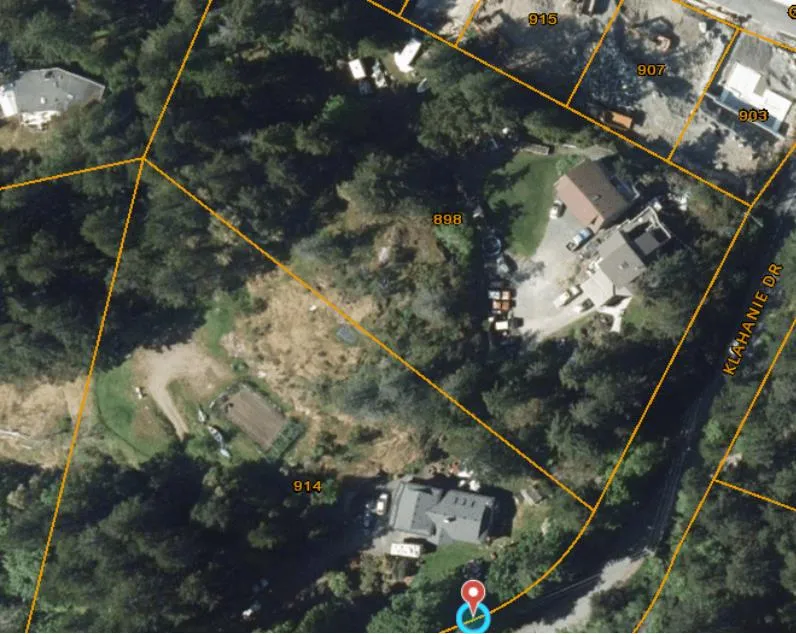
Talmack Urban Forestry Consultants Ltd. - Tree Inventory / Arborist Letter (898 & 914 Klahanie Drive)
Consulting arborist letter summarizing the tagged tree inventory, health and structural condition, retention suitability ratings, and recommended mitigation for the Klahanie Drive development site.
Key facts
- Report date: February 7, 2023 (letterhead)
- Inventory includes species, DBH, canopy, health and structural assessments
- Retention summary categories: Retain, Retain*, Conditional, Remove, TBD
- Attached items noted: Tree resource spreadsheet, site survey, preliminary grading plans
Talmack Urban Forestry Consultants Ltd. - Tree Inventory / Arborist Letter (898 & 914 Klahanie Drive)
February 7, 2023
Formwell Homes
841 Fort Street
Victoria, BC V8W 1H8
Attn: Sam Ganong
Re: 898 & 914 Klahanie Drive
Talmack Urban Forestry Consultants Ltd. was engaged to tag and inventory (in spreadsheet form) all trees that are contained in the site survey (attached). The inventory includes their species, size (d.b.h), canopy diameter, existing health and structural characteristics based on a visual examination, and general remarks and recommendations. For discussion purposes, retention statuses were included in the inventory—these should be considered for coordination only, as the building and grading plans we have reviewed are preliminary. A limited visual (level 1) risk assessment was performed for each inventoried on-site tree. A table of tree inventory data is attached, including critical root zones and retention suitability ratings. Please see Tree Inventory Definitions (below) for reference:
Tree Inventory Definitions
Tag
Tree identification number on a metal tag attached to tree with nail or wire, generally at eye level. Trees on municipal or neighboring properties are not tagged.
NT: No tag due to inaccessibility or ownership by neighbour.
DBH
Diameter at breast height – diameter of trunk, measured in centimetres at 1.4m above ground level. For trees on a slope, it is taken at the average point between the high and low side of the slope.
- Measured over ivy
~ Approximate due to inaccessibility or on neighbouring property
Dripline
Indicates the radius of the crown spread measured in metres to the dripline of the longest limbs.
Relative Tolerance Rating
Relative tolerance of the tree species to construction related impacts such as root pruning, crown pruning, soil compaction, hydrology changes, grade changes, and other soil disturbance. This rating does not take into account individual tree characteristics, such as health and vigour. Three ratings are assigned based on our knowledge and experience with the tree species: Poor (P), Moderate (M) or Good (G).
Critical Root Zone
A calculated radial measurement in metres from the trunk of the tree. It is the optimal size of tree protection zone and is calculated by multiplying the DBH of the tree by 10, 12 or 15 depending on the tree’s Relative Tolerance Rating. This methodology is based on the methodology used by Nelda Matheny and James R. Clark in their book “Trees and Development: A Technical Guide to Preservation of Trees During Land Development.”
- 15 x DBH = Poor Tolerance of Construction
- 12 x DBH = Moderate
- 10 x DBH = Good
To calculate the critical root zone, the DBH of multiple stems is considered the sum of 100% of the diameter of the largest stem and 60% of the diameter of the next two largest stems. It should be noted that these measures are solely mathematical calculations that do not consider factors such as restricted root growth, limited soil volumes, age, crown spread, health, or structure (such as a lean).
Health Condition
- Poor – significant signs of visible stress and/or decline that threaten the long-term survival of the specimen
- Fair – signs of stress
- Good – no visible signs of significant stress and/or only minor aesthetic issues
Structural Condition
- Poor – Structural defects that have been in place for a long period of time to the point that mitigation measures are limited
- Fair – Structural concerns that are possible to mitigate through pruning
- Good – No visible or only minor structural flaws that require no to very little pruning
Suitability Ratings
Rating: Suitable.
● A tree with no visible or minor health or structural defects, is tolerant to changes to the growing environment and is a possible candidate for retention provided that the critical root zone can be adequately protected.
Rating: Conditional.
● A tree with good health but is a species with a poor tolerance to changes to its growing environment or has a structural defect(s) that would require that certain measures be implemented, in order to consider it suitable for retention (ie. retain with other codominant tree(s), structural pruning, mulching, supplementary watering, etc.)
Rating: Unsuitable.
● A tree with poor health, a major structural defect (that cannot be mitigated using ANSI A300 standards), or a species with a poor tolerance to construction impacts, and unlikely to survive long term (in the context of the proposed land use changes).
Retention Status
- Remove – Not possible to retain given proposed construction plans
- Retain – It is possible to retain this tree in the long-term given the proposed plans and information available. This is assuming our recommended mitigation measures are followed
- Retain * - See report for more information regarding potential impacts
- TBD – Retention status “to be determined” at the time of construction or review of detailed plans
Closing
Please feel free to contact us with any questions or concerns.
Yours truly,
Talmack Urban Forestry Consultants Ltd.
Robert McRae
ISA Certified Arborist
Tree Risk Assessment Qualified
Tree Appraisal Qualified Technician
Robbie@Talmack.ca | 778-966-8733
Attached:
- Tree Resource Spreadsheet
- Site survey
- Preliminary grading plans
Document Images
(1)