DocumentsOtherOct 4, 2021Pages 8–9
Notice — Disposition of Lands (2911 West Shore Parkway) / Schedule A
Public notice advising Council will consider disposition of an approximately 3,450 m2 portion of lands at 2911 West Shore Parkway at the October 4, 2021 Council meeting; includes Schedule A and a newspaper clipping.
Key facts
- Disposition parcel approx. 3,450 m2 (11,000 ft2)
- Council consideration: Monday, October 4, 2021 at 5:30 pm, City Hall, 877 Goldstream Avenue
- Notice signed by Marie Watmough, Corporate Officer
- Included newspaper advertisement (Goldstream Gazette)
Notice — Disposition of Lands (2911 West Shore Parkway) / Schedule A
Beautiful Garry oaks reveal Island’s history of colonialism
Lekwungen food expert Cheryl Bryce raising awareness of traditional food systems
Zoe Ducklow
News Staff
Newcomers to Vancouver Island will find it hard to miss the unique Garry oak ecosystem that’s so celebrated by south Islanders. The rough bark on knobby trunks create sculptural landscapes out of grassy hills.
But what makes the Garry oak so special, besides its obvious beauty? Why is it so important and what is the endangered ecosystem being protected from?
“It’s the reason you’re here,” answered Metchosin farmer Robin Tunnicliffe, standing in her field that boasts a wild Garry oak lawn area beside neatly cultivated rows of vegetables. “It’s the reason we’re all here.”
Come again?
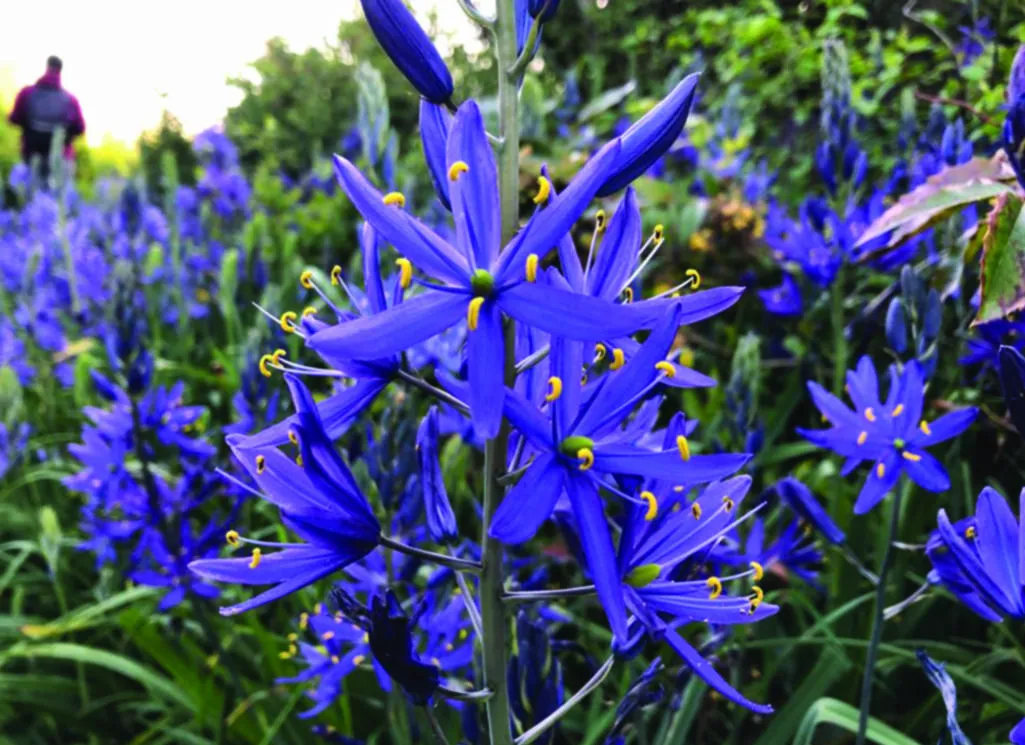
She pointed to the bright purple flowers beneath the gnarly branches – camas flowers, as most Greater Victorians well know. They have a nice, bulbous tuber for a root that’s a great food source, something like a parsnip; rich in nutrients and long-lasting when stored properly.
According to Songhees woman and traditional food expert Cheryl Bryce, the Lekwungen peoples have long cultivated these plants for food and trade. They tended to the hillsides by setting controlled burns and clearing shrubby undergrowth. Scabby Garry oak bark is naturally resilient to flame, so they remained while the grasslands flourished – much like what Beacon Hill Park looks like today.
So when James Douglas rolled up on his schooner in 1842 scouting sites for a new fort, the camas meadows sang to him. He saw open, “uncultivated” land that looked fertile with minimal trees to clear. Perfect for a new fort. Except, it wasn’t uncultivated.
Songhees women were tending to the fields, cultivating and harvesting camas (Kwetlal, in Lekwungen) each fall for food and trade. They managed the land and fairly distributed the harvest. The starchy tubers were a prized item for trade, as valued as salmon. People used to come from all over to the south Island for the bounty. The land looked so welcoming to Douglas because it was a farm.
But settlers quickly took over, letting livestock root for the tubers, planting their own crops of potatoes and carrots, pushing out not just the Songhees people, but also their food.
Bryce grew up helping her grandmother Edna harvest Kwetlal, inadvertently learning as they went. She learned about the death camas, a poisonous relative that her ancestors used to relocate each spring to the borders of the fields to deter raids.
She learned to spread seeds as they dug for the tubers, to replace the topsoil for minimal disruption and how to cook it in a pit oven – an earthen slow cooker, she called it.
Notice of Public Hearing
The City of Langford has received an application to amend Zoning Bylaw No. 300 by means of the proposed Bylaw noted below. All persons who believe that their interest in the property is affected by the proposed Bylaw will be afforded an opportunity to be heard by presenting written submissions prior to 3 pm on the day of the Public Hearing or by making oral submissions at the Public Hearing. Please be advised that no submission may be received by Council after the close of the Public Hearing and any submissions made to Council, whether orally or in writing, will form part of the public record.
PLEASE NOTE: This meeting will be held electronically, and not in-person. Information about how to connect to this meeting is indicated in the table below.
| Meeting Date and Time | Monday, 4 October 2021, 5:30 pm |
|---|---|
| Meeting Place | City Hall Council Chambers, Third Floor, 877 Goldstream Avenue |
| Teleconference | 1-855-703-8985 (Canada Toll Free) OR 1-778-907-2071 (long distance charges may apply) |
| Meeting ID | 850 0276 1754 / Zoom.us or Zoom app on your mobile device |
The Public Hearing is not an information session and Council will not answer questions about the proposal or proposed bylaw(s) except to provide clarification. The purpose of the Public Hearing is for Council to hear the views and opinions of those members of the public who wish to make comments. Please have all your questions answered in advance of the Public Hearing by contacting the Planning Department as noted below.
The complete Agenda including the Bylaw and other material that Council may consider in relation to the bylaw will be uploaded to our website www.langford.ca the Friday afternoon before the Public Hearing.
Questions or comments may be submitted via email to planning@langford.ca, in writing to Langford City Hall, 2nd Floor, 877 Goldstream Avenue, Langford, BC, V9B 2X8, or by calling 250-478-7882.
Marie Watmough
Acting Director of Corporate Services
Proposal (Bylaw No. 1856)
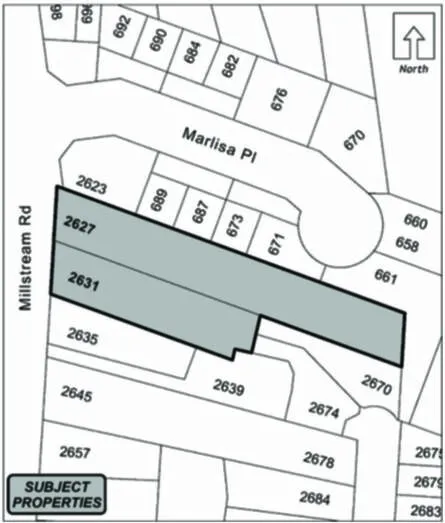
The purpose of Bylaw No. 1856 is to amend the City of Langford Zoning Bylaw No. 300 by amending the zoning designation of the lands that are the subject of Bylaw No. 1856 from R2 (One- and Two-Family Residential) Zone and adding to the RM9 (Medium Density Apartment) Zone to allow for the construction of two apartment buildings with approximately 113 units.
Applicant: Rachael Sansom
Location: The lands that are the subject of Bylaw No. 1856 are 2627 and 2631 Millstream Road as shown shaded on the included plan.
Proposal (Bylaw No. 1998)
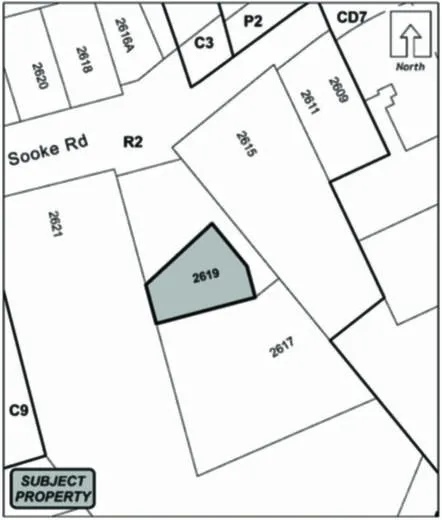
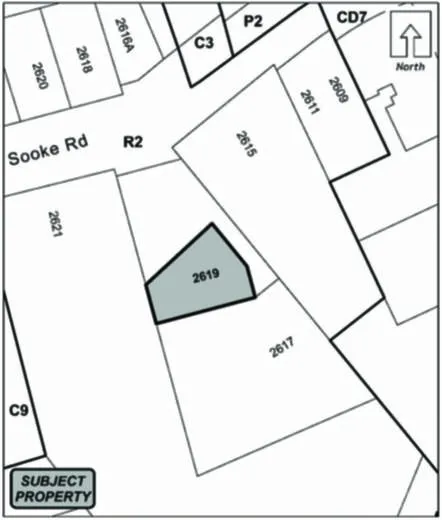
The purpose of Bylaw No. 1998 is to amend the City of Langford Zoning Bylaw No. 300 by amending the zoning designation of the lands that are the subject of Bylaw No. 1998 from R2 (One- and Two-Family Residential) Zone and adding to the P1A (Neighbourhood Institutional) Zone and to amend the text of the Zoning Bylaw to allow for a 44-child group daycare.
Applicant: Roya Adami
Location: The land that is the subject of Bylaw No. 1998 is 2619 Sooke Road as shown shaded on the included plan.
NOTICE OF LAND DISPOSITION
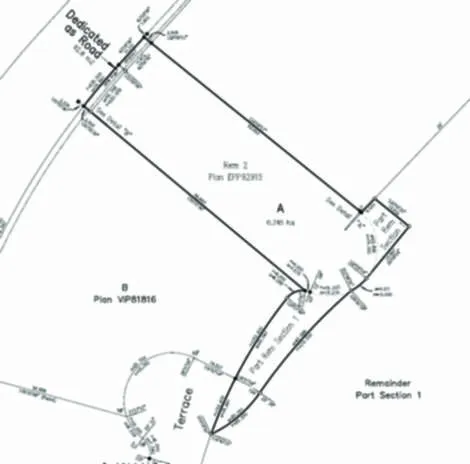
The City of Langford hereby gives public notice of its intention to dispose of that portion of land shown in heavy outline in Schedule ‘A’ as proposed Lot A to Pavery Holdings Inc. for $870,000.00 (excluding GST).
The land is legally described as: 2911 West Shore Parkway – PID No. 031-288-464, Lot 2, Section 1, Goldstream District, Plan EPP92915;
And Part of 2945 Ed Nixon Terrace, PID No. 009-831-037, Section 1, Goldstream District, Except That Part Colored Red on Esquimalt and Nanaimo Location Plan 679 and Except Parts in Plans 2726, 3458, 7154, 9601, 12263, 18094 And 30720, And Except That Part Lying To The South Of The Southerly Boundary of Plan 7154 And To The North Of A Boundary Parallel To And Perpendicular Distant 120 Feet, Southerly From The Said Southerly Boundary And To The West Of A Boundary Bearing South 47 Degrees 37 Minutes 30 Seconds East From The Most Easterly Corner Of Said Plan 7154, Parcel A (DD 94581I) And Except Parts In Plans VIP67876, VIP69106, VIP77950, VIP81816 And EPP14761;
The disposition of the approximately 3450m2 (11,000 ft2) portion of lands will be considered by the Council of the City of Langford at its meeting at the City Hall, 3rd Floor, 877 Goldstream Avenue, on Monday, 4 October 2021 at 5:30pm.
Schedule A
Marie Watmough
Corporate Officer
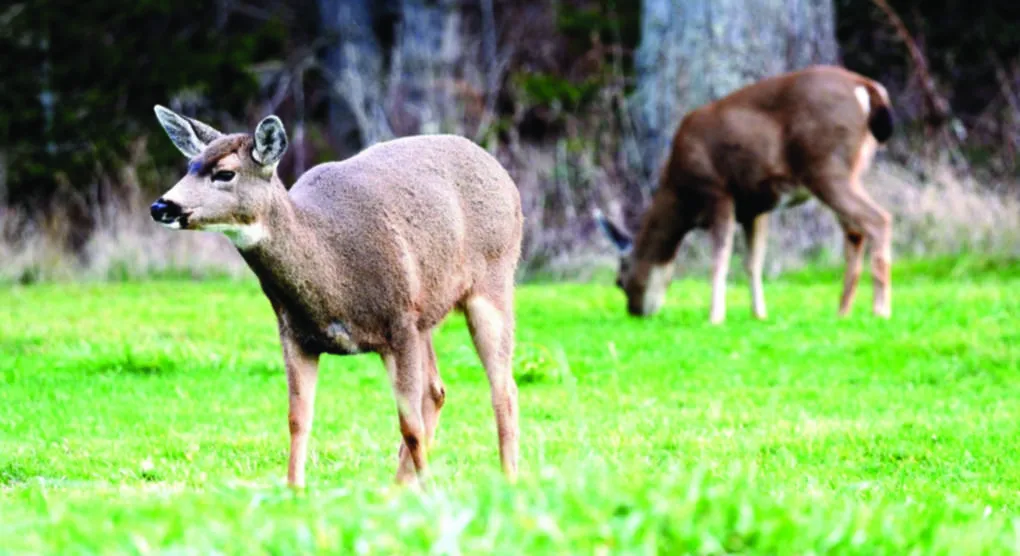
‘Hundreds’ of deer dropping dead on Vancouver Island
Kevin Laird
Sooke News Mirror
Sooke resident Susan Renaud’s Maple Avenue North property is an idyllic place for black-tailed deer, a spot where the animals come to play, rest, nibble on a handful of grass, and lick up a few drops of water. Does have given birth three times in her backyard over the last 15 years.
But several weeks ago, Renaud came across two dead fawns in her yard – for no apparent reason. It was a devastating discovery.
“It was very upsetting. The deer to me are like pets,” Renaud said.
Among neighbours, Renaud is far from alone. Since last fall, Sooke residents and others from Vancouver Island and the Gulf Islands reported hundreds of strange deer deaths to local and provincial officials. At first, provincial officials weren’t sure what was killing deer. They reasoned it could be anything from fertilizers to pesticides – or a virus.
But after tissue samples were sent to Canadian and United States laboratories for testing, the real culprit emerged – a fast-spreading virus in deer that operates not unlike COVID-19 does in humans.
Adenovirus hemorrhagic disease (AHD) poses no risk to humans, livestock or pets – but until now has never been recorded in B.C. First discovered in California in 1993, the disease has gradually moved up the west coast. In 2017, about a dozen animals fell ill in Washington state. The condition began showing up in the Gulf Islands last fall.
Provincial wildlife veterinarian Caeley Thacker said the virus is “very contagious,” spread by direct contact between deer and through the air. Like COVID-19 in humans, research suggests healthy-appearing deer can shed and spread the virus.
“There’s not a whole lot known about the disease,” Thacker said. “We know from other places it seems to be a nose-to-nose contact transmission pathway. We don’t think there are insects or anything like that involved, but, again, we don’t know.”
Visible symptoms of AHD include difficulty breathing, foaming or drooling from the mouth, diarrhea, and seizures. Other symptoms include ulcers and abscesses in the mouth and throat.
Thacker suspects “hundreds” of deer have died from the disease on Vancouver Island in less than a year but doesn’t think it can wipe out the deer population since the disease only transmits from direct contact.
Part of the problem with monitoring the disease is the only reliable diagnostic tool is collecting samples from the carcass of dead deer.
“We can’t tell until the animal is dead if it has AHD,” Thacker said.
So far, deer affected with AHD have been found between Sooke and Courtenay. But sampling is limited due to laboratory capacity and financing.
“We’ve only been testing animals from areas that haven’t been identified, so we’re tracking the spread of the disease rather than the prevalence. The sampling is limited to new areas,” Thacker said.
The province is also collecting blood samples from live animals to see if some deer create antibodies and survive the disease. The province asks anyone who sees deer with symptoms of AHD to report them to the Wildlife Health Laboratory at 250-751-7246.