DocumentsAppendixDec 17, 2024Pages 30–54
Limited Hazardous Building Materials Assessment — 840 Arncote Avenue (TerraWest Environmental Inc.)
TerraWest limited hazardous building materials assessment (LHBMA) of demolition debris at 840 Arncote Avenue (site visit Oct 18, 2024), documenting asbestos and lead-containing materials and providing abatement recommendations.
Key facts
- Report date: October 23, 2024 (TerraWest Project LANG25-01r01)
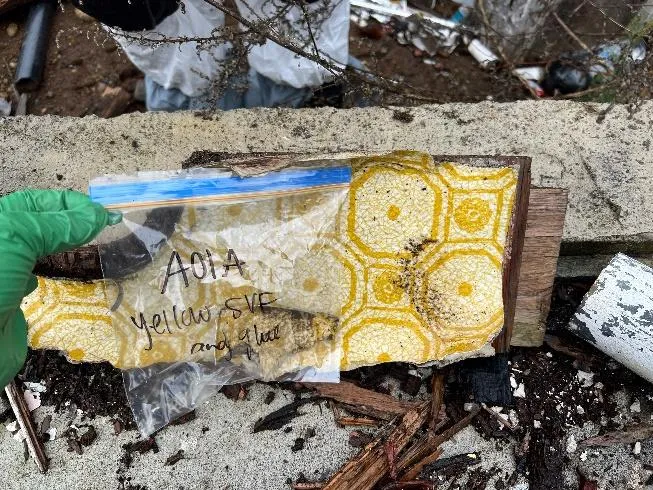
- Asbestos findings: Yellow sheet vinyl flooring sample (A01) chrysotile ~80% detected (moderate/high abatement risk)
- Lead in paint: sample L01 (light blue on wood) = 6700 ppm; L02 (red/brown) = 100 ppm
- Identified other hazards: suspect heating oil tanks, paint cans/oil containers; WorkSafeBC Stop Work Order noted and lifted for assessment
- Recommendations: asbestos abatement by qualified contractors, air monitoring, PPE, disposal at approved landfill, follow WorkSafeBC requirements
Limited Hazardous Building Materials Assessment — 840 Arncote Avenue, Langford, BC
Prepared for: City of Langford
Prepared by: TerraWest Environmental Inc.
Project File: LANG25-01r01
October 23, 2024
Executive Summary
TerraWest Environmental Inc. (TerraWest) was retained by City of Langford (the ‘Client’) to conduct a Site visit at the property located at 840 Arncote Avenue, Langford, BC herein referred to as the 'Site' for the purposes of completing a Limited Hazardous Building Materials Assessment (LHBMA) based on a scope of work provided by the Client.
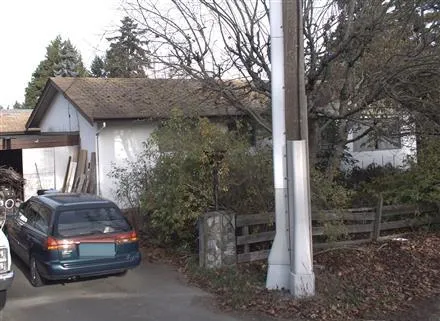
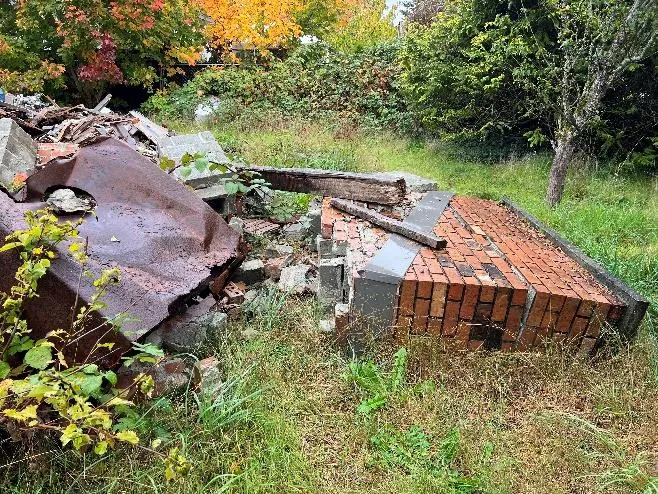
The building on the property has been demolished and the materials remain on site. Garbage and other debris have been dumped on the site. A WorkSafe BC stop work order is in place. The purpose of this LHBMA was to identify hazardous building materials and equipment at the Site in order to safely abate hazardous materials from the site and remove the stop work order. This assessment was conducted in general accordance with the WorkSafeBC requirements outlined in the BC Occupational Health and Safety Regulation Section 20.112 - Hazardous Materials.
Occupied residential buildings surround the lot on two sides and residential buildings are also near the site, across Arncote Avenue and Sunderland Road.
Based on this information, TerraWest performed the following tasks in the areas potentially impacted as noted above:
- Visually assessed safely accessible building materials, finishes and systems for the potential presence of hazardous materials;
- Conducted representative sampling of materials suspected of containing asbestos and/or lead, and submitted samples to an accredited laboratory for analysis;
- Photographed sample locations and representative site conditions;
- Quantified known and suspect hazardous materials and recorded their locations and other observations in site notes;
- Developed a site plan showing sample locations, analytical results, and site information;
- Provided this assessment report, which includes site observations, analytical results, sample location site plan, representative photographs, conclusions, and recommendations.
The LHBMA was conducted by TerraWest representative Jorge Ezquerra, BSSE WSBC Certification #ASB – 10004506 on October 18, 2024.
The hazardous materials table below summarizes the observations and laboratory analytical results.
Hazardous Materials Summary
Hazardous Material Types (Executive Summary list)
- Asbestos-Containing Building Materials (ACMs)
- Yellow Sheet Vinyl Flooring (paper backing)
- Lead in Paints
- Light blue on wood
- Red and brown on wood
- Lead Products
- Electrical components (connectors, conductors and solder) (potential)
- Oakum in sewer pipe joints
- Leachable Lead Materials
- Not conducted
- Batteries (contain heavy metals)
- Not observed
- Mercury
- Not observed
- Pressure Treated Wood (may contain arsenic, copper and/or chromium)
- Not observed
- Polychlorinated Biphenyls (PCBs)
- Based on the age of the facility, PCBs may be present in fluorescent light ballasts if present (not observed).
- Halocarbons
- Not observed
- Radioactive Materials
- Not observed
- Biological Hazards
- Not observed
- Silica
- Silica is present in concrete, concrete block, brick, mortar, stucco, drywall, texture coat, plaster, ceramic tile, grout, and other cementitious building materials.
- Synthetic Vitreous Fibres
- Fibreglass insulation
- Flammables and Explosives/Storage Tanks
- Three tanks (suspect heating oil)
- Household waste – paint cans, oil containers and other vehicle maintenance products
Where hazardous materials were found to be present, all visually similar materials in the work area must be considered hazardous and handled following WSBC regulatory requirements.
If additional suspected hazardous materials are encountered or damaged during renovation or demolition activities, work must stop immediately and materials left in place until assessed by a Qualified Professional.
This Executive Summary is subject to the same standard limitations as contain in the report and must be read in conjunction with the entire report. This document is not intended for use as a scope of work for hazardous materials abatement.
Table of Contents
1.0 INTRODUCTION
2.0 SCOPE OF WORK
2.1 Limitations
3.0 BUILDING DESCRIPTION
4.0 OBSERVATIONS & RESULTS
4.1 Asbestos
4.2 Lead in Paint
4.3 Leachable Lead
4.4 Other Hazardous Materials
5.0 RECOMMENDATIONS
6.0 LIMITATIONS & CLOSURE
Figure 1. Sample Locations and Results
Appendices:
- Appendix A: Site Photographs
- Appendix B: Methodology
- Appendix C: Regulatory Framework
- Appendix D: Laboratory Analytical Reports
1.0 Introduction
TerraWest Environmental Inc. (TerraWest) was retained by City of Langford (the ‘Client’) to conduct a Site visit at the property located at 840 Arncote Avenue, Langford, BC herein referred to as the 'Site', for the purposes of completing a Hazardous Building Materials Assessment (HBMA) based on a scope of work provided by the client.
The building on the property has been demolished and the materials remain on site. Garbage and other debris have been dumped on the site. A WorkSafe BC stop work order is in place.
Potential hazardous materials and equipment were identified through visual observations and/or sampling and laboratory analysis as per the scope of work outlined in Section 2.0 of this report.
Supporting evidence and data collected during this HBMA are provided in the following:
- Sample Location Plan in Figure;
- Site photographs in Appendix A;
- Assessment methodologies in Appendix B;
- A summary of regulatory framework in Appendix C; and
- Laboratory analytical reports in Appendix D.
2.0 Scope of Work
The purpose of this LHBMA was to identify hazardous building materials and equipment at the Site to safely abate hazardous materials from the site and remove the stop work order. This assessment was conducted in general accordance with the WorkSafeBC requirements outlined in the BC Occupational Health and Safety Regulation Section 20.112 - Hazardous Materials.
Occupied residential buildings surround the lot on two sides and residential buildings are also near the site, across Arncote Avenue and Sunderland Road.
Based on this information, TerraWest performed the following tasks in the areas potentially impacted as noted above:
- Visually assessed safely accessible building materials, finishes and systems for the potential presence of hazardous materials;
- Conducted representative sampling of materials suspected of containing asbestos and/or lead, and submitted samples for analysis;
- Photographed sample locations and representative site conditions;
- Quantified known and suspect hazardous materials and recorded their locations and other observations in site notes;
- Developed a site plan showing sample locations, analytical results, and site information;
- Provided this assessment report, which includes site observations, analytical results, sample location site plan, representative photographs, conclusions, and recommendations.
The LHBMA was conducted by TerraWest representative Jorge Ezquerra, BSSE WSBC Certification #ASB – 10004506 on October 18, 2024.
2.1 Limitations
This LHBMA was limited to the materials and equipment identified in the scope of work provided by the Client and described above.
Analytical results of visually homogeneous materials were extrapolated to all areas to undergo the planned work and are dependent on visual observations or other available information. Materials such as plaster finishes and painted drywall surfaces, which have a homogenous visual appearance but potentially dissimilar underlying substrate, cannot be extrapolated with certainty.
The quantities shown in the sections below are estimates only – hidden materials may be present. The contractor is responsible for verifying site conditions.
It is assumed that the following items did not contain asbestos:
- Ceramic tile
- Glass
- Metals
- Plastics in non-industrial applications
- Wood and wood composite materials
Materials suspected to contain asbestos may be present and include:
- Putties, mastics, caulking, pre-formed concrete board and pipes
- Bell and spigot pipe oakum (gaskets/packing) in cast-iron pipe joints
- Cement products (pipes, roof drains, pre-formed board)
- Leveling or setting compound beneath flooring
- Electrical wiring and cables
- Heat shields within light fixtures
- Underground drainage systems (may contain asbestos-cement pipe)
- Pad under fireplace hearth/wood stove
These materials were not sampled as sampling would pose a safety risk to the field staff, and/or the materials may have been concealed and not readily accessible (i.e. located in the large debris pile). Additional assessment of these materials for asbestos must be conducted if discovered prior to disturbance.
Exclusions table:
| Exclusions | Rationale |
|---|---|
| Contents | Beyond the scope of this LHBMA. |
| Debris Pile | Materials that could be safely accessible were sampled. Visual assessment was conducted of exposed materials. Hidden materials may be present that could not be safely assessed. |
| Phase I Environmental Site Assessment | Beyond the scope of this LHBMA |
| Radon Testing | Beyond the scope of this LHBMA |
3.0 Building Description
The following information is from observations made by TerraWest at the Site or information listed on BC Assessment’s website*:
| Item | Finding/Observation |
|---|---|
| Construction/Renovation Era | 1968 (as per BC Assessment) |
| Total Building Area | 1079 SF (as per BC Assessment) |
| Number of Floors | 1 (as per BC Assessment) |
| Foundation | Concrete slab on grade, poured concrete walls and cinderblock |
| Roofing Materials | Asphalt shingles and torch-on |
| Structural Materials/Framing | Wood frame |
| Exterior Finishes | Wood siding and trim |
| Interior Wall Finishes | Drywall |
| Ceiling Finishes | Drywall |
| Floor Finishes | Vinyl floor tile and vinyl sheet flooring |
| Insulation in Attic | Not observed |
| Insulation in Walls | Fibreglass |
| Heating, Ventilation, and Air Conditioning System Type | Heating oil tank and brick chimney were present. No furnace, ducting or radiant heating systems were observed. |
| Mechanical Insulation | Not observed |
| Electrical | 110/220V |
| Windows | Not observed |
| Putties/Caulking/Mastics | Not observed |
*https://www.bcassessment.ca/Property/AssessmentSearch
4.0 Observations & Results
4.1 Asbestos
The following materials were assessed for the presence of asbestos through visual assessment or laboratory analysis. Bolded materials in the table below were determined to contain asbestos. All visually similar materials in the building must be assumed to be asbestos-containing. See Appendix D for a list of materials analyzed for asbestos content.
| Sample ID | Sample Location(s) | Material Type | Asbestos Type / Percentage | Approx. Quantity (surface area) | *Abatement Risk Level |
|---|---|---|---|---|---|
| A01 | Northwest side of stock pile | Yellow Sheet Vinyl Flooring and Glue | Chrysotile 80% (grey fibrous backing) | Unknown | Moderate with Enhanced Controls or High |
| A02A, B, C | Northwest side of stock pile | Parging | None found | N/A | N/A |
| A03A, B, C | North side of stock pile | Stucco grey on wire | None found | N/A | N/A |
| A04 | North side of stock pile | Blue and White Striped Sheet Vinyl Flooring | None found | N/A | N/A |
| A05 | North side of stock pile | Beige Vinyl Floor Tile | None found | N/A | N/A |
| A06 | North side of stock pile | Teal Vinyl Floor Tile | None found | N/A | N/A |
| A07A, B, C | West fence line | Mortar from | None found | N/A | N/A |
| A08A, B, C | Chimney | Brick Mortar | None found | N/A | N/A |
| A09 | East side of stock pile | Asphalt Shingle Top Layer | None found | N/A | N/A |
| A10 | East side of stock pile | Roof Paper | None found | N/A | N/A |
| A11 | East side of stock pile | Asphalt Shingle Bottom Layer | None found | N/A | N/A |
| A12 | East side of stock pile | Black Membrane | None found | N/A | N/A |
| A13 | East side of stock pile | Building Paper | None found | N/A | N/A |
| A14A, B, C | East side of stock pile | Stucco on Chicken Wire | None found | N/A | N/A |
| A15A, B, C | Northwest side of stock pile | Drywall Taping Compound | None found | N/A | N/A |
| A16A, B, C | Column fence | Parging on Post | None found | N/A | N/A |
| A17 | Northwest side of stock pile | Stucco | None found | N/A | N/A |
| A18A, B, C | South side of stockpile | Drywall Taping Compound | None found | N/A | N/A |
*to be confirmed by abatement contractor based on planned abatement procedures and air monitoring results during removal of debris.

4.2 Lead in Paint
Samples of dry paint were submitted for laboratory analysis of lead content. Those samples with a lead content greater than or equal to 90 milligrams/kilogram (mg/kg), which is equivalent to 90 parts-per-million (ppm), are considered ‘lead-containing’ as defined in Health Canada’s Surface Coating Materials Regulation and are bolded in the following table:
| Sample ID | Sample Location(s) | Colour / Substrate | Lead Content (ppm) |
|---|---|---|---|
| L01 | Stock pile | Light blue on wood exterior | 6700 |
| L02 | Stock pile | Red and brown on wood exterior | 100 |
| L03 | Stock pile | White on wood exterior | < 83 |
| L04 | Stock pile | Grey on wood interior | < 82 |
Concentrations of lead in paint that exceed 100 mg/kg are generally understood to be potentially leachable. Metal components with lead-based coatings can be recycled as metal construction waste without conducting a leachate test.
Lead-based paints that are not adhered to metallic surfaces slated for recycling must be analyzed for leachate through the toxicity characteristic leachate procedure prior to disposal.


4.3 Leachable Lead
The BC Ministry of Environment regulates waste materials’ disposal based on the leachability of metals and other compounds present. The BC Hazardous Waste Regulation states that some materials destined for disposal at a licensed landfill facility must be tested for leachability to determine if they should be handled as a hazardous waste.
Paints with lead concentrations greater than 100 mg/kg were not tested for leachate, as all waste materials are considered contaminated with asbestos.
4.4 Other Hazardous Materials
The following table provides a summary of other hazardous materials observed during this HBMA:
| Material | Type / Location | Estimated Quantity |
|---|---|---|
| Lead-Containing Products | Electrical components (connectors, conductors and solder) (potential); Oakum in sewer pipe joints | Electrical throughout; May be hidden in debris pile. ~ 4 joints are visible |
| Batteries (contain heavy metals) | Not observed | N/A |
| Mercury | Not observed | N/A |
| Pressure Treated Wood (pre-2004 lumber may contain Chromated Copper Arsenate) | Not observed | N/A |
| Polychlorinated Biphenyls (PCBs) | Based on the age of the facility, PCBs may be present in fluorescent light ballasts if present (not observed). | N/A |
| Halocarbons | Not observed | N/A |
| Radioactive Materials | Not observed | N/A |
| Biological hazards | Not observed | N/A |
| Crystalline Silica | Concrete, concrete block, brick, mortar, stucco, drywall, texture coat, plaster, ceramic tile, grout and other cementitious building materials are assumed to contain crystalline silica. | All cementitious building materials |
| Synthetic Vitreous Fibres | Fibreglass insulation | Wall insulation |
| Flammable and Explosive Materials / Storage Tanks | Storage tanks – suspect heating oil | Three |


5.0 Recommendations
Based on the results of the HBMA, TerraWest recommends the following substance-specific recommendations:
- Asbestos debris is present in the stockpile. The debris on the site must be considered contaminated with asbestos and abated accordingly. Workers accessing the site must wear adequate personal protective equipment (PPE) as described in BC OHS Regulation Part 8 - Personal Protective Equipment.
- During removal of asbestos-contaminated debris, conduct air monitoring to assess worker exposure and around the perimeter of the site to determine the effectiveness Safe Work Procedures and dust suppression activities.
- Asbestos abatement must be undertaken by trained personnel following procedures acceptable to WorkSafeBC which comply with BC OHS Regulation Part 6 - Substance Specific Requirements for Asbestos and conform to the WorkSafeBC document Safe Practices for Handling Asbestos (BK27). Asbestos-containing materials must be disposed of at an approved landfill.
- Lead-Containing Paint: Ensure work impacting the paint coatings, paint debris and other lead coated materials proceeds in a manner that will contain fumes or dust and be in full compliance with BC OHS Regulation Part 6 – Substance Specific Requirements for Lead and the WorkSafeBC document “Lead-Containing Paint and Coatings, Preventing Exposure in the Construction Industry” and the WorkSafeBC document Safe Work Practices for Handling Lead (BK159). An occupational sample for lead in air must be collected at the beginning of the project to ensure proper worker PPE is being worn and work procedures are effective in controlling lead dust (BC OHS Regulation 6.61).
- Lead Paint and Lead Products Disposal: Prior to disposal, any lead paint waste not impacted by asbestos contamination, and meeting or exceeding 100 mg/kg (100 parts per million) concentration must be collected and tested for leachability by a qualified person, as per the BC Hazardous Waste Regulation.
- Flammables and Explosives: Prior to demolition of a building, stored chemicals, flammables and explosives must first be removed, and be recycled or disposed of in accordance with the BC Ministry of Environment - Environmental Management Act - Hazardous Waste Regulation. Ensure the product in storage tanks on site has been removed, and assess the site for possible contamination once the demolition debris has been removed and the ground is exposed.
General recommendations include:
- A copy of this report must be posted at the work site at all times.
- Prepare a scope of work for hazardous material disturbance or removal required for the planned work. The scope of work should include a risk assessment, safe work practices, personal protective equipment including respiratory protection, and disposal of waste materials.
- Provide copies of this report to Site personnel including contractors prior to commencement of work.
- WorkSafeBC Regulations require that all hazardous materials be safely removed prior to renovation or demolition or protected from damage prior to the commencement of construction. Handling, removal or disturbance of hazardous materials must be undertaken by a qualified contractor employing WorkSafeBC-approved procedures.
- WorkSafeBC requires the owner or prime contractor to submit a written Notice of Project at least 48 hours before beginning any work activity where workers may be exposed to hazardous substances (BC OHS Regulation 20.2.1). A submission form is available at www.worksafebc.com/en/for-employers/just-for-you/submit-notice-project.
- Work must stop if previously unidentified suspected hazardous materials are encountered or inadvertently damaged or disturbed during renovation and/or demolition activities. These suspect materials must be left undisturbed until a qualified person has determined the status of the material.
- All materials in the work area that are visually similar to those identified as hazardous materials in this report must be considered hazardous and addressed accordingly.
- Retain a qualified consultant to specify, assess and verify the successful removal of hazardous materials and then investigate the site for potential heating oil/hydrocarbon contamination from the storage tanks on site.
6.0 Limitations & Closure
This work was performed subject to the Terms and Limitations presented or referenced in the proposal for this project. TerraWest Environmental Inc. has prepared this report for the exclusive use of its Client and may be relied upon by the Client for their private business purposes. Any other third party use of this report, or reliance placed on it, or decisions taken based on it, is the responsibility of such parties. TerraWest accepts no responsibility for any damages suffered by any third party, or any claims made by any third party as a result of decisions made or actions conducted, based on this report. This report does not constitute any expression of legal opinion, and the Client is specifically advised to seek professional legal opinions with respect to applicable regulatory statutes in this matter.
Investigations described by this report were initiated on the Subject Property at the request of the Client. TerraWest’s investigations were conducted in accordance with generally accepted practices of such environmental investigations. No other warranties are made, either expressed or implied.
The findings of this report are partially based on information provided to TerraWest by the Client and other individuals or organizations. While TerraWest believes that information was provided in good faith and has attempted to verify such information where possible, TerraWest does not accept any responsibility for any inaccuracies, deficiencies or omissions contained in this report, based on the use of such information.
These report findings are partially based on TerraWest’s observations of Site environmental conditions, limited to the dates and specific locations of investigation. This report constitutes neither an endorsement nor a condemnation of the Subject Property.
A signed paper copy of this report constitutes the official and complete deliverable document of record in this matter. The complete report includes the main report text, Attachments and Appendices, as identified in the Table of Contents. Should this report be distributed by means of digital transmission, or copied in paper hardcopy form, TerraWest accepts no liability for the completeness, accuracy or digital compatibility of the files provided.
TerraWest Environmental Inc.
WSBC License #AAL – 00001064
Prepared by:
Jorge Ezquerra, BSSE
WSBC Certification #ASB - 10004506
Hazardous Materials Technologist
Reviewed by:
Kathy Muirhead, B.Sc.,
WSBC Certification # ASB-10004218
Operations Manager – Hazardous Materials and IAQ
Figure
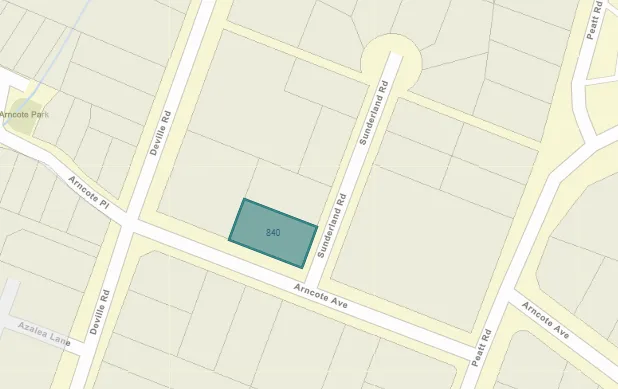
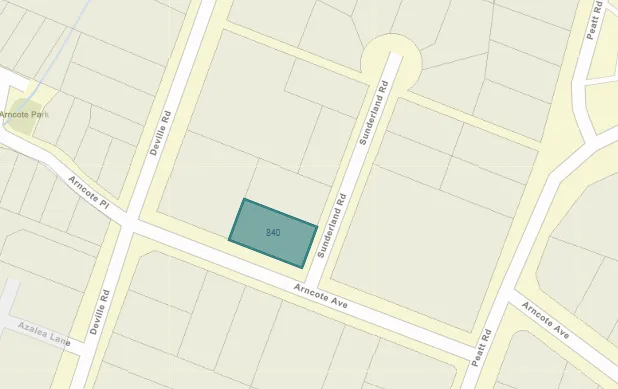
(Material codes shown in figure: CS = Composite Shingle; DTC = Drywall Tape Compound; MEM = Membrane; PAR = Parging; PNT = Paint; PPR = Paper; STO = Stucco; SVF = Sheet Vinyl Flooring; VST = Vinyl Sheet Tile)
Appendix A — Site Photographs
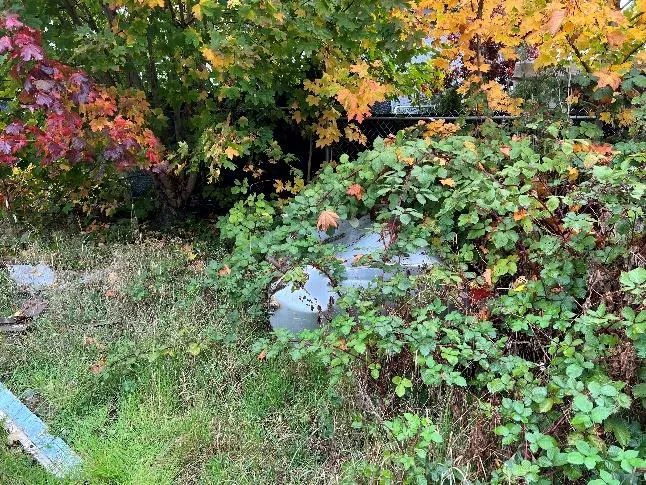
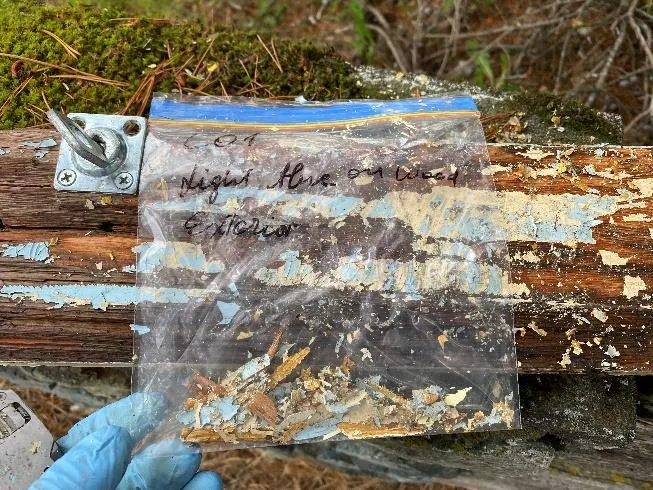
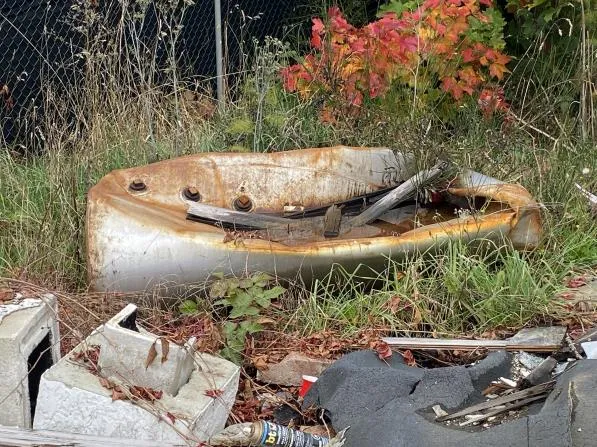
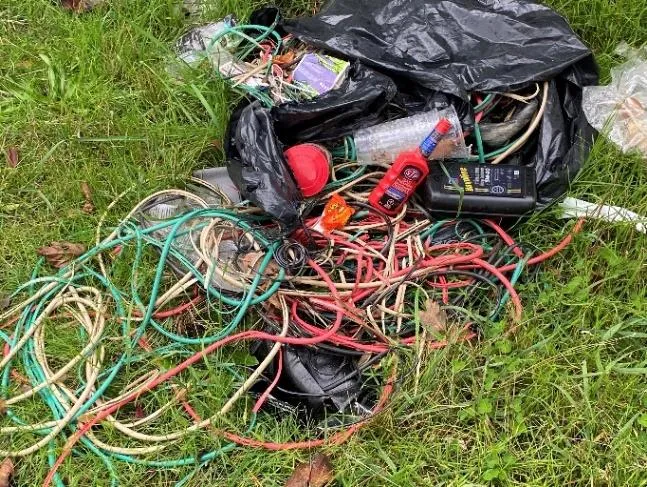
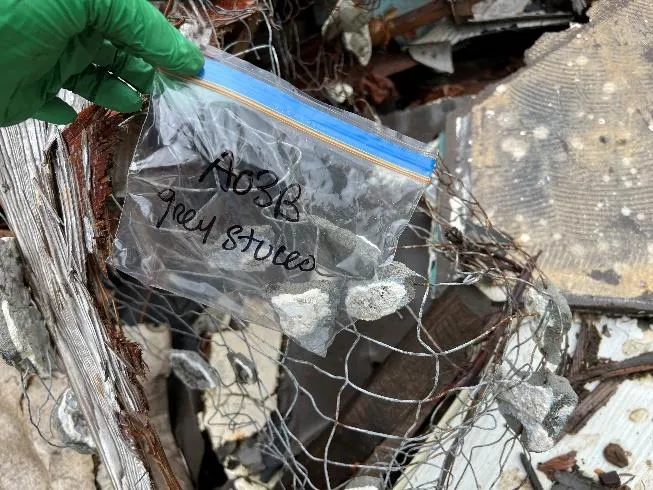
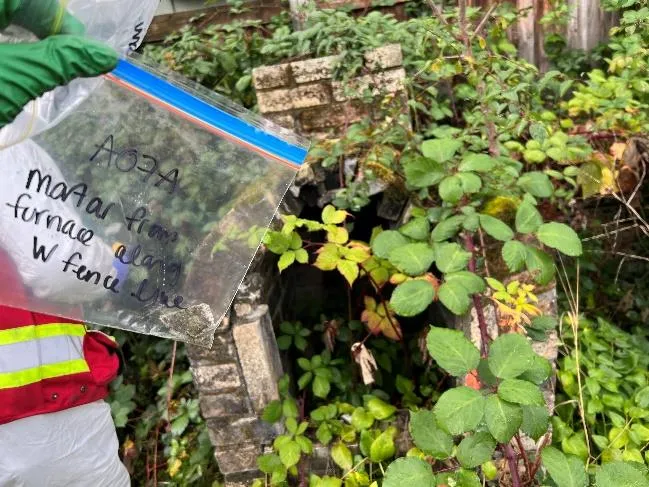
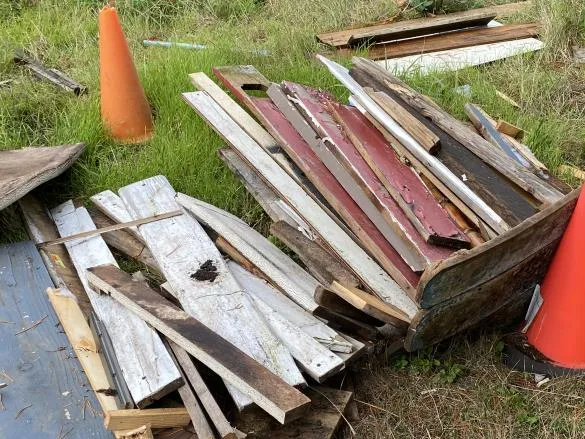
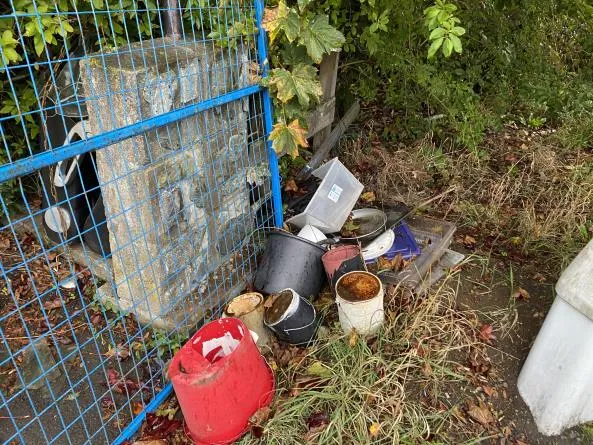
(Note: images grouped above correspond to site photographic documentation. Where the same image content appears in the report, reference is preserved.)
Appendix B — Methodology
Walk-Through
An initial walk-through is conducted throughout the building and observations are made to familiarize the inspector with the types and locations of potential hazardous building materials and develop a sampling strategy. Destructive testing of areas such as concealed layers of flooring, wall and ceiling cavities, concrete block voids, the exterior building envelope and roofing is conducted to the extent possible by the current building use and occupancy.
Asbestos
To confirm or discount the presence of asbestos, representative bulk samples of potential asbestos-containing materials are collected. Areas of homogenous material are identified as defined in WorkSafeBC OHS Guideline 20.112 - “Homogenous material is considered uniform in texture and appearance, was likely installed at the same time and is likely to be of only one type of material or formulation”. Table 2 of the Guideline is used to determine the minimum number of representative bulk samples of each homogenous material. Quantities, sample locations and locations of suspected ACM are recorded. Each sample location is identified with a unique sample number.
Certain materials (such as duct tape, asbestos cement pipe or vermiculite insulation) may be visually identified as ACM without confirmatory sampling.
The following materials are generally not sampled for safety and/or logistical reasons and are assumed to contain asbestos:
- Gaskets or packing on plumbing or mechanical equipment
- Roofing, soffit boards and fascia boards at unsafe heights
- Fibrous paints or coatings
- Elevator brake shoes
- Electrical equipment including wiring, cables and light fixtures
- Fire-rated doors
- Insulation inside of or underneath heated equipment such as boilers or incinerators
Bulk asbestos samples are handled under chain-of-custody protocol and are submitted to TerraWest Environmental Inc., Industrial Hygiene Proficiency Analytical Testing (IHPAT) Program participant, Lab# 296538 in accordance with NIOSH Method 9002.
Bulk asbestos samples are handled under chain-of-custody protocol and are submitted to an accredited laboratory for analysis in accordance with PLM: Bulk Asbestos Building Materials NIOSH 9002. If vermiculite insulation is not visually identified as asbestos containing, it must be analyzed following the Research Method for Sampling and Analysis of Fibrous Amphibole in Vermiculite Attic Insulation (EPA/600/R-04/004, dated January 2004) published by the United States Environmental Protection Agency. All materials containing over 25% vermiculite are considered as a vermiculite material or insulation and are also considered asbestos containing if any asbestos is present (even less than 0.5%), as per Safe Work Practices for Handling Asbestos, WorkSafe BC.
The asbestos analysis is completed using a stop positive approach when appropriate for site conditions. Stop positive means that a set of samples of homogenous material are analyzed consecutively and when a sample is identified as asbestos containing, the analysis is stopped and the remainder of the sample set is assumed to contain asbestos.
Samples (other than vermiculite) containing at least 0.5% asbestos are identified as being asbestos containing.
Lead in Paint
In 1976, Canada’s federal Hazardous Product Act restricted concentrations of lead in new interior paints to 0.5% (5000 parts-per-million (ppm)); however, the use of lead in exterior paints was not restricted. In 1991, the Canadian Paint and Coatings Association voluntarily lowered lead concentrations in new interior paints to 600 ppm. The Hazardous Products Act was not updated to formally recognize this 600 ppm limit until 2005 and still allowed lead to be used in certain classes of paint with a warning label. In 2010, Canada amended the Hazardous Products Act to further lower the concentration of lead in paint to 90 ppm except for certain classes of paint bearing a warning label. Therefore, interior paint manufactured before 2010 may contain greater than 90 ppm of lead.
Distinct types of paints and coatings are visually identified during the survey. If a paint is present in sufficient quantity and destructive sampling is possible, a sample is collected by scraping the surface down to the substrate to ensure that all layers are represented. Each sample is assigned a unique sample number and recorded on the sample plan.
Paint samples are handled under chain-of-custody protocol and submitted to an accredited laboratory for analysis using one or more of the following methods:
- Lead in Paint Chips by Flame Atomic Absorption Spectrophotometry (EPA Method SW-846 3050B/7000B), and/or
- Toxicity Characteristic Leaching Procedure (EPA Method SW-846 1311/7000B).
Samples containing greater than 0.009% lead (90 parts per million) are identified as lead-containing an accordance with Health Canada’s Surface Coating Materials Regulations (SOR2016-193).
Samples collected for TCLP analysis include the underlying substrate (eg. paint on wood). Samples with waste extract containing greater than 5 mg/L of lead are identified as leachable lead waste in accordance with the BC Hazardous Waste Regulation (BC Reg 243/2016).
Lead in Ceramic Tile Glaze
All ceramic tile glaze is assumed to contain lead. Glazed ceramic tiles are not tested as they are not considered to be a paint or surface coating.
Bulk Lead
Suspected bulk lead products are identified by visual observation only. No samples are collected.
Polychlorinated Biphenyl-Containing Electrical Equipment
The Site is visually assessed for the presence of polychlorinated biphenyls (PCBs) in electrical equipment such as fluorescent light ballasts or fluid-filled transformers that may have been manufactured in 1980 or earlier.
An in-depth review of each ballast is to be reserved for deconstruction. Dismantling of in-service electrical equipment to observe individual ballasts is not feasible due to risk of electric shock and damage to operating fixtures. PCBs in dielectric fluids (transformers etc.), and other liquid sources are not sampled as part of this assessment.
Halocarbons
The potential presence of halocarbons in HVAC equipment, refrigeration equipment and fire suppression systems is determined by visual observation of manufacturer’s labels and maintenance records only.
Pressure-Treated Lumber
Pressure-treated lumber is commonly used in decks, fences and playground structures and may be treated with preservatives containing arsenic, chromium and/or copper. According to Health Canada, structures built before 2004 may contain Chromated Copper Arsenate (CCA), which is no longer available for residential construction projects. Pressure-treated lumber is identified by visual observation only; no samples are collected.
Pressure-treated lumber may be identified by a label or stamp, a pattern of slits in the wood, or a green colour. These attributes may be obscured by paint, stain or weathering.
Mercury-Containing Equipment
Mercury-containing equipment such as thermostats, manometers and fluorescent tube/lamps/bulbs are identified by visual observation only.
Batteries
Depending on the type, batteries may contain nickel, cadmium, mercury, lithium, cobalt, and copper. Batteries are visually identified only.
Radioactive Materials
Radioactive sources such as smoke detectors are identified by visual observation only as testing for radioactive materials is outside the scope of work.
Silica
All cementitious building materials including concrete, masonry, brick, mortar, stucco, stone, ceramic tile, grout, leveling or setting compound, gypsum wall board (drywall), fibre cement board, plaster and texture coat are assumed to contain crystalline silica. No sampling is conducted.
Suspect Visible Growth and Biological Agents
Observations are made to identify the presence of suspected visible growth and/or staining on surface materials. Sampling to confirm the presence of mould growth or performing an intrusive inspection of concealed areas is outside the scope of work.
Visual observations are made for evidence of rodent, avian or bat guano or other hazardous biological agents including biomedical waste, nests, damage, carcasses, traps, staining and tracks.
Synthetic Vitreous Fibres
Fibreglass insulation, mineral wool insulation and ceramic fibre insulation products identified by visual observation are assumed to contain synthetic vitreous fibres (SVF), which are also known as man-made vitreous fibres (MMVF).
Toxic, Flammable and Explosive Materials
Toxic, flammable or explosive materials, including fuel storage tanks, are identified by visual observation of manufacturer’s labels, containers or tanks only. No samples are collected.
Appendix C — Regulatory Framework / References
(See report Appendix C — summary of relevant regulatory framework references and guidance documents.)