DocumentsPresentationOct 10, 2023Pages 3–21
Blink RapidBus Westshore Line — BC Transit Update (Presentation)
BC Transit presentation providing an overview of the Victoria Regional Transit System, RapidBus program, the Westshore (Blink) RapidBus launch, planned stations and corridor improvements, fleet electrification and next steps for implementation.
Key facts
- West Shore RapidBus (Blink) launched April 2023 introducing new Route 95 (Langford/Downtown)
- Route frequency: 7–8 minute peak weekday; minimum 15 minute service 7am–10pm Mon–Sat, 8am–10pm Sun
- Island Highway Transit Priority ICIP funding application: $14.9M budget (local share funded by VRTC)
- Joint funding announced July 2023: $395.5M for up to 115 BEBs and 134 charging points
- Eight sets of RapidBus stations planned in the City of Langford; construction timing noted (e.g., project construction tendering if funded; some works target 2024 construction, in-service 2025)
Blink RapidBus Westshore Line — BC Transit Update
October 10, 2023



Presentation Overview
Objectives:
- Provide an overview of BC Transit and an update on implementation and planning activities to advance the RapidBus Implementation Strategy
Overview:
- Overview
- BC Transit Initiatives
- RapidBus Initiatives
- Next Steps
Victoria Regional Transit System Overview
Conventional Transit
- Fixed routes and schedules
- 57 transit routes
- 22.4 million boardings in 2022/23
- Range of vehicles, services:
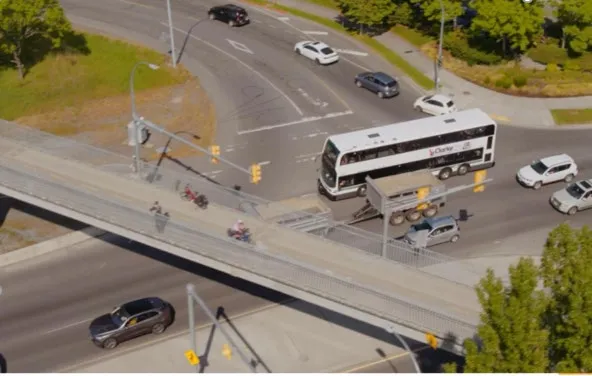
- Double Deckers
- 30’ 35’ 40’ vehicles
- Community shuttles
Custom Transit (handyDART)
- Door to door, demand responsive
- Eligible people with a disability
- Operated by First Canada ULC
- Supported by taxi programs
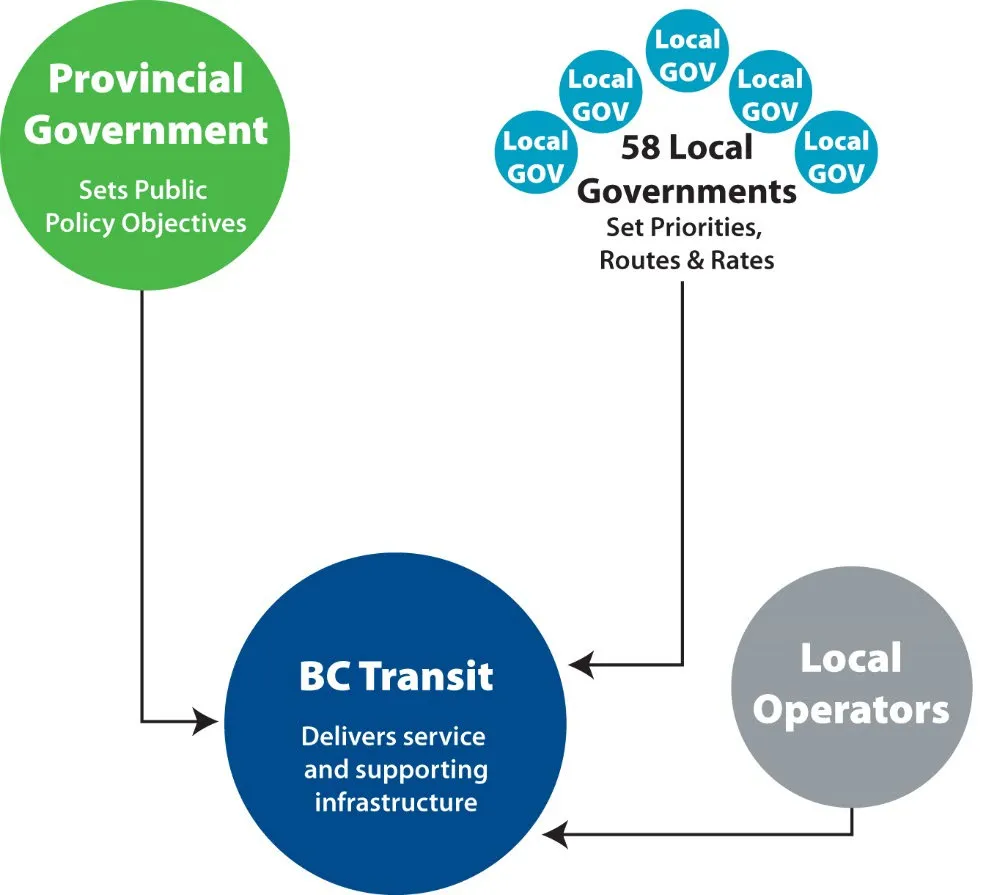
System Operates Through Partnership: BC Transit’s Model
Victoria Regional Transit Commission
- Plans community, establishes transit priorities and routes
- Sets service levels and approves budgets
- Set fares
- Provide local tax subsidy
BC Transit
- Turns VRTC priorities into transit operating and capital plans
- Works with Province to access funding
- Operates Victoria conventional service
- Custom Transit operated via contracted service provider
- Manages capital program

Background: Victoria Regional Transit Commission
- Established under the British Columbia Transit Act
- Local government representation for transit services in the CRD
- Eight elected local government officials are appointed by the Province
- Chair is designated by the Minister responsible for BC Transit
- Appointment process, composition and term described in the Act
- Staff, resources and contracted services provided by BC Transit
Local Government Collaboration
- Bus stops and shelters
- Collaboration on infrastructure for multi modal transportation (municipalities responsible for roads)
- Local planning initiatives (OCP etc.)
- Development Referrals
- Stakeholder engagement
- Collaboration with MOTI on Highways infrastructure
- Collaboration with CRD on regional growth strategies, regional parks and trails
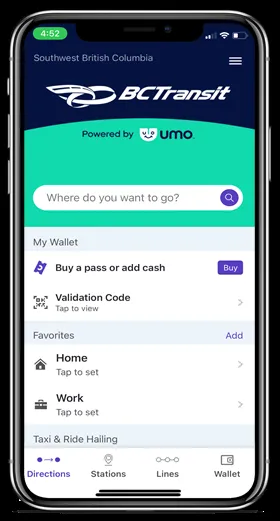
Electronic Fare Collection System (Umo)
- BC Transit’s new fare collection technology
- Replacing end-of-life and costly fare technology
- Better meets the expectations of riders
- Reduces barriers to fare payment and transit access
Primary customer-facing components:
Mobile app
Reloadable fare card
Onboard fare validator
Dedicated customer call centre
Future ability to enable onboard credit and debit card tap payments
Increased and improved data to inform recommendations
Now launched in the Victoria Regional Transit System!
Fare review now underway
Low Carbon Fleet Program
Victoria Regional Transit System Deployment
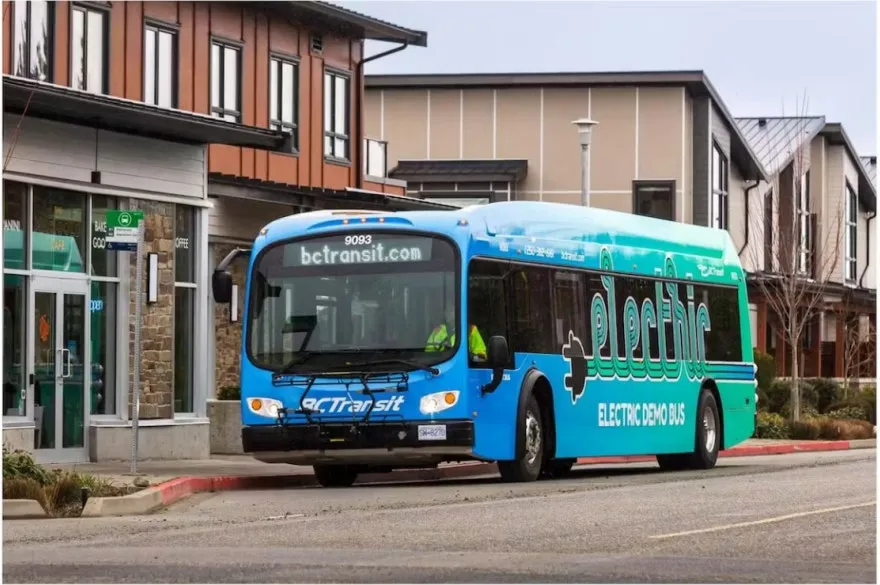
- Battery Electric Demonstration (BEB) bus now in service
- 10 BEBs coming to the VRTS
- New electric bus and charging infrastructure projects in development
- Joint funding announced in July 2023 for $395.5 million for up to 115 BEBs and 134 charging points
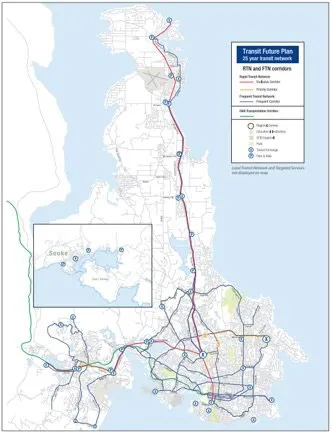
Transit Future Network
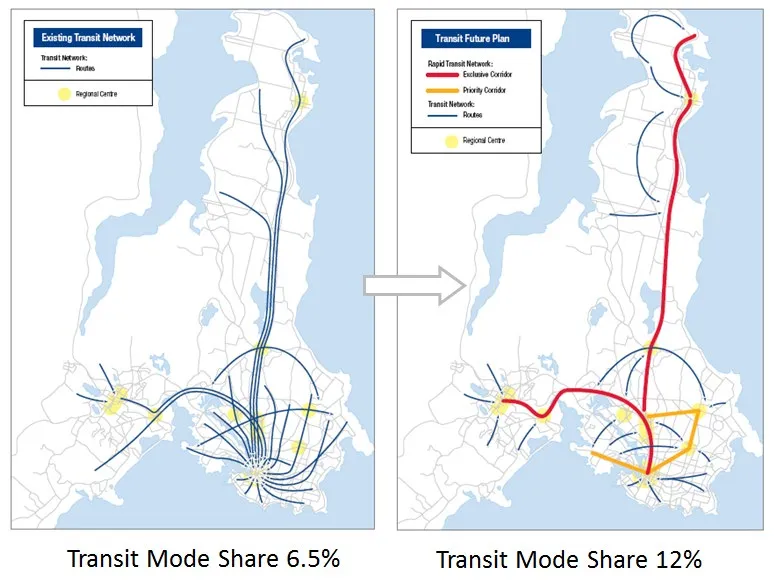
BC Transit developed a 25-year transit plan for the region, which included development of the Transit Future Network.
The Transit Future Network uses four layers of transit service:
- Rapid Transit
- Frequent Transit
- Local Transit
- Targeted Services

RapidBus
CONNECTED, FREQUENT, FAST AND RELIABLE
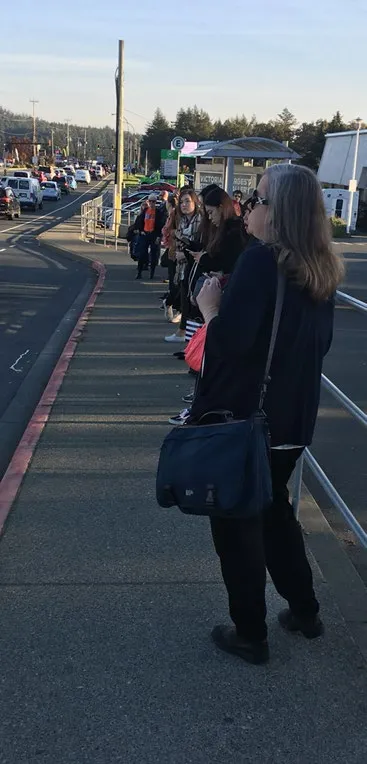
- RapidBus is a bus delivered rapid transit service designed to connect and support designated urban centres of high density, mixed-use areas of the region
- Features include branded services, corridor treatments, unique stations, limited stops and high frequencies
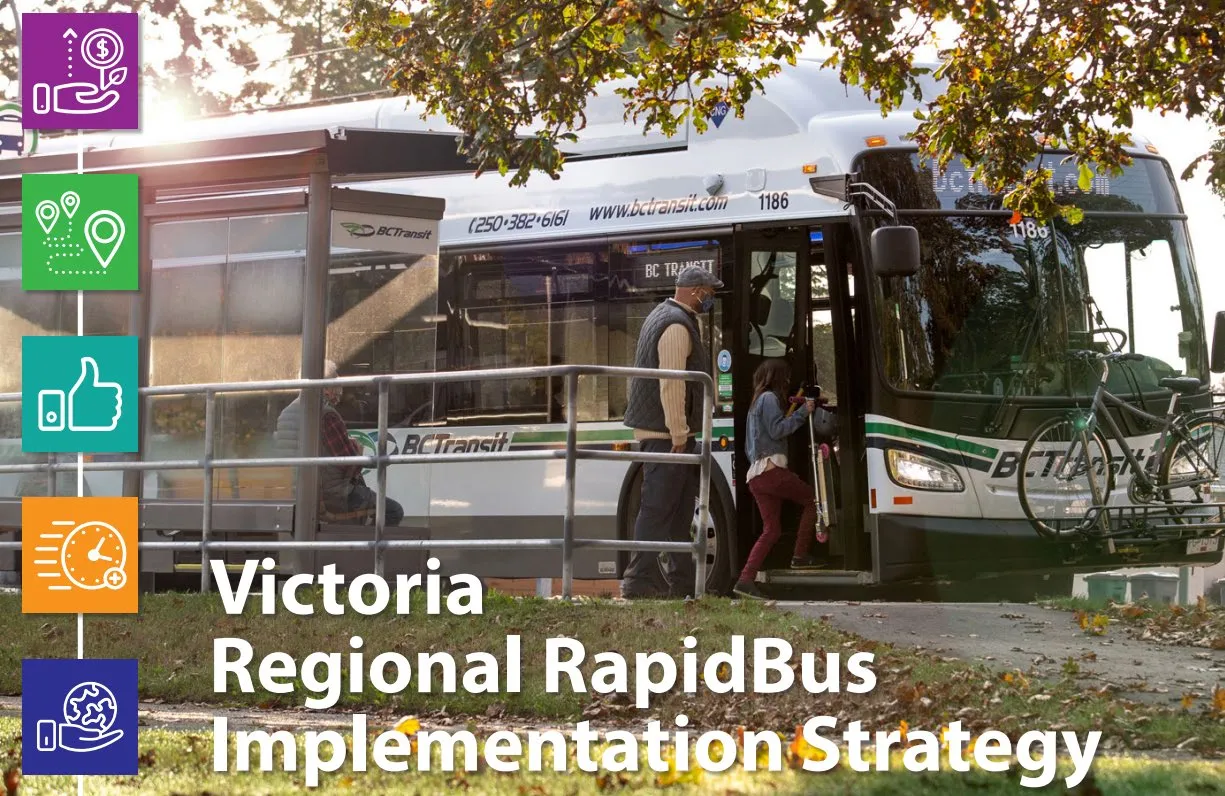
RapidBus Implementation Strategy
- Endorsed by the Victoria Regional Transit Commission in 2021.
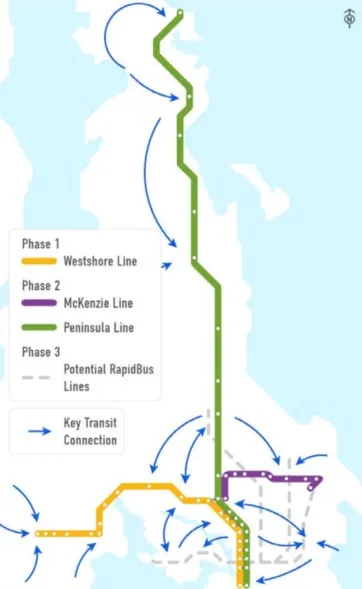
- The RapidBus Implementation Strategy identifies three top priority RapidBus lines separated into two phases:
Phase 1
- West Shore RapidBus Line
- Island Highway Transit Priority Improvements
- RapidBus Station Study
- Downtown Victoria Visioning
Phase 2
- McKenzie RapidBus Line
- Corridor Study
- Peninsula RapidBus Line
- RapidBus stations
- Transit hub study (Sidney)
West Shore RapidBus Line Launch
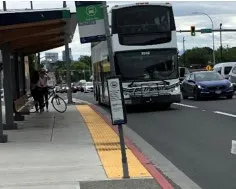
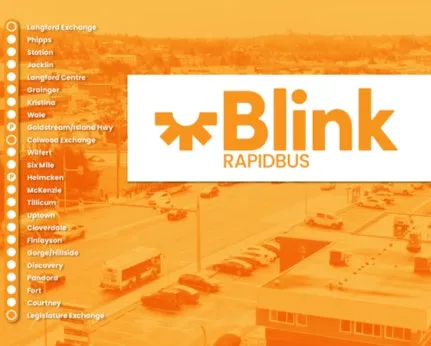
- The flagship Blink West Shore RapidBus Line was launched in April 2023.
- Introduced the new Route 95 Langford/ Downtown
- Route 95 replaced Route 50, operating along the same route, but with added service and fewer bus stops
- 7-8 minute frequency at peak periods on weekdays
- Minimum of 15 minute service from 7am-10pm Monday to Saturday and 8am-10pm Sunday
Island Highway – Westshore RapidBus Improvements
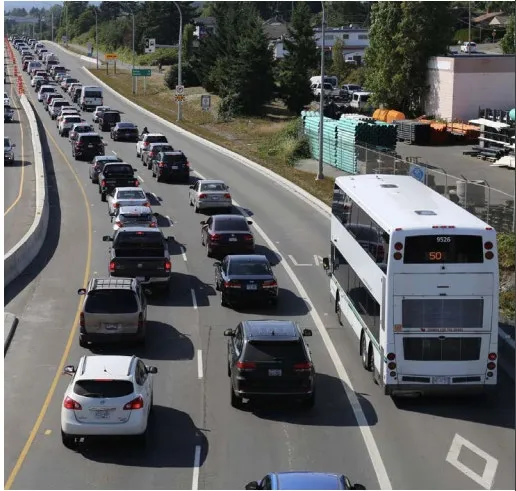
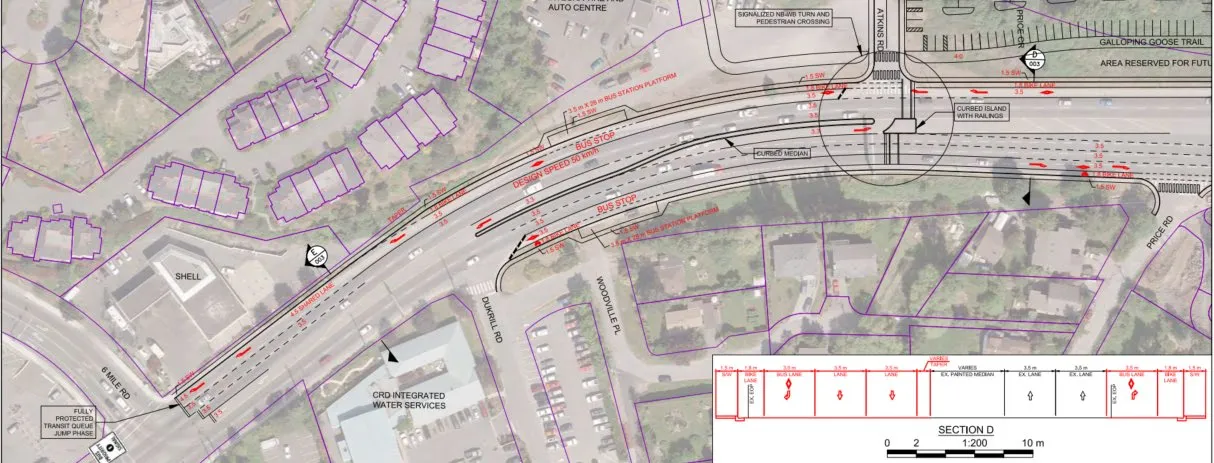
Island Highway Priority Project
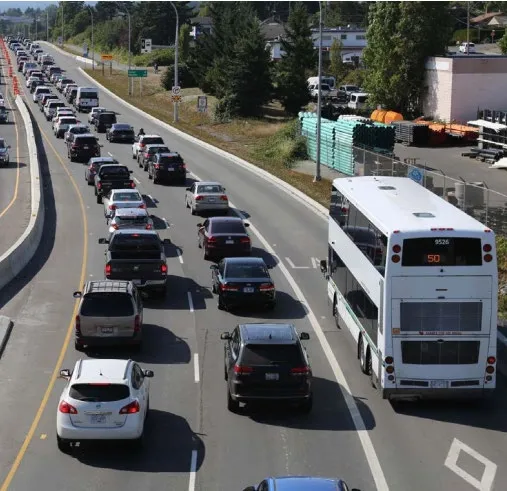
- Supports the Westshore Rapid Bus Strategy.
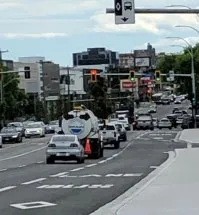
- Transit priority improvements for Island Highway between Highway 1 in the Town of View Royal and Wale Road in the City of Colwood.
- ICIP application for $14.9M budget and the local share is funded by the VRTC.
- If the application is successful next step would be project construction tendering.
- Construction 2024 and in-service in 2025.
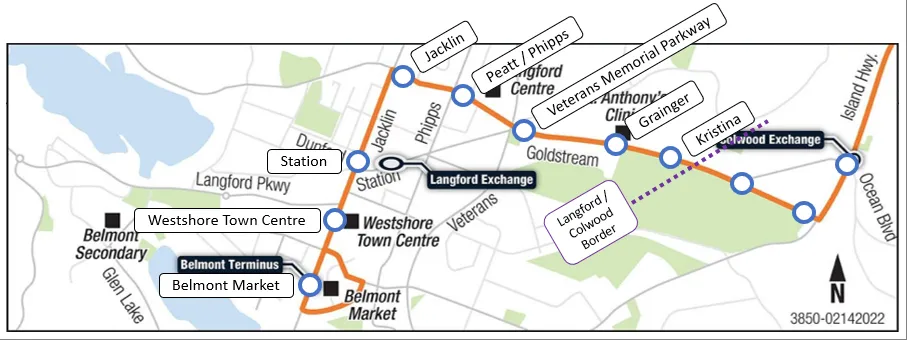
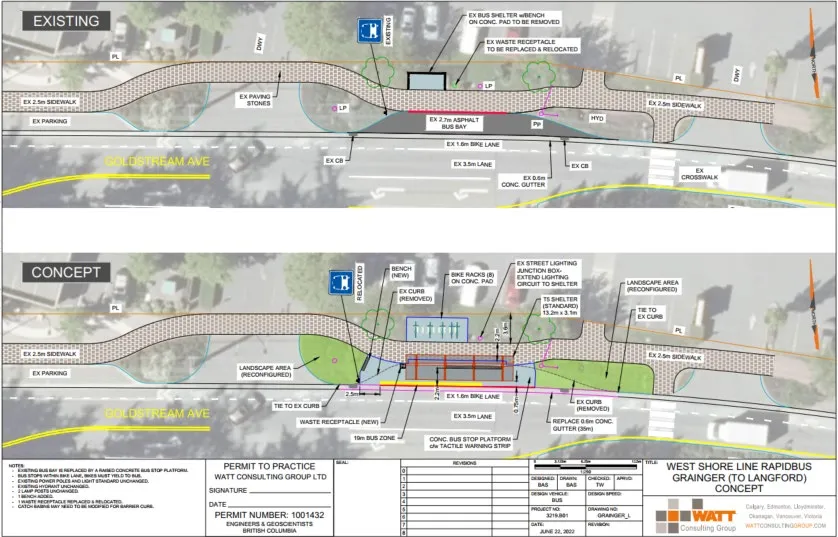
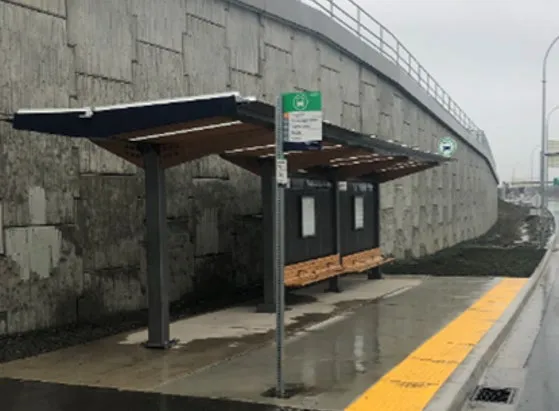
Westshore RapidBus - Proposed Stations
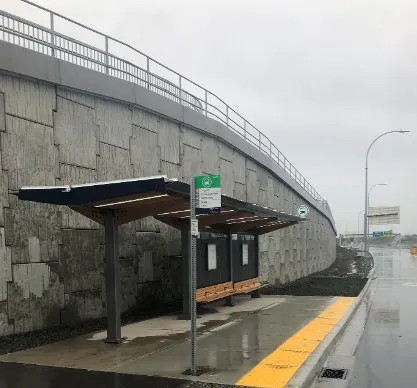
There are 8 sets of stations being planned in the City of Langford.
Westshore RapidBus Station Planning
- Developed preliminary designs and cost estimates for the RapidBus Stations along the Westshore Line.
- Concepts includes shelters, sidewalk improvements, bus bays, ancillary improvements
Westshore RapidBus Projects – Next Steps
Overview of process and timing
| Stage | Activities | Typical Duration |
|---|---|---|
| Transit Future Vision / RapidBus Strategy | Future Transit Network Vision; Prioritization Study – Conceptual Options; Study budgeting & agreement; Develop and evaluate conceptual options | 12 months |
| Support of Conceptual Options | Local Government support in principle of street design concepts; Transit Commission support in principle of concept and local share of funding | 6–18 months |
| Business Case Development and Approval | BC Transit/Province Funding; Federal Funding | 6–9 months |
| Project Delivery | Detail Design; Public Engagement; Construction Tendering; Construction | 18–24 months |
- RapidBus Stations
- Island Hwy Transit Priority
Questions?
Chelsea Mossey – Senior Manager, Government Relations
CMossey@bctransit.com
James Wadsworth – Manager, Infrastructure Planning
JWadsworth@bctransit.com